Indonesia, Canada Join Hands to Expand SME Exports Through TRISEG Initiative
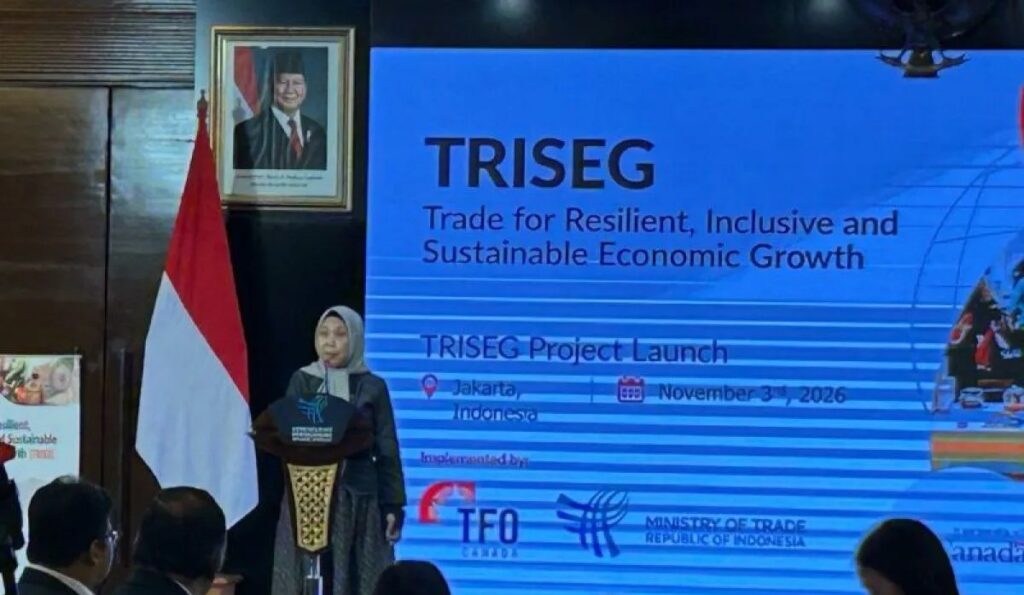
Jakarta, The Gulf Observer: Indonesia and Canada have joined hands to strengthen the export capacity of Indonesian small and medium-sized enterprises (SMEs) and expand their access to the Canadian market through the Trade for Resilient, Inclusive, and Sustainable Economic Growth (TRISEG) project.
Under the initiative, Indonesia’s Ministry of Trade is collaborating with the Trade Facilitation Office (TFO) Canada to provide technical assistance to 200 Indonesian SMEs, particularly businesses operating in the handicrafts and home furniture sectors.
Speaking at the project’s launch ceremony in Jakarta on Tuesday, November 3, Director General of National Export Development at Indonesia’s Ministry of Trade, Fajarini Puntodewi, said the programme would support local businesses through product design development, market intelligence, consumer trend forecasting and strategic pricing.
She explained that the initiative also prioritises women-led and women-owned enterprises, providing them with opportunities to enhance their competitiveness and expand their presence in international markets. However, she acknowledged that access to trade financing remained a major challenge for local exporters and was not yet covered under the programme.
Meanwhile, Director of Export Development for Manufactured Products at the ministry, Deden Muhammad Fajar Shiddiq, said the TRISEG project was a five-year initiative running until March 2030, supported by a grant of C$334,783 (approximately US$239,503) from TFO Canada.
The project aims to assist 200 SMEs, with two-thirds of the participating businesses targeted to be women-led. It also seeks to facilitate at least 20 commercial agreements and establish business connections with 20 new Canadian buyers.
Shiddiq expressed confidence that the initiative would contribute to reducing Indonesia’s trade deficit with Canada by strengthening the export performance of Indonesian businesses.
Bilateral trade between Indonesia and Canada reached US$3.51 billion during January-August 2026, representing a 15.5 per cent increase compared with the corresponding period last year. However, Indonesia recorded a trade deficit, with exports to Canada amounting to US$1.12 billion, while imports from Canada stood at US$2.39 billion.
Highlighting the potential of the handicrafts sector, Shiddiq noted that Indonesian handicraft exports to Canada increased by 21.8 per cent to US$8.41 million in 2025. The positive trend continued during the first eight months of 2026, with exports rising by 46.5 per cent year-on-year to US$8.15 million.
Despite the growth, Indonesia currently accounts for only around 1.2 per cent of Canada’s total handicraft imports, which reached US$700.7 million in 2025.
Shiddiq further noted that the anticipated entry into force of the Indonesia-Canada Comprehensive Economic Partnership Agreement (I-CA CEPA) on December 1, 2026, was expected to create broader market-access opportunities for Indonesian exporters.
The TRISEG project represents a joint effort by Indonesia and Canada to promote inclusive and sustainable economic growth, strengthen SME competitiveness, encourage women’s participation in international trade and expand bilateral commercial relations.