Vietnam Seeks High-Value Foreign Investment to Strengthen Position in Global Value Chains
Hanoi, The Gulf Observer: Vietnam is stepping up efforts to attract high-quality foreign investment in strategic technologies, research and development, and green and digital transformation as part of its ambition to move towards higher-value activities in global supply chains.
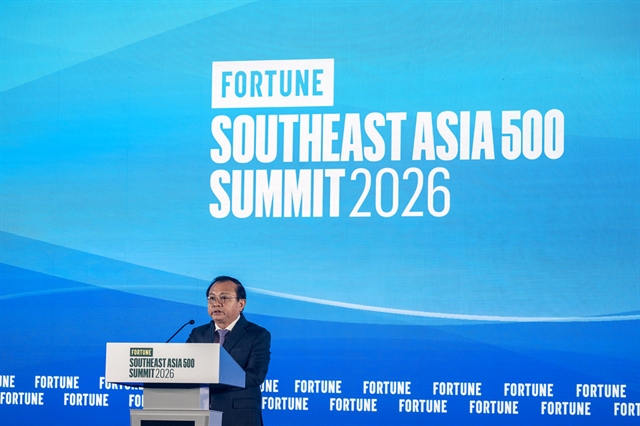
Deputy Finance Minister Lê Tấn Cận outlined the country’s investment priorities while addressing more than 250 business leaders, policymakers and investors at the inaugural Fortune Southeast Asia 500 Summit 2026, held in Ho Chi Minh City on November 3.
He said Viet Nam aimed to establish itself as a regional hub for innovation, advanced technology and international finance while pursuing double-digit annual economic growth during 2026–2030 and achieving high-income status by 2045.
Despite global economic and geopolitical uncertainties, Viet Nam had demonstrated resilience, recording GDP growth of 9.01 per cent in the first nine months of 2026, providing a strong foundation for its future economic ambitions.
The Deputy Finance Minister noted that the country continued to attract foreign direct investment, particularly in high-technology industries, semiconductors and green energy.
He emphasized that the government’s investment strategy was shifting beyond traditional manufacturing towards developing an innovation-driven ecosystem that promotes stronger cooperation between multinational corporations and domestic enterprises.
He said Viet Nam prioritised investors bringing core technologies, modern management expertise and commitments to technology transfer, green transformation and digitalisation.
Lê Tấn Cận identified five major priorities for cooperation with international investors, including joint research and development in artificial intelligence, semiconductors, biotechnology and clean energy; investment in high technology, digital infrastructure and modern logistics; stronger connections between foreign investors and domestic businesses; development of skilled human resources and knowledge ecosystems; and cooperation in establishing Viet Nam’s international financial centres.
He also reaffirmed the government’s commitment to strengthening the private sector, improving infrastructure and maintaining a stable, transparent and favourable investment environment.
Meanwhile, Nguyễn Lộc Hà, Standing Vice Chairman of the Ho Chi Minh City People’s Committee, highlighted the city’s growing economic significance following its merger with the former Bình Dương and Bà Rịa-Vũng Tàu provinces in July 2025.
With a population exceeding 14 million and contributing approximately 23.5 per cent of national GDP, Ho Chi Minh City is positioning itself as an internationally competitive centre for finance, technology, innovation and trade.
The city attracted more than US$19 billion in foreign direct investment during the first nine months of 2026, four times the amount recorded in the corresponding period last year and representing over 30 per cent of the national total.
Major investment projects included the Cần Giờ international transshipment port, valued at more than US$4.9 billion, and an artificial intelligence factory data centre project worth approximately US$2.1 billion.
Hà stressed that the city sought to strengthen cooperation between international investors and domestic enterprises in manufacturing, research and services, enabling Vietnamese businesses to expand into regional markets and enhance their competitiveness.
Priority areas include automation, artificial intelligence, energy management, workforce training, the international financial centre, free trade zones and logistics infrastructure.
Andrew Staples, Fortune’s Editorial Director for Asia and Co-Chair of the Fortune Southeast Asia 500 Summit, said Viet Nam’s rapid economic growth was among the key reasons for selecting Ho Chi Minh City to host the inaugural summit.
He noted that the region’s 500 largest companies generated combined revenues of US$1.9 trillion, representing a 3.4 per cent year-on-year increase, while Viet Nam’s 72 companies featured on the list recorded collective revenue growth of 10.5 per cent, three times the regional average.
Held under the theme “New Horizons, Enduring Growth”, the summit brought together business and industry leaders from banking, energy, manufacturing, technology, infrastructure and other major sectors to discuss Southeast Asia’s competitiveness and the emergence of regional multinational companies.
Discussions also examined artificial intelligence, energy, regional connectivity, international finance and strategies for developing globally competitive businesses.
Participants highlighted that Southeast Asia, particularly Viet Nam, was increasingly attracting investment amid the restructuring of global supply chains, with growing opportunities in electronics, semiconductors, electric vehicles, data centres and advanced manufacturing.
However, speakers stressed that attracting investment alone would not be sufficient. Countries must also strengthen domestic industrial capabilities, promote innovation, develop competitive local enterprises and ensure greater participation in higher-value segments of global supply chains.
They agreed that regional integration, automation, artificial intelligence and sustained investment in domestic capabilities would be essential for Southeast Asia to enhance its global competitiveness amid geopolitical uncertainties and changing international trade patterns.