Tajik Official Says National Clothing Aligns With Islamic Norms and Cultural Traditions

Dushanbe, The Gulf Observer: Tajik national clothing fully complies with Islamic requirements and reflects the country’s rich cultural heritage, Chair of the Committee for Women and Family Affairs under the Government of Tajikistan Bunafsha Faiziddinzoda said at a news conference on February 5.
Faiziddinzoda emphasized that Tajiks possess a distinctive and deeply rooted culture, in which national dress should hold a prominent place in society. She noted that traditional Tajik clothing meets Islamic standards and does not contradict religious requirements.
She highlighted that the committee annually conducts the “Tojikona Mepushem” (We Dress in the Tajik Way) campaign for girls and women, alongside a range of initiatives aimed at promoting and popularizing national attire.
Faiziddinzoda also announced that the country’s well-known “Sad Rangi Chakan” (Hundred Colors of Chakan) festival will this year be held in a new festival-competition format titled “Matovu Sad Rang.” The updated format is intended to promote not only chakan embroidery but also other forms of traditional clothing. According to her, the competitive approach allows tailors and designers to showcase their work, compete, and select the best designs, which are then recommended for everyday wear.
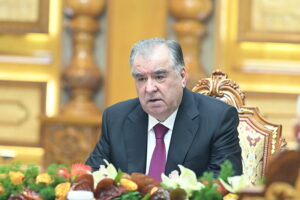
The remarks follow earlier statements by President Emomali Rahmon, who on December 16, 2025, during an address to a joint session of Parliament, reiterated concerns about citizens wearing what he described as “alien clothing.” He stressed the importance of preserving cultural traditions, particularly national dress, as an integral element of Tajik identity.
“Do not forget about the culture of clothing, about how we Tajiks dress when we visit the homes of the deceased or go visiting,” the president said, adding that the appearance of the capital reflects the image of the entire country and calling on citizens to show modesty and respect for national values.
In 2024, President Rahmon signed 35 new laws, including the Law on Regulating Traditions, Celebrations, and Rituals in the Republic of Tajikistan, which introduced new norms such as a ban on idgardak—children’s celebrations for Eid al-Fitr and Eid al-Adha—and the wearing of clothing considered alien to national culture. The legislation was proposed by the president and approved by both chambers of Parliament.
At the time, Tajikistan’s grand mufti Saidmukarram Abdulqodirzoda publicly supported the law, stating that Tajiks, like Arab nations, have their own distinctive traditional clothing and should adhere to Sharia norms while avoiding imitation of foreign cultures.