Azerbaijan’s Urban Planning Experience Highlighted in Exclusive AZERTAC Interview with Ms. Fatima Tuz Zehra
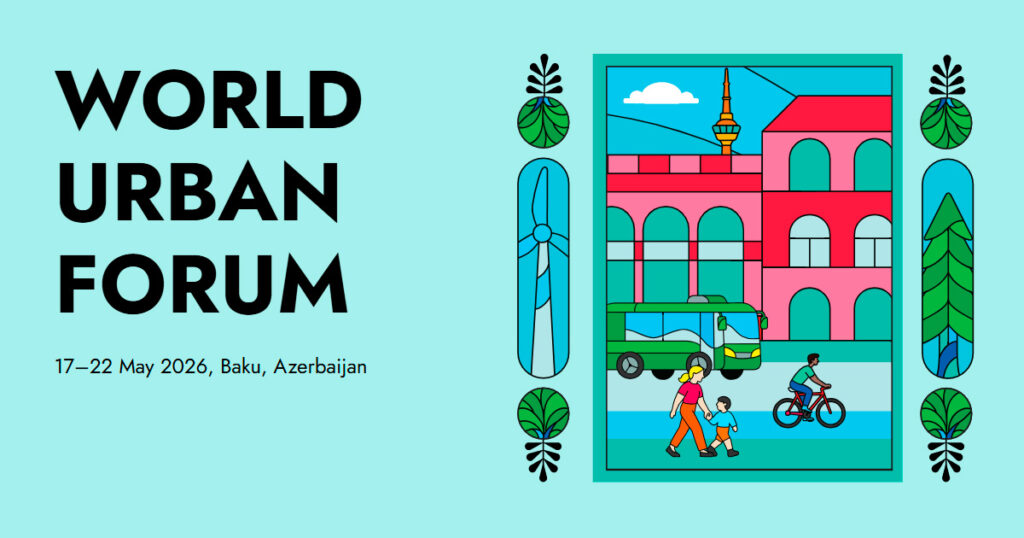
In a world where urban development is rapidly reshaping the face of the planet, the role of cities extends far beyond their geographical boundaries. Baku is set to host the 13th World Urban Forum (WUF13) — an event that not only discusses the future of sustainable cities but also creates practical tools to improve people’s lives.
For Azerbaijan, this is an opportunity to showcase its experience, open new avenues for regional cooperation, and draw attention to the challenges of small cities and vulnerable communities. The forum will serve as a platform for knowledge exchange among cities, where the experience of megacities can be adapted to the realities of smaller settlements. It also presents an opportunity to attract investment in projects aimed at safe, inclusive, and sustainable development. Finally, WUF13 will highlight the importance of a strategic approach to urban development, where innovation and the preservation of cultural heritage go hand in hand.
AZERTAC present interview with Pakistani expert, Editor-in-Chief of The Gulf Observer (an international English-language online publication featuring analytical articles, interviews, and opinions on global politics, economics, energy, and international relations — ed.) and President of The Gulf Observer Research Forum Fatima Tuz Zehra.
– What does hosting WUF13 signify for Azerbaijan’s position on the global urban development stage?
-Hosting WUF13 is truly a landmark moment for Azerbaijan. It presents the country as a modern, forward-looking state that is actively shaping the global agenda in sustainable urban development. Following the successful hosting of COP29, Azerbaijan has already demonstrated its institutional capacity and diplomatic maturity in organizing large-scale international platforms. WUF13 further reinforces this, cementing Baku’s status as a hub for global dialogue on cities, sustainability, and inclusive growth.
– How can WUF13 in Baku amplify the voice of small cities, regional authorities, and vulnerable communities?
-The uniqueness of WUF lies in its ability to provide a platform not only for global capitals but also for secondary cities. Hosting the forum in Baku creates an excellent opportunity to draw attention to the realities of small cities in Central Asia and the Caspian region. Such inclusivity is critical, as sustainable urban development cannot be achieved without considering the interests of all stakeholders—especially those who have traditionally remained outside the spotlight.
– What are your key expectations from WUF13 under the theme “Housing the world: Safe and resilient cities and communities”?
-I expect WUF13 to bring housing and urban sustainability issues to the forefront of the global development agenda. Importantly, the focus should extend beyond megacities to include smaller and more vulnerable settlements. It is also essential that the forum stimulates investment in strengthening the capacity of local authorities, enabling them to address urban challenges more effectively and create safer, more inclusive environments.
– How can Azerbaijan strengthen regional cooperation through WUF13?
-WUF13 provides Azerbaijan with an excellent opportunity to deepen cooperation with countries in Central Asia and the Caspian region. The forum can serve as a bridge, bringing nations together around shared urban challenges and solutions. Through dialogue and partnerships, Azerbaijan can further solidify its position as a regional leader in sustainable urban development.
– What role do knowledge exchange and capacity building play in achieving sustainable urban outcomes?
-They play a crucial role. Investment in infrastructure alone is not sufficient—local authorities must possess the knowledge, skills, and institutional capacity to manage urban growth effectively. WUF13 can become a powerful platform for sharing experiences between countries and fostering long-term partnerships that strengthen governance systems and urban planning practices.
– How can Azerbaijan balance modernization with the preservation of cultural heritage?
-Azerbaijan has a unique opportunity to demonstrate that development and heritage preservation can go hand in hand. Baku is a vivid example of the integration of historical identity with modern architecture. The key is to follow a thoughtful approach in which urban expansion respects cultural heritage while simultaneously incorporating innovation and sustainability principles.
– In the context of Azerbaijan–Pakistan relations, how can the two countries enhance cooperation in urban development?
-Azerbaijan and Pakistan share strong diplomatic and cultural ties, and the potential for cooperation in urban development is significant. Azerbaijan’s Ambassador to Pakistan, Khazar Farhadov, plays a positive role in advancing cooperation across various sectors—from business and culture to defense and education. Both countries can collaborate on smart city projects, housing initiatives, and sustainable infrastructure. In this context, joint platforms, knowledge exchange, and technical partnerships are particularly important.
– Are there opportunities for Azerbaijan to participate in urban development projects in Pakistan?
-Yes, such opportunities are highly promising. Azerbaijan’s experience in urban planning, infrastructure development, and post-conflict reconstruction could be extremely valuable for Pakistan. Cooperation may include the development of climate-resilient cities, modern housing solutions, and infrastructure projects, particularly in rapidly growing urban centers.