Beyond Promises: The Practical Power of the Global Development Initiative (GDI)
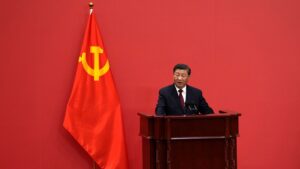
The Global Development Initiative (GDI) introduced by Chinese President Xi Jinping to the 76th United Nations general assembly in September 2021 has gained a characteristic value of modern Chinese global interaction. Having been originally perceived by numerous people as one more aspect of the spreading strategic power of the Chinese capital, the initiative has turned into a viable tool that brings quantifiable development results to the Global South. Four years since the introduction, the GDI shows the way in which development policy, when combined with strategic intent, can both influence the community at the local level and the international system.
The current global crisis is a compound situation
The instability after the pandemic, economic disparity, climate instability, and geopolitical competition are increased. In this regard, the GDI is a transformation into people-oriented and results-driven development. In contrast to the Belt and Road Initiative (BRI), which devoted a significant part to large infrastructure projects, the GDI focuses on speedy interventions rather than large-scale methods of implementation in eight priority areas: poverty reduction, food security, public health, financing development, green development, industrialization, digital economy, and connectivity. This is a direct response to the urgent demands of developing nations where most of them are in debt and need low-cost and high-impact solutions.
The 2025 Progress Report supports the fact of the level of development of the GDI The initiative has more than 100 countries now and it collaborates with various international agencies, such as the United Nations. The Group of Friends of the GDI has more than 80 countries being members, and the Global Development Promotion Center Network has the same number. This wide involvement demonstrates that China has managed to convert a political suggestion into a functional system that is embraced by the whole world.
The GDI is also serious as illustrated by financial commitments. The USD 4 billion Global Development and South South Cooperation has funded over 180 projects in more than 60 countries to reach out to over 30 million people. In the meantime, the Global Development Capital Pool has rallied another USD 14 billion. The fact that China has continued to support UN Peace and Development Trust Fund 2026-2030 is a long-term commitment. As opposed to a loan-based model of BRI, the GDI concentrates on grants, capacity building and technical assistance, which are more risk aversion and cost effective and yield quick and visible outcomes.
Analytically, the GDI is an analytically strategic and socially transformative model. It definitely makes China more influential through the establishment of networks of officials, specialists, and institutions that are trained in the Chinese-sponsored programs. But it brings tangible ground level dividends as well. This is its duality, practical development combined with strategic influence, which is the key to comprehending the increasing influence of the GDI.
The practical impact of the initiative can be observed in the eight priority areas. In farming, Ethiopia, Kenya, and Pakistan have demonstration areas where drought-resistant seeds, modern irrigation methods and practical training of the farmers are introduced. These specific measures increase productivity, stabilize the household earnings, and enhance food security. Cambodian, Sri Lankan, and Kenyan facilities have had digital diagnostics, telemedicine platforms, and training of specialists in the field of public health. With these types of improvements, the health systems of countries become stronger, more care becomes accessible, and they become more resilient to future epidemics.
The practical orientation of the GDI is also available in the renewable energy and climate aspects. Off-grid solar mini-grids in the rural African and Asian regions are now providing a dependable supply of electricity to households, schools, and small companies. The systems of early-warnings, trainings on disaster response, and climate-adaptation strategies have benefited the vulnerable coastal areas. These projects help deal with the most vulnerable aspects of climate change that are amplified and show how development can support resilience.
Another way the GDI transforms practically is in relation to digital development. Coding, e-commerce, mobile banking, and data literacy training have empowered thousands of the youth with the competencies that are fundamental to functioning in the digital economy. Governments have been helped to create e-governance portals that are modifying the way the administration is conducted in the governments, enhancing transparency, and also improving delivery of services. The interventions acknowledge that the digital infrastructure and technological capability cannot be isolated when it comes to sustainable development in the 21st century.
Nevertheless, it would be a mistake to consider the GDI as selfless. Its design empowers the soft power of China and installs the Chinese influence in the countries that use the developing methods and computer networks. Support tends to bring states to the Chinese regulatory standards, technology structures and governance. This is a strategic point which does not dismiss the developmental point of the GDI, but it shows the role played by the initiative in establishing an international environment that would be more accommodating to Chinese interests.
The critics lament that the program can create some type of dependency particularly the digital infrastructure. These fears are not exactly groundless. Nevertheless, the emphasis on grants, training and multilateral cooperation that comes along with the GDI has seen the program avoid much of the traps that come with traditional aid or massive loan ages on infrastructure. Its expedient interaction, pragmatic focus, and cooperation with UN organizations bring in additional accountability and transparency, which adds to the overcoming of doubt.
The fact that the GDI belongs to the cooperation of the South-South is also one of its strengths. Western donors, as it has always been, have controlled development aid that is normally subject to political bartering and bureaucracies. An alternative is the GDI that is a more flexible and ideologically less restrictive one. The initiative grants agency to those countries which desire to determine their own development priorities and this is hence highly attractive to local institutions and communities to spearhead their own development agenda.
The general significance of the GDI is in the fact that it demonstrates that effective development requires not only high declarations. It entails action, flexibility and collaboration. The project proves that it is possible to mediate a considerable change with the assistance of specific measures that will be necessary to address the immediate needs, enable the development of the long-term capacity, and rely on the international cooperation. It confirms that development can be both the local and the strategic on the global level.
The GDI illustrates how some ongoing development project can be a strategic objective and actual development benefits. China has created a field which is in its geopolitical interests and it also has a benefit to bring practical benefits to millions of people like farmers who can benefit with better modes of agriculture and health men and women who can experience the benefits of telemedicine and other benefits. Its success demonstrates that the development, when being prioritized to human concerns, will empower the communities simultaneously changing the international networks.
Conclusion
Lastly, Global Development Initiative is not just on promise but it is reality now. It has marshaled huge resources, capacity, institutional fortification, and practicality aid where it is most needed. A blend of tangible deliverables, multilateral cooperation and its strategic effect is suggestive of a fresh form of development diplomacy a kind that appreciates the fact that the actual strength lies not in proclamation, but in delivery of quantifiable difference. The GDP is a fascinating prompt that development is intended best to be responsive, operational and in killing with the day to day demands of the people to whom it is meant to be working on pressing issues.