Brotherhood Beyond Borders: Azertac’s Head of Society Reflects on the Strengthening Pakistan–Azerbaijan Partnership
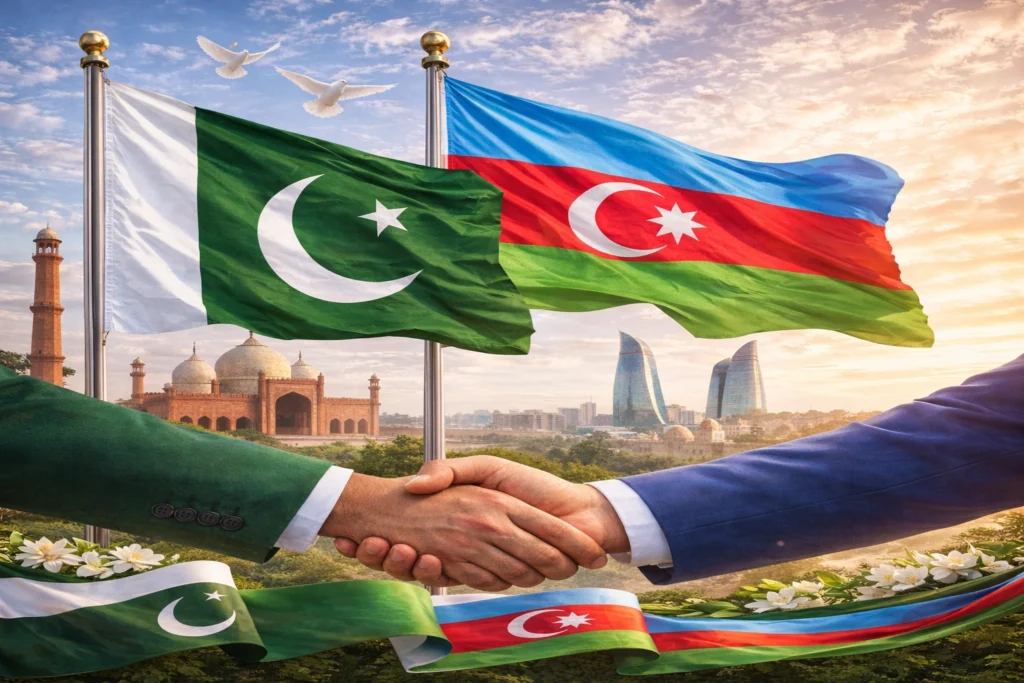
Pakistan and Azerbaijan enjoy a time-tested and deeply rooted relationship founded on mutual trust, shared cultural affinities, and unwavering diplomatic support on core national interests. Since the establishment of diplomatic ties in 1992, both countries have consistently strengthened cooperation across political, economic, defense, and people-to-people domains. Their partnership is characterized not only by strong governmental engagement but also by a profound sense of brotherhood reflected in reciprocal support at international forums. As bilateral trade, defense collaboration, connectivity initiatives, and media cooperation continue to expand, Pakistan–Azerbaijan relations stand as a model of strategic friendship built on shared values, regional stability, and a common vision for progress.
In this context, The Gulf Observer is to present an exclusive interview with Ms. Tamilla Mammadova, a distinguished journalist and Head of Society at Azerbaijan’s State Media Agency, Azertac. With her extensive experience in public affairs reporting and social development coverage, Ms. Mammadova offers valuable insights into Azerbaijan’s evolving media landscape, societal priorities, and the growing role of journalism in strengthening international understanding — including the enduring partnership between Azerbaijan and Pakistan.
What are the most promising sectors for expanding bilateral trade and investment between Pakistan and Azerbaijan (e.g., energy, infrastructure, IT, agriculture)?
-Economic cooperation between Pakistan and Azerbaijan is experiencing a qualitative upswing, noticeably shifting from purely diplomatic declarations to a tangible, substantive agenda. Several sectors stand out in this dynamic as having particularly high growth potential.
First, energy and energy infrastructure. Azerbaijan is interested in participating in Pakistani oil and gas projects, including infrastructure initiatives like Machike-Thallian-Taru Jabba White Oil Pipeline (MTT-WOP), while Pakistan is considering importing Azerbaijani energy resources and involving SOCAR in its own projects. This mutual interest is driven not only by commercial but also geopolitical factors, energy security and supply diversification remain key objectives for both economies.
Second, agriculture and agro-industrial complex. Pakistan has traditionally been strong in the production of agricultural commodities—rice, cotton, fruits, and textile raw materials form the basis of its export potential. Azerbaijan, for its part, is interested in developing dairy farming and agricultural technology services. Joint research, the exchange of seeds and processing technologies, and expanded trade in agricultural products could play a significant role in diversifying both countries’ export baskets and strengthening food security.
Third, infrastructure and transport and logistics corridors. Pakistan’s foothold in Central Asia and proximity to the region’s markets create a natural incentive to expand transport links. Strengthening participation in transport corridors, including initiatives for the Trans-Caspian International Transport Route, could create sustainable logistics platforms that improve access to European, Central Asian, and Middle Eastern markets. This surpasses traditional trade, creating real competitive advantages.
Fourth, defense industry. This area has gone beyond formal declarations. The parties have intensified joint arms production projects, including cooperation in ammunition and defense components.
Fifth, IT and digital technologies. Discussions on cooperation in the digital economy, artificial intelligence, payment systems, and fintech infrastructure are opening new horizons for mutual investment and knowledge exchange. Pakistan, which is promoting the concept of Digital Pakistan, and Azerbaijan, which is striving to accelerate digital transformation in the economy and public administration, see overlapping interests in this context.
How can improved connectivity, including transit routes and regional economic corridors, enhance economic cooperation between the two countries?
-Improving transport accessibility between Azerbaijan and Pakistan through transit routes and regional economic corridors opens up new opportunities for bilateral economic cooperation. The Trans-Caspian International Transport Route (Middle Corridor) reduces cargo delivery time from China to Baku to 8-10 days, and in 2024, over 3.3 million tons of cargo were transported through the corridor, with container traffic nearly doubling compared to the previous year.
These improvements reduce logistics costs, expedite trade, and create more efficient supply chains for goods from the energy, agricultural, and industrial sectors. Furthermore, developed transport corridors provide access to markets in Central Asia, Europe, and the Middle East, stimulating investment in logistics, infrastructure, and related industries.
As a result, transport infrastructure is becoming a key factor in economic integration, not only increasing trade but also strengthening the strategic partnership between Azerbaijan and Pakistan, creating a platform for sustainable growth in the long term.
How have cultural exchanges, academic collaborations, and people-to-people contacts strengthened mutual understanding between Pakistan and Azerbaijan?
-Cultural exchange, academic cooperation, and people-to-people contacts have played a key role in strengthening mutual understanding between Pakistan and Azerbaijan. Regular cultural events, exhibitions, and festivals allow both sides to learn about each other’s history, traditions, and art, building a solid foundation of trust.
In the educational sphere, joint programs, student exchanges, and academic conferences facilitate the exchange of experiences, the development of skills, and the formation of professional ties that strengthen long-term cooperation.
Furthermore, active contacts between citizens through business forums, tourism, and public initiatives create a direct channel of communication, facilitating a better understanding of the economic and social interests of both countries. Taken together, these measures form a system of “soft power” that supports diplomatic and economic interaction on a sustainable basis.
How has defense cooperation, including joint military exercises and defense production collaboration, contributed to regional security and strategic alignment?
Defense cooperation between Azerbaijan and Pakistan is moving beyond declarations to concrete actions, strengthening bilateral ties, regional security, and strategic alignment. A key element was the contract for the supply of JF-17 Block III fighter jets: Pakistan committed to delivering up to 40 aircraft by 2025, including pilot and technician training, as well as participation in joint projects, marking a significant step in the modernization of the Azerbaijani Armed Forces.
In addition to deliveries, the countries actively conduct joint military exercises and training, including the bilateral Indus Shield Alpha air maneuvers, as well as regular trilateral exercises with Turkey. This enhances the interoperability of armed forces, professional training, and technological exchange.
Taking together, such initiatives strengthen trust between the militaries, create a platform for strategic alignment, and transform defense cooperation into a factor supporting regional stability and shared security interests.
What initiatives can further promote tourism cooperation, including religious, historical, and heritage tourism between the two countries?
A number of specific initiatives could further promote tourism between Azerbaijan and Pakistan. First and foremost, this includes organizing joint cultural, historical, and religious routes—pilgrimages to spiritual centers, tours of architectural monuments, and cultural sites. Azerbaijan is already actively promoting its cultural heritage sites and routes for tourists from Pakistan, attracting tour operators and creating a practical basis for joint programs.
Developing infrastructure and transportation accessibility remains an important area. Direct flights from Islamabad, Lahore, and Karachi to Baku make travel more convenient, and the number of Pakistani tourists in Azerbaijan is growing, according to official data, the number of Pakistani citizens visiting Azerbaijan in 2024 was 80,924, an increase of approximately 47% compared to 2023. In the first seven months of 2025, approximately 46,000 Pakistani tourists visited Azerbaijan, exceeding the same period last year.
Furthermore, hosting festivals, exhibitions, gastronomic and musical events, as well as promoting tourism through digital platforms and social media, increases awareness of countries’ cultural brands and stimulates interest in joint travel.
How can universities and cultural institutions enhance collaboration through scholarships, joint research programs, and language learning initiatives?
Universities and cultural institutions in Azerbaijan and Pakistan are already laying a practical foundation for expanding cooperation through scholarships, joint research programs, and language learning initiatives. Specifically, the Heydar Aliyev International Education Grant program provides fully funded scholarships for undergraduate, graduate, and PhD students, including Pakistani citizens, including preparatory language courses. This allows Pakistani students to study Azerbaijani culture, history, and language, as well as participate in the country’s academic life.
Furthermore, Azerbaijani universities, such as the Azerbaijan Technical University (AzTU) and the Azerbaijan University of Languages, are negotiating and signing memorandums with Pakistani universities, including the University of Lahore and the National University of Modern Languages. These agreements cover joint research, faculty and student exchanges, participation in international conferences, and publications. Exchange programs are already underway, with students from Pakistan studying in Baku, gaining intercultural experience and professional training.
Language learning initiatives (Azerbaijani courses in Pakistani universities and Urdu courses in Azerbaijani institutions) further develop cultural and professional competencies, facilitating communication and strengthening long-term interpersonal ties. Together, these measures create a platform for sustainable academic and cultural exchange, building trust and mutual understanding between countries.
What role can chambers of commerce, business forums, and SMEs play in strengthening Pakistan–Azerbaijan commercial partnerships?
-If we look at the Pakistan-Azerbaijan commercial partnership from a practical business perspective, it is chambers of commerce, business forums, and small and medium-sized enterprises (SMEs) that can become the driving force that propels relations into a truly economic arena. According to official data for January–September 2025, total trade turnover between Azerbaijan and Pakistan reached approximately $20.7 million, a 38.7% increase compared to the same period in 2024.
A key institutional step was the establishment of the joint Pakistan-Azerbaijan Chamber of Commerce and Industry in 2025, which formalized business dialogue and provided businesses with a permanent channel for finding partners, supporting transactions, and promoting investments.
Business forums complement this work by serving as platforms for direct B2B contacts. In recent years, such events in Baku and Islamabad have led to the signing of specific agreements in digital trade, logistics, and services, including the launch of joint online platforms and pilot investment projects. This demonstrates that the forums serve a practical rather than a ceremonial function—they bridge the gap between companies and accelerate decision-making.
Small and medium-sized enterprises, which already form the backbone of both countries’ economies, play a special role. Together, these mechanisms form a practical infrastructure for economic cooperation, where trade and investment growth is based not on one-off initiatives, but on ongoing interaction between the business communities of the two countries.
How can media organizations from Pakistan and Azerbaijan collaborate to promote balanced narratives and enhance public awareness about bilateral relations?
Media organizations in Pakistan and Azerbaijan can build cooperation in several practicalareas. First and foremost, through direct agreements between news agencies and television channels: sharing news content, joint special projects, and publishing materials based on primary sources rather than third-party interpretations. This reduces the risk of one-sided reporting and enhances credibility.
Secondly, through journalist exchange programs, media visits, and joint forums. Working “on the ground” allows for a deeper understanding of the political, economic, and cultural context, which contributes to the formation of more balanced narratives.
Thirdly, through co-production of analytical, documentary, and digital projects: interviews with experts, businesses, and academics. Joint online formats and multilingual platforms are particularly promising.
Cooperation between media organizations in Pakistan and Azerbaijan already has a concrete institutional basis. In July 2024, state-run news agencies Associated Press of Pakistan (APP) and AZERTAC signed a memorandum of cooperation, providing for regular exchange of news, photos, and videos, as well as professional contacts between editorial offices. This created a formal mechanism for direct information exchange without intermediaries.
In what ways can digital platforms and social media be utilized to foster stronger public engagement and counter misinformation?
Digital platforms and social media can become a direct and understandable bridge between experts, institutions, and the public if used correctly.
First, they make it possible to explain complex topics in simple terms—through short videos, visual infographics, and live formats like live broadcasts and Q&As. People want to understand what’s happening and why, not just receive information. Second, social media makes it possible to quickly respond to fake news. When false information appears, prompt clarification with facts and figures helps stop its spread before it becomes the “conventional version.” Third, digital platforms allow us to communicate with different audiences in different ways—with young people, professionals, or regional communities—considering their interests and perceptions.
And most importantly, by not remaining silent but regularly and openly explaining sensitive issues in advance, social media becomes a tool for trust and dialogue with society, rather than a source of disinformation.
What future steps can Pakistan and Azerbaijan take to further enhance strategic defense ties and contribute to regional peace and stability?
Pakistan and Azerbaijan can further strengthen their strategic defense cooperation by expanding joint exercises, deepening cooperation in defense technology, and intensifying the exchange of experience and training for military personnel. Building on existing projects, such as the JF-17 fighter program and bilateral air and ground exercises, the countries can establish regular multi-layered maneuvers that enhance interoperability and operational readiness.
An important step could also be the joint development and production of weapons, including technology localization and equipment modernization, which would create long-term industrial and technological ties between the countries.
Finally, institutionalizing defense dialogues and strategic planning will allow Azerbaijan and Pakistan to coordinate their positions on regional security issues, improve joint crisis responses, and promote stability in the South Caucasus and neighboring regions. Taken together, such measures will transform the bilateral defense partnership into an active factor in maintaining peace and security in the region.