CASS Lahore Hosts Roundtable on Peaceful Uses of Nuclear Technology

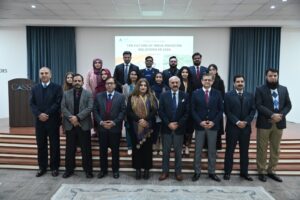
Lahore, The Gulf Observer: The Centre for Aerospace and Security Studies (CASS) Lahore organized a roundtable discussion titled “Peaceful Uses of Nuclear Technology”, bringing together a wide range of academics, students, intellectuals, and domain experts.
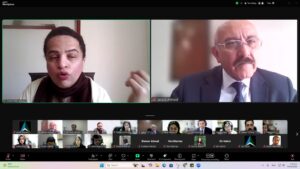
The keynote speaker, Dr. Ansar Pervaiz, Advisor to the National Command Authority, emphasized that resistance to nuclear energy is rooted not in its inherent dangers but in a persistent communication gap. He clarified misconceptions regarding radiation risks, noting that they are scientifically manageable. Highlighting the tangible benefits of nuclear technology, he underlined its vital contributions in fields such as medical treatment and agriculture. He praised the Pakistan Atomic Energy Commission (PAEC) for leading advancements in the peaceful application of nuclear science.
Discussing the broader framework of global nuclear governance, Dr. Pervaiz reaffirmed Pakistan’s constructive role in international dialogue and explained the country’s position on treaties such as the Comprehensive Nuclear-Test-Ban Treaty (CTBT) and the Nuclear Non-Proliferation Treaty (NPT). He stressed that Pakistan continues to advocate for an equitable, non-discriminatory regime that protects its legitimate security interests while allowing the peaceful use of nuclear technology for national development.
In his concluding remarks, Air Marshal Asim Suleiman (Retd), President CASS Lahore, urged that nuclear science must be viewed not only as a tool of deterrence but also as a force for human progress. He underscored its transformative role in health, agriculture, industry, clean energy, and sustainable development. Calling for greater emphasis on knowledge, innovation, and responsible governance, he encouraged broadening the national conversation on the peaceful uses of nuclear technology to harness its socio-economic potential for future generations.
The interactive session that followed allowed participants to delve into the physics and mechanics of nuclear technology, its peaceful applications, and the framework of nuclear safeguards, with particular focus on global obligations and compliance mechanisms.