Indonesia Enacts New Criminal Codes, Ending Century-Old Colonial-Era Laws
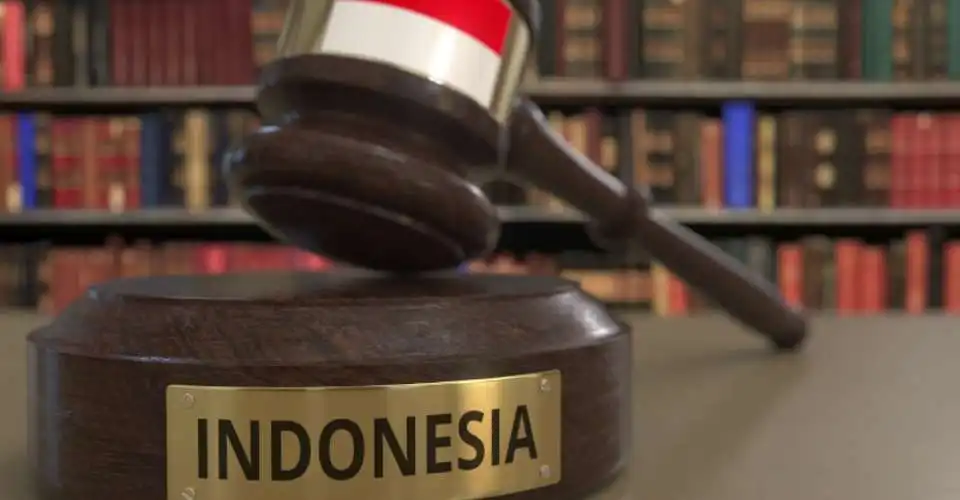
Jakarta, The Gulf Observer: Indonesia has officially enacted its new National Criminal Code (KUHP) and Criminal Procedure Code (KUHAP), marking a historic end to colonial-era laws that governed the country’s justice system for more than a century.
Coordinating Minister for Legal, Human Rights, Immigration, and Corrections Yusril Ihza Mahendra described the enactment as a major milestone in Indonesia’s legal reform.
“This moment opens a new chapter for law enforcement that is modern, humane, just, and rooted in Pancasila and Indonesian cultural values,” Mahendra said on Friday.
The KUHP, enacted under Law No. 1 of 2023, and the KUHAP, established through Law No. 13 of 2024, represent the culmination of decades-long reform efforts that began in 1998. The previous criminal code was based on the Wetboek van Strafrecht voor Nederlandsch-Indie, introduced in 1918 during Dutch colonial rule, while the old criminal procedure code dated back to the New Order era under Law No. 8 of 1981.
Both former legal frameworks had faced criticism for being repressive, overly reliant on imprisonment, and inconsistent with modern human rights standards following constitutional amendments.
The newly enacted KUHP introduces a fundamental shift from a retributive justice model to a restorative approach, emphasizing rehabilitation and reconciliation. It provides for alternative punishments such as community service, mediation, and medical or social rehabilitation for narcotics users, measures aimed at reducing prison overcrowding.
Several sensitive offenses, including extramarital relations, have been reclassified as complaint-based offenses, thereby limiting state intervention in private matters.
Meanwhile, the new KUHAP strengthens investigative, prosecutorial, and judicial procedures. It enhances transparency, expands protections for victims and witnesses, broadens restitution mechanisms, and incorporates digital systems to improve procedural efficiency.
To facilitate implementation, the government has prepared 25 implementing regulations. Cases filed before January 2, 2026, will continue to be processed under the previous legal codes, while new cases will fall under the updated KUHP and KUHAP.
“This is the beginning of continuous evaluation,” Mahendra said, inviting civil society to provide feedback. “Our goal is a criminal justice system that is fair, humane, and sovereign.”