Islamabad Talks: A Move Towards Global Peace
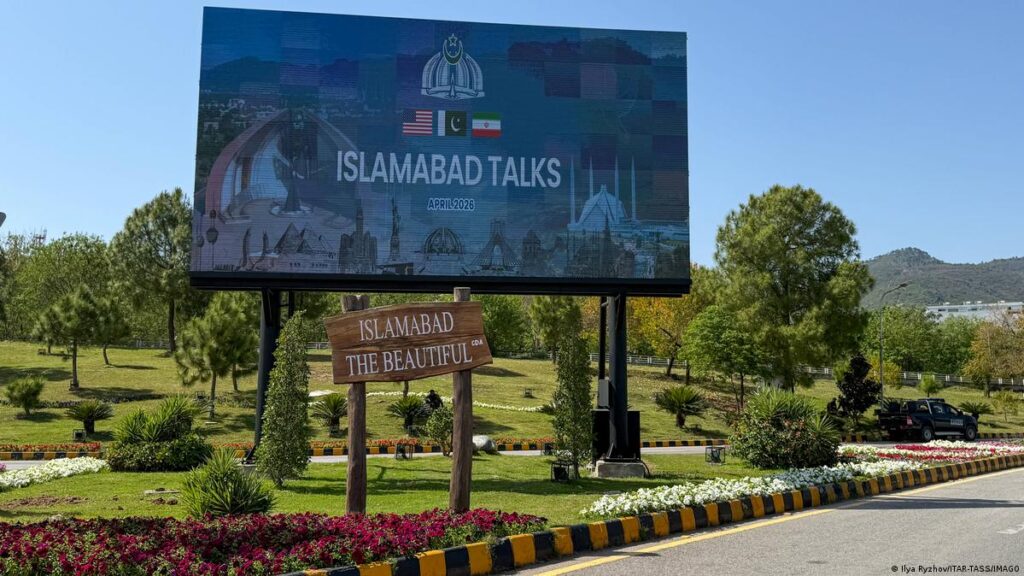

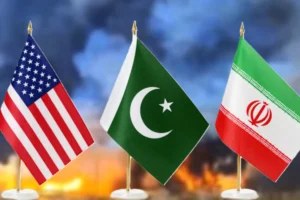
The recent peace negotiations between the United States and Iran in Islamabad have been widely framed as a decisive step toward global peace and stability. Diplomatic language is filled with optimism. Policymakers speak of de escalation, cooperation, and mutual understanding. Yet beneath this carefully constructed narrative lies a deeper and more complex reality. These talks are not simply about ending conflict. They are about managing it within a global system where war and peace are not opposites, but deeply interconnected processes.
At the heart of the Islamabad negotiations are competing proposals that reflect divergent strategic interests. Iran has put forward a framework centered on sanctions relief, access to frozen financial assets, and greater control over its economic sovereignty, particularly in relation to energy routes. The United States, in contrast, has emphasized limitations on nuclear capabilities, restrictions on regional military influence, and guarantees regarding the security of global trade routes such as the Strait of Hormuz. These proposals are often presented as pathways to peace, yet they are better understood as competing visions of order, each rooted in the desire to secure power and influence. This reveals a fundamental truth about the nature of peace in the contemporary world. War and peace exist on a continuum. War represents the overt and violent expression of geopolitical and economic competition. Peace, on the other hand, is the diplomatic management of that same competition. The Islamabad talks illustrate how conflict does not end with negotiation. It is reorganized, reframed, and absorbed into new forms of engagement. The battlefield shifts from military confrontation to diplomatic bargaining, but the underlying struggle remains.
The tensions between the United States and Iran did not emerge in isolation. They are embedded in a broader political economy shaped by control over resources, access to markets, and the regulation of global financial systems. The disruption of oil flows and trade routes during the conflict created instability that reverberated far beyond the immediate region. Rising energy prices affected developing economies, while uncertainty in global markets heightened economic insecurity. In this context, peace becomes a necessity for the system to function. Stability is required not as an ethical imperative, but as an economic one.
Yet the stability produced through such negotiations is inherently uneven. The United States enters the talks with significant leverage, backed by economic power, military alliances, and influence over global institutions. Iran negotiates within constraints shaped by sanctions and geopolitical isolation. This asymmetry shapes both the process and the outcome of the talks. While the language of diplomacy emphasizes mutual respect and cooperation, the reality is one of unequal bargaining power.
This inequality is further reinforced through the way peace is represented and understood. In a neoliberal context, peace is framed as a technical solution to a strategic problem. It is presented as the outcome of rational negotiation, expert knowledge, and policy design. This framing discourages critical engagement. It reduces complex political struggles to manageable issues of governance. Citizens are positioned as passive observers, expected to accept the outcomes rather than question the structures that produce them.
The Islamabad talks exemplify this dynamic. They take place in controlled environments, removed from public participation, where decisions are made by a limited group of actors. The voices of those most affected by conflict are largely absent. Ordinary people in Iran, who have endured the consequences of sanctions and economic hardship, are not present at the negotiating table. Nor are the communities across the region whose lives have been shaped by instability and violence. These are the subaltern voices, marginalized within both war and peace.
Their exclusion raises a critical question. Can peace be meaningful if it does not include those who bear the cost of conflict. The answer depends on how peace is defined. If peace is understood narrowly as the absence of direct military confrontation, then the Islamabad talks may indeed represent progress. They can reduce immediate tensions, reopen channels of communication, and create conditions for economic recovery.
However, if peace is understood more broadly as a condition of justice, dignity, and equality, then the limitations of these negotiations become clear. The structural inequalities that underlie the conflict remain intact. Economic disparities persist. Power continues to be concentrated in the hands of a few. The benefits of stability are distributed unevenly, often favoring those who are already privileged.
This does not mean that the talks are without value. De escalation matters. Dialogue matters. Preventing further loss of life is a significant achievement. But it is important to recognize that such outcomes are only partial. They address the symptoms of conflict without confronting its root causes. They create a temporary equilibrium rather than a lasting transformation.
The broader question is whether such peace initiatives can genuinely contribute to global peace and prosperity. On one level, they can. By reducing tensions between major actors, they lower the risk of wider conflict. They help stabilize markets and provide a degree of predictability in an uncertain world. These are important contributions, particularly in a global system that is highly interconnected.
On another level, however, their impact is limited. Without changes in the distribution of power and resources, the conditions that give rise to conflict will continue to exist. Peace will remain fragile, contingent on shifting interests and strategic calculations. Human dignity will remain unevenly realized, dependent on one’s position within the global hierarchy. The Islamabad negotiations thus reflect both the possibilities and the contradictions of peace in the contemporary world. They demonstrate the capacity for dialogue even in moments of tension. At the same time, they reveal the constraints imposed by a system that prioritizes stability over justice. They show how peace can be both necessary and insufficient.
Ultimately, the significance of these talks lies not only in their immediate outcomes, but in what they reveal about the nature of global politics. Peace is not a neutral or purely benevolent process. It is shaped by power, interests, and ideology. It is both a goal and a strategy. It can alleviate suffering, but it can also reproduce inequality.
The challenge, then, is to move beyond a narrow understanding of peace as mere stability. It is to imagine a form of peace that addresses the structural conditions of conflict. A peace that includes the voices of those who are most affected. A peace that is grounded not only in diplomacy, but in justice. Whether the Islamabad talks can move in that direction remains uncertain. For now, they stand as a reminder that in a world defined by competition and inequality, peace is always a contested and incomplete project.