Kazakhstan Outlines Priorities as It Assumes EAEU Chairmanship from 2026
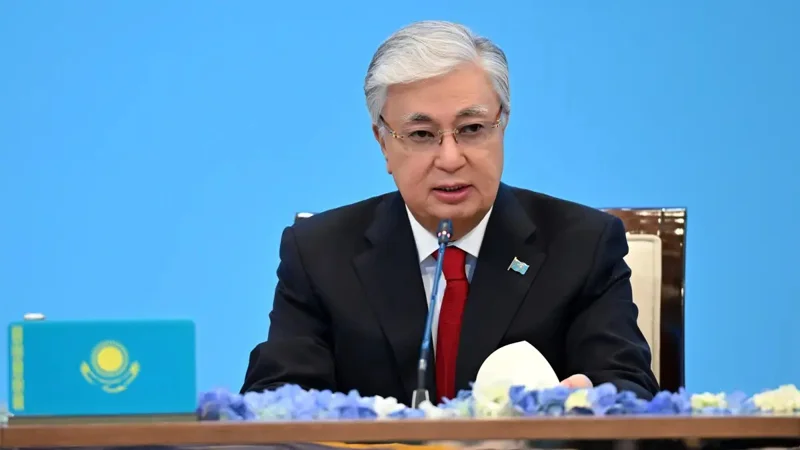
Astana, The Gulf Observer: President of Kazakhstan Kassym-Jomart Tokayev has addressed the Heads of State of the Eurasian Economic Union (EAEU) as Kazakhstan prepares to assume the chairmanship of the organization from January 1, 2026, according to the Akorda press service.
The Kazakh president noted that the previous year marked a milestone for the EAEU as the union entered its second decade of development. Despite ongoing global economic and geopolitical challenges, he said EAEU member states have continued to demonstrate positive economic performance and resilience.
Tokayev emphasized that the key objective for the coming period is to strengthen the efficiency of integration, enhance the union’s economic potential, and increase its relevance in the evolving global environment.
Beginning in 2026, the EAEU will implement the Declaration on the Further Development of Economic Processes until 2030 and the Eurasian Economic Path until 2045. Tokayev stated that Kazakhstan intends to give priority attention to these strategic documents during its chairmanship.
Outlining Kazakhstan’s proposed agenda, the president identified several priority areas for advancing the EAEU’s goals.
Artificial Intelligence as a Driver of Economic Integration
Tokayev highlighted artificial intelligence as a new tool for deepening economic integration, noting that global investments in AI have exceeded one trillion dollars in recent years and that its contribution to the global economy could reach ten trillion dollars in the coming decades.
He said Kazakhstan has set a strategic goal of becoming a fully digital country, pointing to initiatives such as the Alem.ai Center in Astana and the pilot CryptoCity zone in Alatau as evidence of the country’s readiness to develop a digital ecosystem.
The president stressed Kazakhstan’s openness to sharing knowledge and experience with EAEU partners in artificial intelligence, digital regulation, and economic transformation. He proposed signing a Joint Statement on the responsible development of artificial intelligence within the EAEU on the sidelines of the Eurasian Economic Forum scheduled for 2026 in Astana.
“This document is intended to define a new vector of cooperation in the digital transformation of our economies,” Tokayev said.
EAEU as a Geopolitical and Logistics Bridge
Tokayev described the EAEU as a geopolitical bridge linking East and West, as well as North and South, noting that major transit routes pass through the territories of member states. He called for coordinated efforts to transform the union into a leading continental logistics hub.
He outlined priority measures, including the modernization of transport, logistics, and customs infrastructure, the development of international transport corridors and multimodal shipping, and stronger cooperation between EAEU logistics companies and partners from third countries.
The president emphasized that the introduction of intelligent systems and big data would enable “seamless logistics,” allowing cargo to move efficiently across borders. He cited Kazakhstan’s Smart Cargo pilot project, which digitizes documentation and integrates with partner systems within the EAEU, as an example.
Tokayev also proposed creating an integrated AI-based cargo management system across the union to reduce delivery times, lower costs, and enhance the competitiveness of Eurasian transport corridors.
Technological Modernization of Industry and Agriculture
Highlighting industry and the agro-industrial complex as the economic foundation of EAEU member states, Tokayev stressed the need to expand cooperation in producing globally competitive goods.
He noted that financing mechanisms already exist within the EAEU to support cooperative projects in industry and agriculture and urged directing resources toward breakthrough and innovative initiatives.
The president underlined the importance of encouraging enterprises and farms to adopt digital solutions and artificial intelligence, proposing the establishment of demonstration centers, support for automation startups, and the creation of competence centers, with active backing from the Eurasian Economic Commission.
Commitment to Barrier-Free Trade
Tokayev reaffirmed that barrier-free trade must remain an unconditional principle of the EAEU’s work, calling for the elimination of administrative obstacles.
“All artificial restrictions hindering trade, bans on the movement of citizens, and queues of freight transport at borders should become a thing of the past,” he said.
He stressed that customs regulation and other forms of state control, including sanitary, veterinary, and phytosanitary measures, must not be used as instruments of pressure among member states. He also emphasized strict adherence to commitments already adopted to ensure a barrier-free environment, noting that oversight remains the responsibility of the Eurasian Economic Commission.
To detect potential barriers at an early stage, Tokayev proposed using artificial intelligence technologies to monitor legislative initiatives within member states.
Expanding Global Trade Partnerships
The Kazakh president also called for expanding the EAEU’s economic cooperation with external partners. He recalled the signing of free trade agreements with Mongolia and Indonesia, as well as the Economic Partnership Agreement with the United Arab Emirates in 2025.
Looking ahead, Tokayev said it would be advisable to broaden the EAEU’s engagement with countries of the Global South, the Arab world, Southeast Asia, Africa, and relevant regional organizations.