Leaders of Turkic States Convene in Gabala for the 12th Summit of the Organization of Turkic States
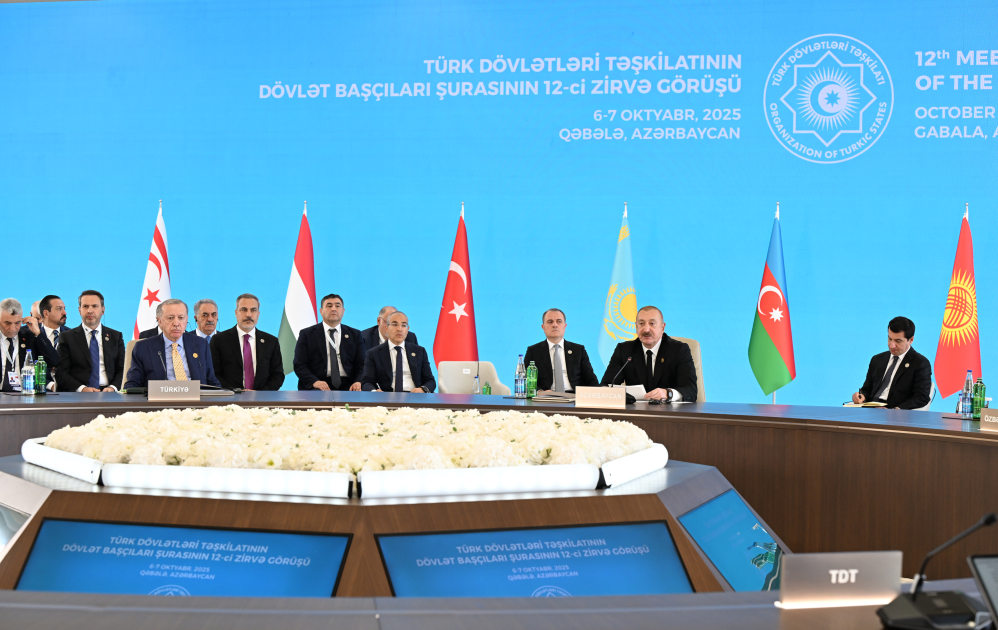
Gabala, The Gulf Observer: The 12th Summit of the Council of Heads of State of the Organization of Turkic States (OTS) was held in Gabala, Azerbaijan, bringing together the leaders of Turkic nations to discuss regional peace, economic cooperation, and strategic integration among member states.
The summit was attended by President of Azerbaijan Ilham Aliyev, President of Türkiye Recep Tayyip Erdoğan, President of Uzbekistan Shavkat Mirziyoyev, President of Kyrgyzstan Sadyr Zhaparov, President of Kazakhstan Kassym-Jomart Tokayev, Prime Minister of Hungary Viktor Orbán, Chairman of the Halk Maslahaty of Turkmenistan Gurbanguly Berdimuhamedov, President of the Turkish Republic of Northern Cyprus Ersin Tatar, and Secretary General of the OTS Kubanychbek Omuraliev.
President Ilham Aliyev welcomed the heads of state and government, following which a group photograph was taken. The Azerbaijani President then opened the summit with a keynote address.
President Aliyev’s Address: Peace, Unity, and Development
In his speech, President Aliyev highlighted the transformation of the Organization of Turkic States into an influential geopolitical platform built on shared historical, cultural, and linguistic ties. He expressed gratitude to Kyrgyzstan for its successful chairmanship and reaffirmed Azerbaijan’s commitment to strengthening the organization’s work, noting that his country contributed US$2 million to support the OTS Secretariat.
Aliyev emphasized that political stability, strong demographics, rich natural resources, and growing defense capabilities make the Turkic world a significant global actor. Stressing the importance of peace and security as the foundation of progress, he proposed that joint military exercises for OTS member states be held in Azerbaijan in 2026 to bolster defense cooperation.
The Azerbaijani leader also underlined his country’s role in restoring peace and sovereignty following the 44-day Patriotic War in 2020 and the 2023 counter-terrorism operations, noting that the peace agreement initialed between Azerbaijan and Armenia in Washington marked a historic step toward turning the South Caucasus into a region of stability.
Aliyev detailed Azerbaijan’s expanding role as a transport and energy hub, highlighting the rapid growth of the Middle Corridor, the Zangezur Corridor, and the nation’s diversified oil, gas, and renewable energy networks. He announced that Azerbaijan currently exports natural gas to 14 countries and plans to derive 40% of its energy from renewables by 2030.
The President proposed that the 100th anniversary of the First Turkological Congress (1926) be celebrated next year under the auspices of the OTS, underscoring the enduring unity of Turkic peoples. He also expressed deep appreciation to the brotherly countries for their contributions to rebuilding Garabagh and Eastern Zangezur, mentioning educational and cultural projects sponsored by Uzbekistan, Kazakhstan, Kyrgyzstan, Hungary, Turkmenistan, and Türkiye.
Addresses by Heads of State
President Sadyr Zhaparov of Kyrgyzstan commended Azerbaijan’s organization of the summit and highlighted the progress of the OTS since the signing of the Nakhchivan Agreement. He welcomed the peace process between Azerbaijan and Armenia, calling it a demonstration of political will and a pathway to lasting stability in the South Caucasus.
President Kassym-Jomart Tokayev of Kazakhstan congratulated Azerbaijan for hosting the summit and lauded the peace declaration between Baku and Yerevan as a “historic milestone.” He stressed the importance of unity among Turkic nations and praised ongoing collaboration on the Green Energy Corridor linking Kazakhstan, Azerbaijan, and Uzbekistan.
President Recep Tayyip Erdoğan of Türkiye called for preserving the shared cultural heritage of the Turkic peoples while advancing cooperation in emerging technologies, including the development of artificial intelligence language models. He described the Gabala Declaration—to be signed at the summit—as a step toward deepening solidarity and brotherhood among Turkic nations.
President Shavkat Mirziyoyev of Uzbekistan emphasized the value of enhancing economic, trade, and transport cooperation within the Turkic world. He praised Azerbaijan’s reconstruction of Karabakh and expressed hope that the peace declaration with Armenia would open new opportunities for regional collaboration.
Chairman Gurbanguly Berdimuhamedov of Turkmenistan underscored the importance of promoting stability, friendship, and solidarity among Turkic states amid global challenges.
Prime Minister Viktor Orbán of Hungary reaffirmed his country’s partnership with Azerbaijan, commending Baku’s renewable energy initiatives and referring to Central Asia as the “golden reserve” of the European Union.
President Ersin Tatar of the Turkish Republic of Northern Cyprus expressed gratitude to Azerbaijan for its hospitality, calling the summit’s timing—on the fifth anniversary of Azerbaijan’s Karabakh Victory—“highly symbolic.” He described the victory as a shared achievement of the Turkic world and reaffirmed the TRNC’s continued solidarity with Azerbaijan.
Secretary General Kubanychbek Omuraliev highlighted the historic symbolism of holding the summit in Gabala following the peace declaration between Azerbaijan and Armenia. He emphasized the strategic significance of the Zangezur Corridor and announced the establishment of the Union of Turkic Universities Secretariat, financed in part by Azerbaijan’s contribution.
Gabala Declaration and Conclusion
Concluding the event, President Aliyev thanked all participants for their contributions and reaffirmed Azerbaijan’s commitment to deepening cooperation within the OTS framework.
The Gabala Declaration—adopted at the summit—outlined key decisions aimed at enhancing unity, economic integration, and peace among Turkic nations.
Following the official proceedings, President Aliyev invited the attending leaders to the groundbreaking ceremony of a new mosque in Fuzuli, a gift from brotherly Turkmenistan, symbolizing the enduring spiritual and cultural bonds among the Turkic peoples.