Morocco Signs Eight Agreements to Launch ‘Idarati X.0’ in Major Push for Digital Public Administration Reform
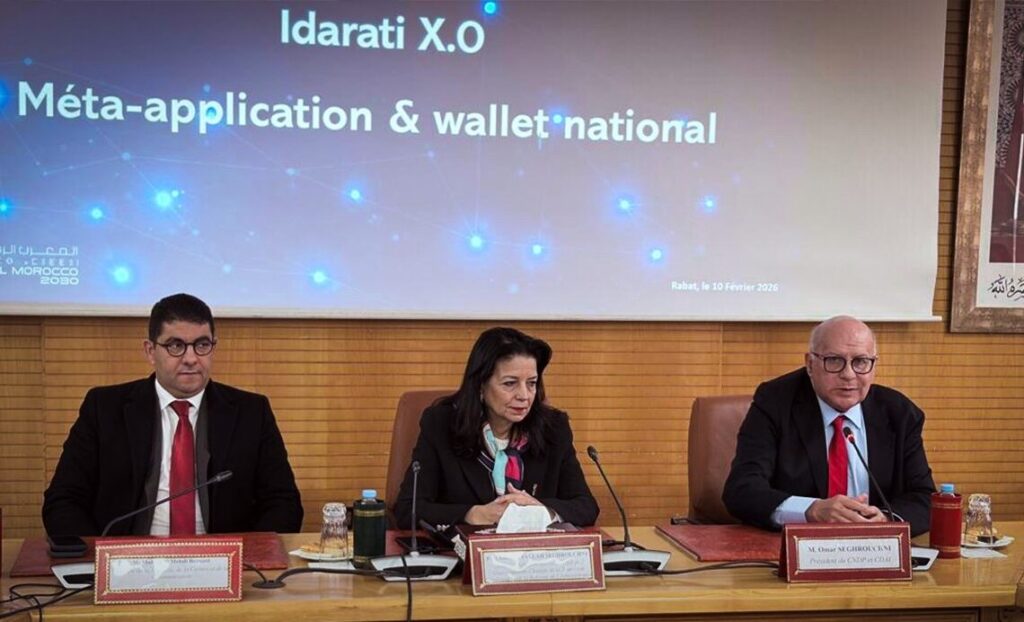
Rabat, The Gulf Observer: Morocco has signed eight cooperation agreements bringing together public institutions and private-sector partners to launch Idarati X.0, a new phase in the country’s efforts to modernize public administration through advanced digital tools.
The agreements were signed at the Ministry of Digital Transition and Administrative Reform as part of a broader national strategy aimed at simplifying citizen interaction with public services and accelerating digital transformation across government institutions.
The signing ceremony was overseen by Amal El Fallah Seghrouchni, Delegate Minister to the Head of Government in charge of Digital Transition and Administrative Reform. Representatives of all participating institutions formally endorsed the agreements, marking a unified commitment across government bodies and private-sector stakeholders.
On the public side, signatories included the Ministry of Youth, Culture and Communication; the National Social Security Fund (CNSS); the National Agency for Land Conservation, Cadastre and Cartography (ANCFCC); the National Road Safety Agency (NARSA); and the Ministry of Logistics and Transport.
The agreements were also signed by Omar Seghrouchni, President of the National Commission for the Protection of Personal Data (CNDP), and the Digital Development Agency (ADD), underscoring the central importance of data protection, governance, and regulatory compliance within the initiative.
Private-sector partners include IDAKTO, SHAREID, and the Moroccan Society for Electronic Services. These firms, specializing in digital identity and electronic services, will contribute to the project’s technical design and functional architecture.
Officials stated that Idarati X.0 builds upon the existing Idarati platform, which currently serves as a reference portal for administrative procedures and public service information. While the current system primarily guides users in identifying services and required steps, the new phase aims to allow citizens to complete procedures directly through a unified digital interface.
The initiative is designed to enable interoperability among participating institutions while preserving their operational autonomy. By leveraging artificial intelligence and secure digital identity mechanisms, Idarati X.0 seeks to reduce administrative duplication, streamline processes, and enhance the quality, security, and traceability of digital interactions between citizens and public authorities.
A key component of the project is the planned adoption of a national digital wallet linked to secure infrastructure and connected to the electronic national identity card issued by the General Directorate of National Security (DGSN). Authorities emphasized that this foundation will facilitate reliable online service usage while ensuring strict adherence to personal data protection regulations.
The cooperation framework outlines a six-month roadmap beginning with the initial signing on February 10, 2026. The process will involve technical and regulatory alignment, system architecture design, proof-of-concept testing, and the formulation of final recommendations for nationwide deployment.
Officials indicated that the project is expected to culminate in a comprehensive national operational framework for digital public services, representing a significant milestone toward more coordinated, efficient, and citizen-centric public administration in Morocco.