Oman Highlights Ethics, Human-Centric Approach to Work at 36th International Islamic Affairs Conference in Egypt
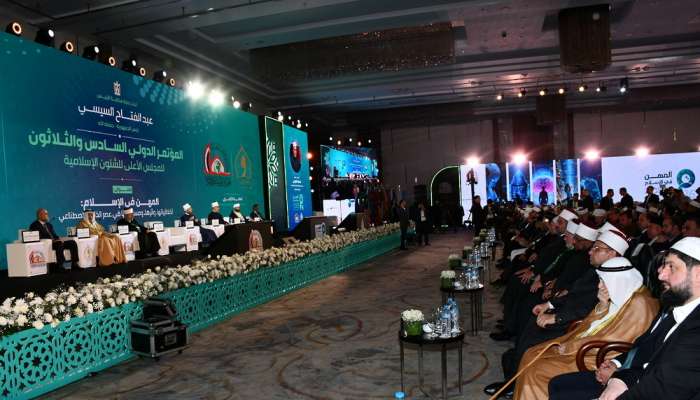
Cairo, The Gulf Observer: The Sultanate of Oman, represented by its Ministry of Endowments and Religious Affairs, participated in the 36th International Conference of the Supreme Council for Islamic Affairs, hosted by the Arab Republic of Egypt.
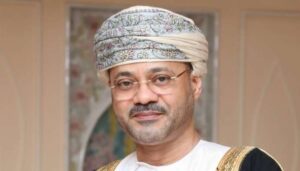
The Omani delegation was led by Dr. Mohammed Said Al Maamari, Minister of Endowments and Religious Affairs.
In his address, Minister Al Maamari highlighted the deep fraternal ties between Oman and Egypt and praised Egypt’s steadfast commitment to fostering dialogue on Islamic issues and promoting joint Islamic action. He noted that the conference is taking place at a critical historical moment, marked by rapid technological transformations, evolving patterns of work, and complex ethical considerations intertwined with development and progress.
The Minister explained that the conference theme reflects a broad awareness of the challenges facing modern societies, particularly concerning the ethics and future of professions in an era of growing reliance on Artificial Intelligence (AI). He observed that the digital revolution has led to rapid changes in the nature of work and production, affecting tools, values, standards, and the societal impact of professions.
He stressed that the primary challenge is to preserve the essence of professions and uphold the centrality of human beings in emerging work systems, ensuring that technology serves as a tool for progress rather than a factor that undermines social balance, justice, or the spirit and value of work.
Minister Al Maamari emphasized that the Islamic perspective regards work first as a “trust and responsibility” (Amanah), rather than merely a job or means of production. This vision, he noted, transcends time and provides guidance across eras, especially in the current period of rapid technological transitions.
He remarked that civilization is measured not merely by technological power but by ethical integrity—whether in medicine, business, judiciary, craftsmanship, or any professional responsibility. He warned that the true risk lies not in technology itself, but in the erosion of ethical responsibility, turning professions from meaningful missions into soulless functions.
The Minister underlined that societal progress should be measured not only by technical speed but by the capacity to govern advancement with values that enhance human presence. He called for balanced discourse combining technological development with ethical commitment, emphasizing that AI remains a tool while moral responsibility remains uniquely human.
Dr. Al Maamari urged religious and academic institutions to actively contribute to this global discussion by promoting professional ethics, guiding labor policy, and safeguarding human dignity in the workplace. He highlighted Oman’s experience in instilling ethical values within professional environments, describing it as a cornerstone of sustainable development, trust-building, and balancing technical advancement with the human dimension.
Concluding his address, the Minister noted that the conference, through its scientific and international exchanges, provides a platform to launch a long-term intellectual and ethical trajectory. Its outcomes, he said, will influence technical societies, educational curricula, and labor policies, underscoring that a profession is not only defined by the work performed but also by the positive impact it leaves on the lives of others.