President Aliyev Receives U.S. Delegation, Discusses Peace Agenda and Bilateral Cooperation
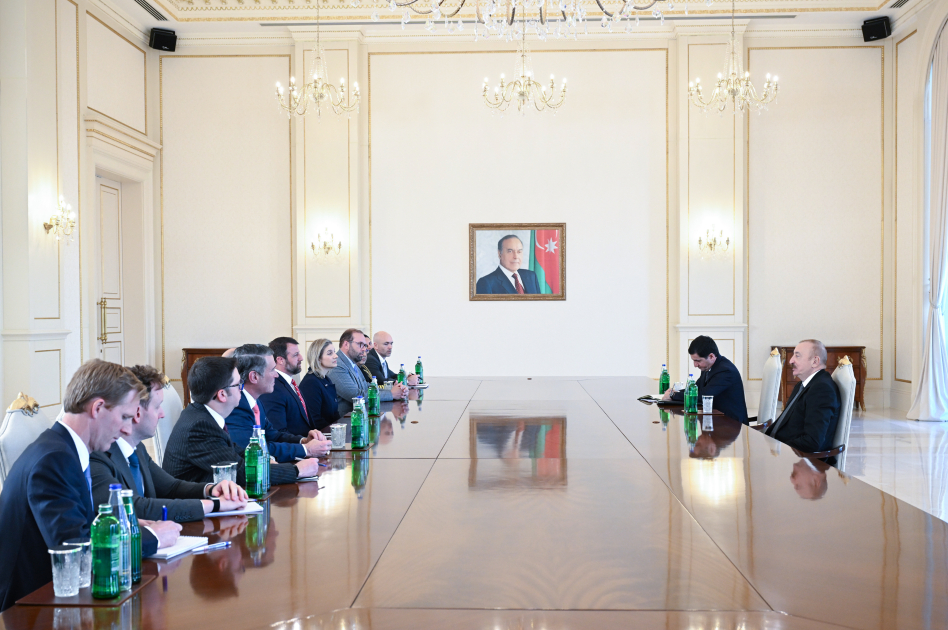
Baku, The Gulf Observer: President of the Republic of Azerbaijan, Ilham Aliyev, received a U.S. delegation in Baku on January 4, engaging in discussions on regional peace, bilateral relations, and future cooperation.
The delegation included Markwayne Mullin, Republican Senator from Oklahoma and member of the U.S. Senate Armed Services Committee; Jason Smith, Republican Representative from Missouri and Chairman of the House Committee on Ways and Means; Ronny Jackson, Republican Representative from Texas; and Jimmy Panetta, Democrat Representative from California and member of the House Committee on Ways and Means.
The U.S. delegates expressed their gratitude to President Aliyev for the reception, noting that the development they observed in Baku had made a strong impression. They also conveyed their congratulations on Azerbaijan’s achievements in advancing the peace agenda between Azerbaijan and Armenia, particularly in Washington.
President Aliyev thanked the delegation and described the agreements reached as historic, highlighting the role of U.S. President Donald Trump in facilitating the process. He reaffirmed Azerbaijan’s commitment to advancing the regional peace agenda and emphasized that trade relations with Armenia have already been established, including the export of Azerbaijani oil products to Armenia and the transit of wheat from Kazakhstan and Russia via Azerbaijani territory. He further expressed hope that the TRIPP corridor would create new opportunities for regional transport connectivity.
Addressing the Freedom Support Act, President Aliyev stated that Section 907 no longer reflects the current state of Azerbaijan-U.S. relations. He welcomed the decision by former President Trump to suspend its enforcement and expressed hope that Congress would continue efforts to fully repeal it.
The leaders also highlighted the growing bilateral relations between Azerbaijan and the United States, noting significant potential for expanding cooperation in political, economic, energy, defense and defense industry, education, information technology, artificial intelligence, and other sectors. They exchanged views on prospects for collaboration between the legislative authorities of both countries, reinforcing their commitment to continued dialogue and partnership.