Romania Makes Strong Impact at WEF 2026 with Focus on Energy, Security, and Regional Stability
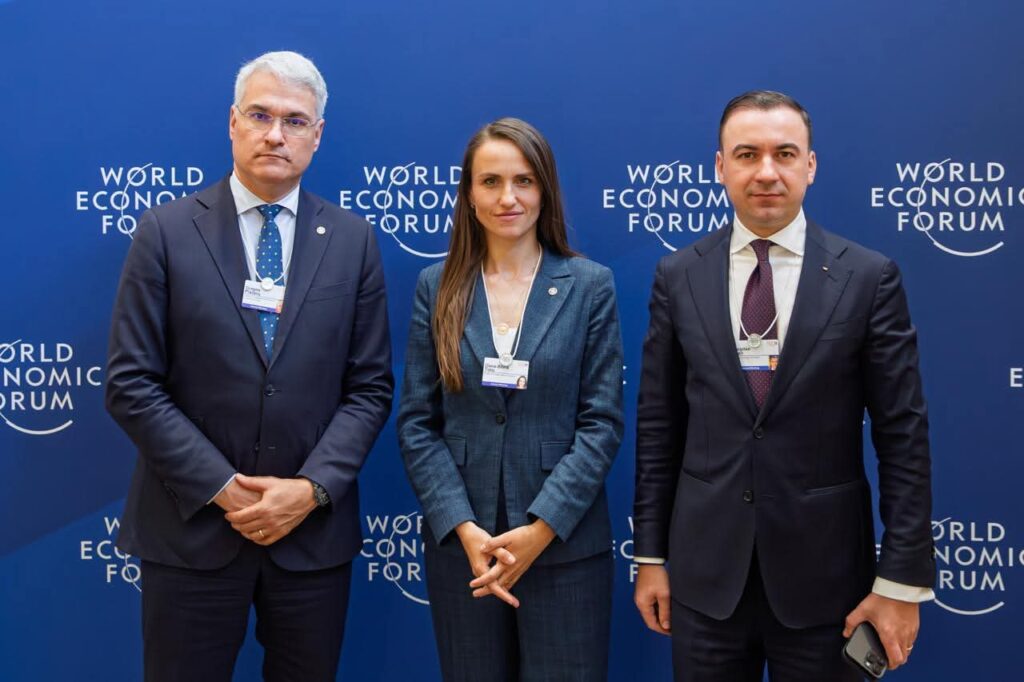
Davos, The Gulf Observer: The Romanian delegation participating in the 2026 Annual Meeting of the World Economic Forum (WEF) has carried out an intensive and substantive agenda during the first three days of the forum, marked by high-level participation in official panels and a series of strategic meetings.
Romania is represented at WEF 2026 by Minister of Foreign Affairs Oana Țoiu, Minister of Investments and European Projects Dragoș Pîslaru, Minister of Energy Bogdan Ivan, and Presidential Adviser Radu Burnete. The simultaneous presence of three Romanian ministers as speakers in official WEF sessions has enabled Romania to make a significant contribution to global debates on issues of strategic importance, including energy competitiveness, foreign investment, social cohesion, and security on NATO’s Eastern Flank.
Officials noted that the strong interest shown in Romania’s participation reflects the country’s growing relevance at both regional and international levels. Romania’s perspectives were presented as particularly pertinent in the context of current geopolitical and economic challenges facing Europe and the wider transatlantic community.
Foreign Minister Oana Țoiu delivered interventions in two official WEF panels. Speaking at the session titled “Staying Grounded in an Age of Uncertainty,” she underscored the importance of pragmatic diplomacy and highlighted Romania’s openness to sharing its development experience. She pointed to Romania’s rapid economic transformation, noting that the country’s gross domestic product has increased tenfold within a single generation.
In the panel “Can Russia Sustain a Wartime Economy?” the Romanian foreign minister analysed the long-term implications of a war-driven economy on regional stability. She emphasised Romania’s role as a key security provider in the Black Sea region, including for commercial routes, as an emerging energy producer, and as a supporter of the European Union aspirations of neighbouring states.
In addition to panel participation, the agenda of the foreign minister included a series of strategic and working-level meetings with senior officials, foreign ministers, members of the United States Congress, and experts from the security community and academia. These discussions focused on strengthening the transatlantic partnership, identified by Romania as a strategic priority.