Saudi FM Highlights Vision 2030’s Commitment to Dialogue and Moderation at UN Civilizations Forum
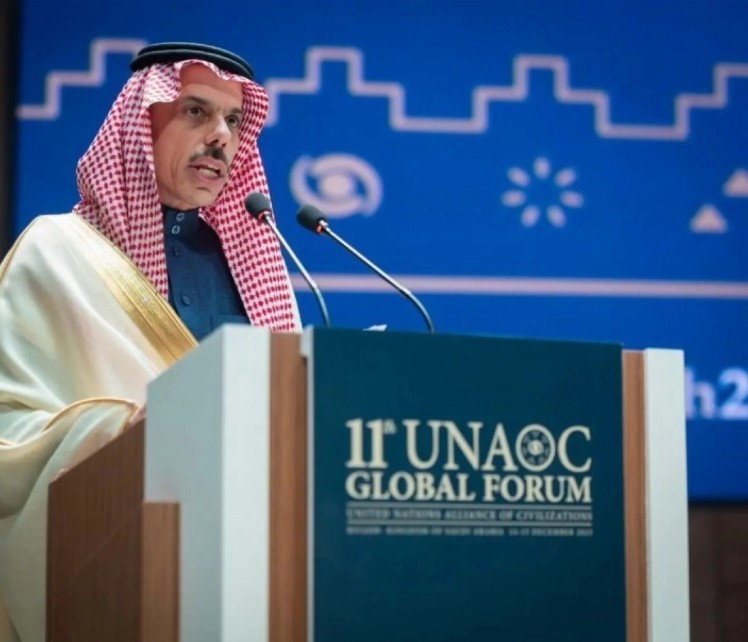
Riyadh, The Gulf Observer: Saudi Minister of Foreign Affairs Prince Faisal bin Farhan on Sunday affirmed that Saudi Vision 2030 reflects a comprehensive national approach based on moderation, openness to other civilizations, and the firm rejection of hate speech and extremism.
Prince Faisal made the remarks while chairing the opening session of the 11th Global Forum of the United Nations Alliance of Civilizations (UNAOC), hosted by the Kingdom in Riyadh. The opening session was attended by United Nations Secretary-General António Guterres and High Representative for the United Nations Alliance of Civilizations Miguel Ángel Moratinos, along with senior international officials and dignitaries.
In his address, the Saudi foreign minister said the Kingdom’s hosting of the forum underscores its continued support for United Nations efforts to promote dialogue, tolerance, and peaceful coexistence among different civilizations and cultures. He noted that the convening of the 11th UNAOC forum provides an important opportunity to assess past efforts and exchange perspectives on managing diversity and differences through building bridges of communication and dialogue among civilizations and religions.
Prince Faisal stressed the central role of youth in shaping a more peaceful future, describing them as the true embodiment of hope and the leaders and messengers of peace of tomorrow. He expressed his satisfaction at the strong youth participation in the forum, highlighting that a youth forum is being held alongside the main sessions. He also noted that the venue will host the graduation ceremony of the eighth cohort of the Young Leaders Qualification Program under the Salam Project for Civilizational Communication, adding that the UNAOC forum can rightly be described as a forum for youth.
Held under the theme “Two Decades of Dialogue for Humanity: Advancing a New Era of Mutual Respect and Understanding in a Multipolar World,” the forum has drawn the participation of foreign ministers from friendly countries, political and religious leaders, heads of international organizations, and representatives of civil society.
The forum aims to review the achievements of two decades of global dialogue, address contemporary challenges, and outline future pathways for collective action to strengthen mutual understanding among peoples and foster communication that contributes to international peace and stability.