Saving Iran
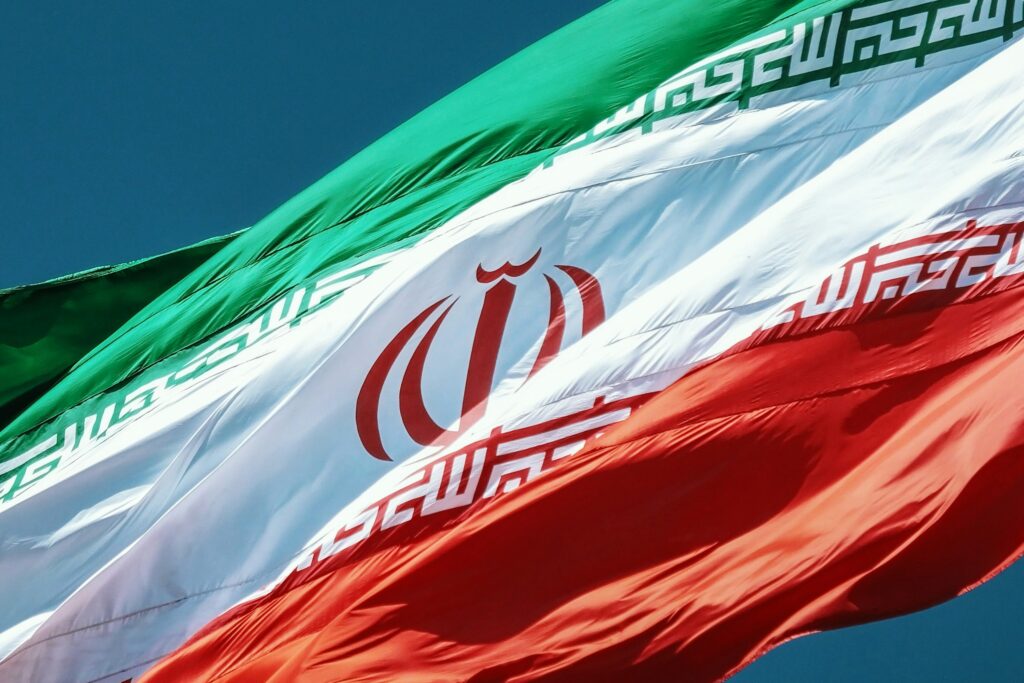
In a carefully choreographed sequence, global media has redirected attention away from Venezuela and concentrated scrutiny on Iran. The mechanics of this narrative shift can be examined separately, but the more consequential issue lies beyond media framing. Recent developments indicate that the Gulf region has entered a fragile and potentially destabilising phase. Since China facilitated the rapprochement between Iran and Saudi Arabia, discernible efforts have emerged to erode that understanding for a simple reason that regional calm diminishes external leverage besides enabling Iran to sustain its political, moral, and material support for the Palestinian cause. In practical terms, Iranian support remains the only consistent and tangible backing Palestinians receive from any Muslim country today, and precisely the role many seek to dilute. What we are witnessing today is the outcome of a long process, cultivated over decades within multiple power centres, aimed at weakening Iran’s regional posture before provoking a confrontation, one that ultimately saw Iran surprise the world with its response. Following the failure of a direct attack, the pressure has now entered its next phase, shifting the arena from external theatres to Iran’s internal cohesion.
The world is being led to believe that Iran is internally imploding solely because of a politically inflexible, religiously motivated, and intrinsically hard-line system of governance; however, what is rarely acknowledged is that a substantial part of the frustration Iranian society is displaying is the result of decades-long Western sanctions that have brought untold misery to the country’s common people. It was the resilience and resolve of its people, supported by the strength of oil revenues, that enabled Iran to survive for so long, whereas when similar sanctions were imposed on Syria, it crumbled within just five years.
Having said that, much can also be written about the unusually rigid theological nature of Iran’s political system, which goes beyond what is found in most religious societies. The doctrine of clerical guardianship, which elevates unelected religious authority above popular will, has at times succeeded in shielding Iranian society from external adversaries; however, it has left little room for social adjustment or generational change. While religion remains central to Iranian identity, the fusion of absolute theological certainty with state power has narrowed political space, and what is generally considered political dissent in other parts of the world has been transformed into a moral offense. It appears from outside that this rigidity has, perhaps, gradually distanced the state from large segments of its own society, particularly the youth and urban middle classes, many of whom do not reject faith itself but resist its use as an instrument of coercive governance.
Yet it would be simplistic, and strategically misleading, to treat Western-style democracy as a universal remedy, especially given its frequent use by powerful states as a legitimising framework for external intervention, amplified by Western media support. On the contrary, political history offers many examples of monarchies that provided continuity, prosperity, and social cohesion when exercised with restraint, just as there are cases where communist systems, despite ideological rigidity, delivered order and rapid development under specific conditions. A cursory glance at history reveals that even a theological system can function when it is exercised with moderation, accountability, and an awareness of social change. The assumption that faith-based governance is inherently incompatible with political order is more ideological than historical. A popular Western belief that faith and politics are natural antitheses overlooks long periods in which religiously informed systems provided cohesion, moral restraint, and legitimacy, especially in societies where faith formed the core of collective identity.
For the people of Iran, the lessons of Libya and Iraq should weigh heavily. People of both the countries were made to believe that collapse would be followed by renewal, yet what emerged instead was prolonged fragmentation, violence, and the empowerment of factions that had been cultivated long before central authority fell. Iran is not immune to such dynamics, as internal fault lines are known to exist, particularly in its more sensitive regions where sharply divergent religious philosophies coexist and remain vulnerable to external influence.
Strategic thinkers have long warned against pushing states into existential corners. John Mearsheimer has argued that when a state’s survival appears threatened, restraint gives way to unpredictability and regional stability is inevitably undermined. Henry Kissinger, in different contexts, made similar observations about the Gulf, emphasizing that its balance depends on avoiding catastrophic miscalculations. Chinese and Russian officials, despite differing worldviews, have consistently stressed that the Gulf must not be allowed to descend into open conflict, partly because both have deep economic and strategic stakes in Iran and the wider region.
For countries bordering Iran, this moment demands strategic foresight, as history shows that regional crises rarely remain contained and that the internal destabilisation of a neighbour often produces consequences with inevitable spill over effects. Iran is a civilisation-state with depth, resilience, and a long historical arc; it has endured sustained pressure before and, in time, will recover again. When that happens, relationships shaped by anything other than genuine support are neither easily forgotten nor readily repaired. More importantly, instability in one state seldom respects borders; it travels through refugee flows, militancy, economic disruption, and sectarian tension, eventually unsettling even those who once believed themselves insulated. Pakistan is already a victim of such dynamics. Regional actors must therefore recognise that supporting stability in Iran is a matter of rational self-interest.
This brings us to the message for the wider world. Iran today is not a defenceless state like Syria or Lebanon. Over the years, it has developed sophisticated military capabilities, including long-range missiles and asymmetric tools whose full extent remains uncertain. If Iran is pushed entirely to the wall, the assumption that it will absorb pressure quietly is not grounded in logic or history. As a last resort, Tehran retains the ability to strike interests across the Gulf, disrupt energy flows, and impose costs that would be felt far beyond the region. Security and stability of Iran, thus, remains vital for the interest of Gulf. The uncomfortable question, therefore, must be asked: does any serious power actually want the Gulf, the backbone of the global energy system, to go up in flames? Such instability would not spare Israel, whose security environment would deteriorate rapidly in a region consumed by open conflict. Nor would it leave global markets untouched, as energy shocks and supply disruptions would reverberate worldwide. Russia and China, too, cannot be expected to remain passive if their interests are directly threatened. What begins as pressure on Iran risks turning into a broader strategic confrontation, transforming a regional crisis into a global one.
One lesson the world has learned since 9/11 is that stability, however imperfect, remains preferable to collapse disguised as change. For the Iranian leadership, this is a moment that demands serious introspection and a willingness to shed past conduct that has deepened internal strain. For the Iranian people, it requires asking what comes after anger, and who ultimately benefits if the state fragments; they must recognise that they would be the greatest losers. For the wider world, it means acknowledging that cornering Iran may satisfy short-term calculations, but it risks igniting a chain reaction whose consequences no one can control.