Sri Lankan Prime Minister Calls for Inclusive Education Policies to Ensure Equal Access to Vocational and Higher Education
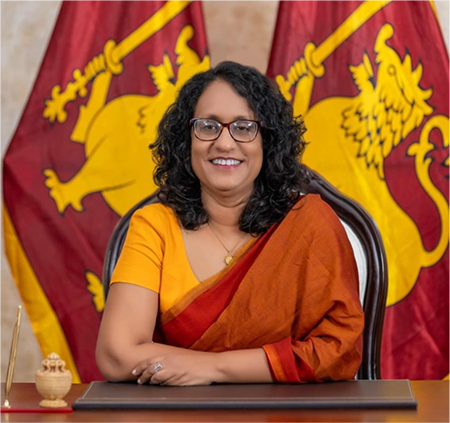
Colombo, The Gulf Observer: Sri Lankan Prime Minister Dr. Harini Amarasuriya has underscored the need for all government strategic plans to be formulated in a manner that ensures no child in Sri Lanka is deprived of vocational or higher education due to economic hardship.
The Prime Minister made these remarks while addressing a workshop on budget formulation and strategic planning for institutions affiliated with the vocational education sector, held at the Grand Monarch. The workshop was organised with the participation of heads and senior officials of nine institutions, including two universities linked to vocational education.
Dr. Amarasuriya stressed the importance of aligning the development strategies of vocational education institutions and their affiliated bodies with the National Economic Development Plan. While acknowledging that vocational institutions play a critical role in producing skilled professionals, she emphasized that education reforms must go beyond technical competence and also cultivate compassion, empathy, ethical values, and care for others. Such an approach, she said, is essential to developing professionals enriched with humanity.
She further noted that expanding access to vocational education for children facing economic disadvantages is a key responsibility of the government, enabling them to build secure and sustainable futures.
The Prime Minister also drew attention to the impact of the artificial intelligence (AI) revolution on the future of vocational education. She observed that there is still no comprehensive global understanding of how AI is reshaping the world of work and vocational fields, highlighting the urgent need to integrate vocational education into the mainstream education system through timely reforms.
Cautioning that the AI revolution is often driven by profit motives, Dr. Amarasuriya emphasized that Sri Lanka must ensure it is not marginalized, as happened during previous industrial revolutions. While technology has expanded opportunities for online teaching and learning, she pointed out that its influence remains limited in professions that require human care and compassion, such as childcare and caregiving, underscoring the continued importance of soft skills and a human-centered approach.
Discussions at the workshop also focused on creating flexible education pathways that would allow students to progress through vocational education up to the doctoral level, as well as opportunities for lateral entry while employed. Participants agreed that maintaining high standards and quality alongside such flexibility is essential to safeguarding the credibility and integrity of the education system.