Trump Announces Planned Blockade of Strait of Hormuz Following Failed Iran Talks in Islamabad
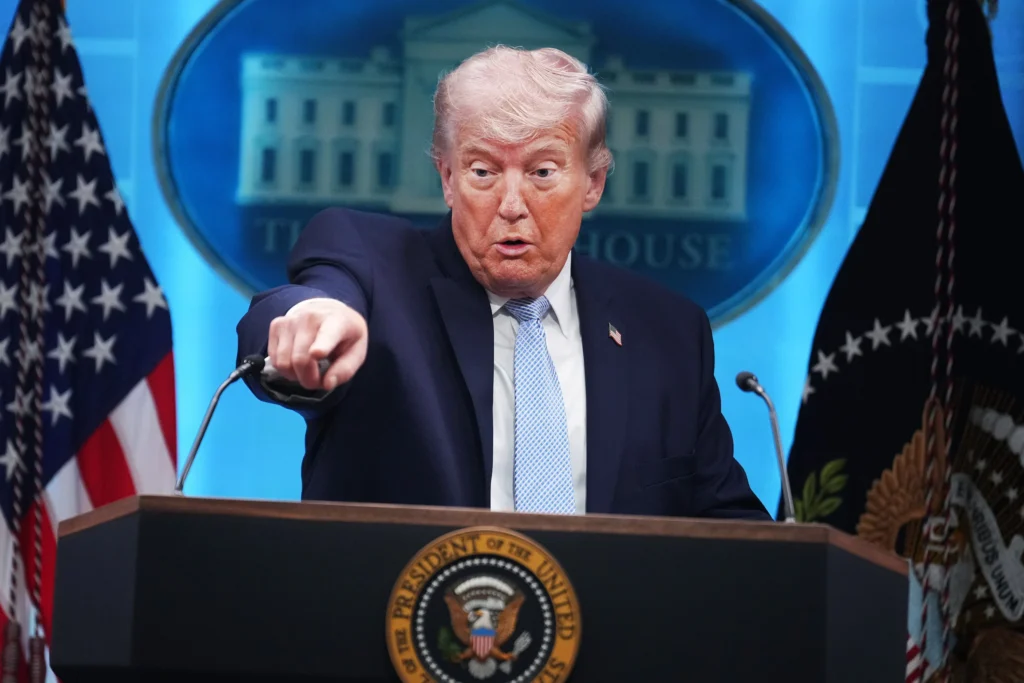
Washington, The Gulf Observer: U.S. President Donald Trump on Sunday announced plans to impose a naval blockade on vessels entering or leaving the strategically vital Strait of Hormuz, following the collapse of high-level negotiations with Iran held in Islamabad.
In a statement posted on his Truth Social platform, President Trump declared that the United States would “blockade any and all ships trying to enter or leave the Strait of Hormuz,” adding that the measure would be implemented shortly with the participation of other countries.
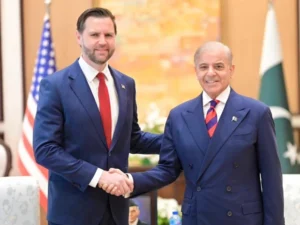
The announcement comes after talks between U.S. and Iranian representatives in Pakistan’s capital failed to yield an agreement aimed at ending weeks of escalating conflict in the Middle East. According to Trump, Iran’s refusal to abandon its nuclear ambitions remained a key obstacle during the negotiations.
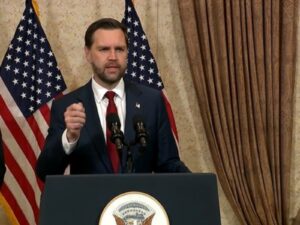
The U.S. president said he had been fully briefed on the outcome of the talks by Vice President JD Vance, Special Envoy Steve Witkoff, and senior advisor Jared Kushner.
Trump further stated that he had directed the U.S. Navy to intercept vessels in international waters suspected of paying transit tolls to Iran, accusing Tehran of engaging in what he described as “illegal acts of extortion.” He also indicated that efforts to clear naval mines in the Strait of Hormuz would commence, warning of severe consequences for any hostile actions against U.S. forces or commercial shipping.
The Strait of Hormuz, a critical maritime chokepoint for global oil and gas shipments, has seen heightened tensions since the onset of the conflict, with Iran reportedly restricting the movement of vessels in the area.
In his remarks, Trump reiterated Washington’s hardline stance on Iran’s nuclear program, emphasizing that preventing Tehran from acquiring nuclear capabilities remains a top priority for the United States.
The situation marks a significant escalation in regional tensions, raising concerns among the international community over the potential impact on global energy supplies and maritime security.