UAE Council Reviews Child Digital Safety Plan, Education Policy Reforms in Second 2026 Meeting
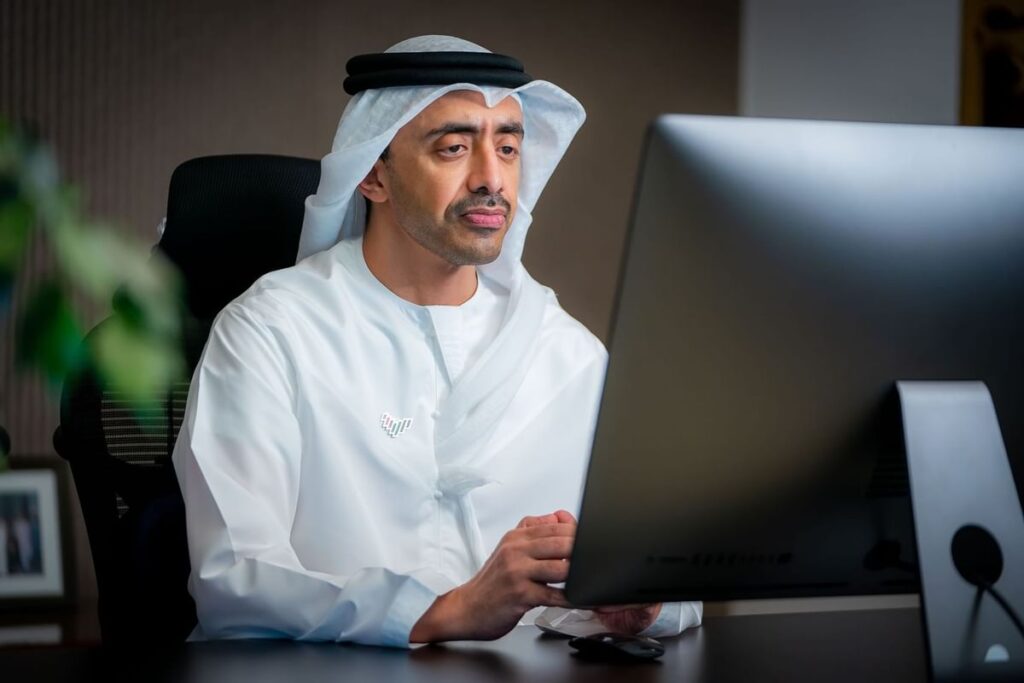
Abu Dhabi, The Gulf Observer: The Education, Human Development and Community Development Council held its second meeting of 2026 under the chairmanship of Sheikh Abdullah bin Zayed Al Nahyan, Deputy Prime Minister, Minister of Foreign Affairs and Chairman of the Council.
The virtual session was attended by Sheikha Mariam bint Mohamed bin Zayed Al Nahyan, Vice-Chairperson of the Council, along with senior ministers and officials.
Focus on Regulating Children’s Social Media Use
The meeting addressed key national priorities, including regulating children’s use of social media, strengthening digital safety frameworks, advancing education policies and curricula, and reviewing results of students’ standardised assessments.
Sheikh Abdullah bin Zayed stressed that regulating children’s use of social media is a national responsibility requiring clear and robust frameworks that align with rapid technological advancements. He highlighted the need to establish a safe and balanced digital environment for future generations while safeguarding societal values.
The Chairman explained that the proposed direction follows a phased, risk-based implementation strategy prioritising social media platforms due to their widespread influence among children. The framework includes age-based access regulations tailored to different developmental stages to balance technological opportunities with child protection.
He underscored the importance of integrating child, community and education policies to strengthen family stability, social cohesion and long-term national competitiveness. He added that policy impact should ultimately be measured by the development of confident individuals proud of their national identity and equipped with skills to contribute to the UAE’s progress.
Strengthening Family and Community Role
Sheikha Mariam bint Mohamed bin Zayed Al Nahyan emphasised that empowering families is central to navigating rapid digital transformations. She called for equipping parents with practical tools and knowledge to manage children’s digital engagement responsibly and foster healthy online habits.
She noted that regulating children’s social media use extends beyond content monitoring to its broader impact on family relationships, communication quality, children’s real-life engagement, and cognitive development, including focus, attention span and time management.
Early intervention during foundational developmental stages, she said, is essential to cultivate balanced digital habits and mitigate potential behavioural and cognitive risks. She further highlighted the importance of protecting children’s digital well-being and mental health while reinforcing national identity and critical thinking skills.
National Child Digital Safety Plan
During the meeting, Sana bint Mohammed Suhail, Minister of Family and Chairperson of the Child Digital Safety Council, presented updates on the national plan to enhance child digital safety.
She stated that the plan operates within a comprehensive national framework aimed at transitioning from general awareness to an integrated system combining regulation, empowerment and strengthened community engagement.
The initiative includes developing a national classification system for digital platforms based on risk assessment to ensure proportionate and enforceable regulatory obligations. The first phase will prioritise social media platforms and age-based access management, with gradual expansion to other digital services.
Education Policy and Curriculum Reforms
Minister of Education Sarah bint Yousif Al Amiri presented the latest developments in public education, including alignment of national frameworks and policies to establish a clear reference for school education and define the UAE learner profile in line with national identity and future aspirations.
She emphasised strengthening coherence across the curriculum, assessment frameworks and teacher development strategies to ensure improved educational outcomes aligned with national priorities.
The Council reviewed results of student standardised assessments, including Arabic language evaluations, highlighting their role as diagnostic tools to inform curriculum enhancements and evidence-based interventions aimed at addressing learning gaps and strengthening foundational skills.
Updates were also provided on the development of Arabic language and Islamic education curricula to reinforce national identity, Emirati values and consistent educational standards across stages.
Year of Family Initiative
The meeting was convened within the broader framework of 2026 being designated as the “Year of Family,” reaffirming the UAE’s commitment to strengthening family stability, safeguarding future generations and sustaining investment in human capital and knowledge.
Senior officials in attendance included Abdulrahman bin Mohammed Al Owais, Shamma bint Suhail Al Mazrui, Dr. Abdulrahman Abdulmannan Al Awar, Dr. Sultan bin Saif Al Neyadi, Abdulla bin Mohammed bin Butti Al Hamed, Dr. Mohamed Hamad Al Kuwaiti and other key government representatives.