Uzbekistan Unveils Ambitious 2026–2030 Environmental Plan, President Mirziyoyev Approves Nationwide “Clean Air” and Green Initiatives
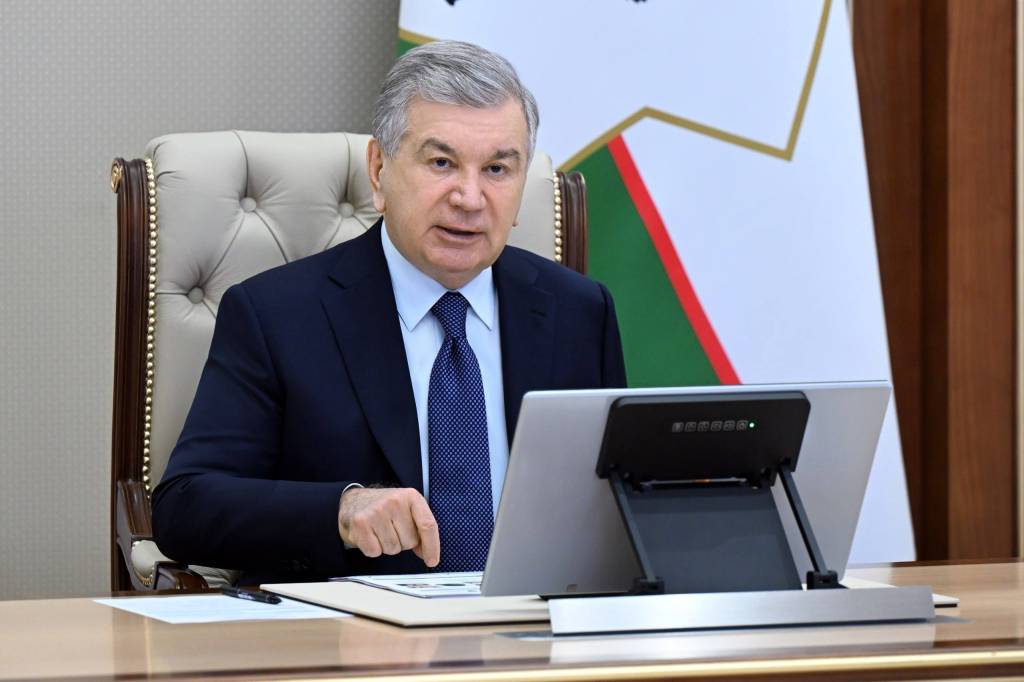
Tashkent, The Gulf Observer: President Shavkat Mirziyoyev on March 23 reviewed a comprehensive presentation outlining Uzbekistan’s key nationwide projects in ecology and environmental protection for the period 2026–2030, approving a wide-ranging strategy aimed at improving air quality, expanding green spaces, and strengthening environmental sustainability.
The presentation focused on major initiatives under the “Clean Air” project, measures to combat desertification, the expansion of botanical and dendrological parks, and the promotion of environmental education through the nationwide “Ecoculture” program.
Officials informed the President that rising air pollution levels have been recorded in major cities, including Tashkent, Navoi, Fergana, Chirchik, and Termez, driven by industrial growth, increased vehicle usage, reliance on carbon-based fuels, natural factors, and insufficient monitoring systems.
To address these challenges, the government has set key targets through 2030, including reducing pollutant emissions, increasing the share of captured emissions at industrial facilities, lowering transport-related emissions, and decreasing the number of days when PM2.5 levels exceed permissible limits. Authorities noted that recent measures have already led to some improvement in Tashkent’s air quality, with a noticeable reduction in PM2.5 levels during the first two months of the year.
Under the “Clean Air” project, priority will be given to the energy and industrial sectors through tax incentives, financial support for the adoption of alternative energy, and the installation of advanced monitoring systems and emission control technologies. Mandatory automatic monitoring stations will be deployed at industrial enterprises, with real-time data integrated into a unified geographic information system. Environmental compliance requirements in the construction sector are also set to be tightened.
The plan further includes the preservation of “wind corridors,” the development of green belts around cities, and measures to mitigate natural dust, such as creating artificial reservoirs and expanding urban greenery. Special focus will also be placed on reducing emissions from the transport sector through stricter fuel standards, environmental classification of vehicles, modernization of fleets, and promotion of public transport.
Addressing emissions from greenhouse enterprises, the presentation highlighted the need to relocate energy-intensive greenhouses from Tashkent and surrounding areas to regions with more favorable climatic conditions, such as Surkhandarya. A major agro-park covering 940 hectares is planned in Sherabad district, while new greenhouse projects in Tashkent will be restricted from October 1, 2026.
The President was also briefed on the expansion of green infrastructure under the “Yashil Makon” program, which includes plans to establish 12 new botanical gardens and 16 dendrological parks nationwide. By 2028, each region is expected to host green complexes of at least 100 hectares, contributing to an increase in national green coverage from 14.2 percent to 30 percent by 2030, along with a projected 20–25 percent reduction in PM2.5 and PM10 levels.
A flagship project, the National Dendrological Park in Tashkent, will span 108 hectares and feature 50,000 trees and 100,000 shrubs. Designed as both a scientific and public space, the park will include themed botanical zones, an artificial lake, eco-friendly infrastructure, and facilities for education and recreation. It is expected to reduce local temperatures by up to 4 degrees and enhance urban biodiversity.
In the field of education, the “Ecoculture” initiative aims to integrate environmental science, awareness, and innovation. Starting from the 2026/2027 academic year, “green technical schools” will be established in all regions and linked to the Central Asian University of Environmental and Climate Change Studies (Green University). Student enrollment is projected to reach 10,000 by 2028/2029, with new programs focusing on climate change, green economy, sustainable energy, and environmental engineering.
The presentation also highlighted plans to boost public awareness through initiatives such as the revival of the “10,000 Steps” program, the launch of a “Healthy Lifestyle” platform, and the hosting of major international events, including the GEF-8 Assembly and Eco Expo Central Asia 2026 in Samarkand.
A separate draft strategy on combating desertification was also reviewed. Officials noted that over 70 percent of Uzbekistan’s territory is arid, with land degradation causing annual economic losses of approximately $830 million. To address this, a regional research center under Green University will be established, featuring advanced laboratories, satellite-based monitoring systems, and a genetic bank of drought-resistant plants.
The center is expected to strengthen Uzbekistan’s capacity to forecast and manage desertification, expand green cover in the Aral Sea region, and promote sustainable land and pasture use.
Recognizing the strategic importance of these initiatives, President Mirziyoyev approved the proposed projects, emphasizing their role in improving public health, enhancing environmental resilience, and promoting the use of science and modern technologies for sustainable development.