Việtnam Reviews 2025 Performance, Sets Tasks for 2026 at Government Conference
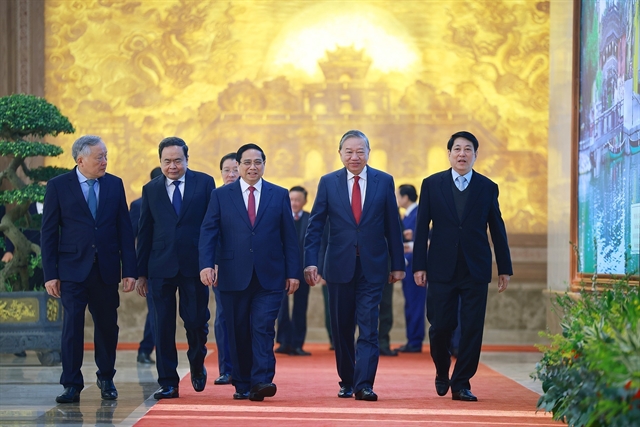
Hanoi, The Gulf Observer: The Government on Thursday convened a hybrid conference to review its performance in 2025 and outline key tasks for 2026 for central and local administrations.
The conference was attended by senior leaders of the Party, the State, the Government and the National Assembly, along with representatives from ministries, agencies and local authorities nationwide.
In his opening remarks, Prime Minister Phạm Minh Chính said Việtnam successfully fulfilled its socio-economic development tasks for 2025 and the 2021–2025 period despite increasingly complex global developments.
He noted that the country faced unprecedented challenges, including the prolonged impacts of COVID-19, rising inflation, slowing global economic growth, disrupted supply chains, military conflicts and extreme climate events, with difficulties outweighing opportunities.
Domestically, Việtnam had to cope with external shocks while remaining a developing economy in transition, marked by a low starting point, increasing routine and unexpected tasks, long-standing internal shortcomings, and the need for major administrative restructuring. Natural disasters and floods also caused significant losses to production, business activities and people’s livelihoods, the Prime Minister said.
However, Prime Minister Chính stressed that under the leadership of the Party Central Committee—particularly the Politburo and the Secretariat led by General Secretary Tô Lâm—with the support of the National Assembly and the concerted efforts of the entire political system, the people, businesses and international partners, the Government had decisively directed ministries and localities to implement solutions, achieving notable results across sectors.
He highlighted that in 2025, Việtnam recorded economic growth of 8.02 per cent, ranking among the top-performing economies in the region and globally. The country also maintained macroeconomic stability, kept inflation under control, ensured budget deficits and public debt remained within limits, strengthened social welfare, consolidated defence and security, and promoted international integration, thereby enhancing its standing on the international stage.
At the same time, the Prime Minister candidly pointed out persistent challenges, including shortcomings in economic restructuring, improving growth quality, advancing science and technology, digital transformation and green transition, as well as managing macroeconomic stability, exchange rates and interest rates amid external pressures. He also cited concerns related to environmental pollution, traffic congestion, and risks to information security, cybersecurity and public order in certain areas.
He called on delegates to focus on analysing and evaluating key developments in 2025 and throughout the 2021–2025 term, paying particular attention to negative factors that significantly affected the country.
Regarding leadership and management, Prime Minister Chính urged an assessment of whether the Government, ministries and localities demonstrated strong determination and decisive actions, effectively implementing solutions to “turn the situation around” and “turn risks into opportunities,” while responding proactively, timely and appropriately to changing circumstances.
On the results of 2025 and the 2021–2025 period, he requested a clear analysis of major highlights in economic growth and macroeconomic stability; breakthroughs in strategic infrastructure development; progress in culture, social development and people’s livelihoods; achievements in eliminating temporary and dilapidated housing and expanding social housing; efforts in disaster response and flood mitigation; advances in defence, security and anti-corruption work; and notable outcomes in foreign affairs and international integration. He also called for an honest assessment of challenges related to implementing the two-tier local government system and streamlining the central administrative apparatus.
The Prime Minister further asked participants to identify bottlenecks and challenges across sectors, analyse their objective and subjective causes, explain disparities in performance among different areas, and share practical lessons learned to better inform future governance and development efforts.