Türkiye Prepared to Assume ‘Any Responsibility’ for Palestinian Peace: Fidan
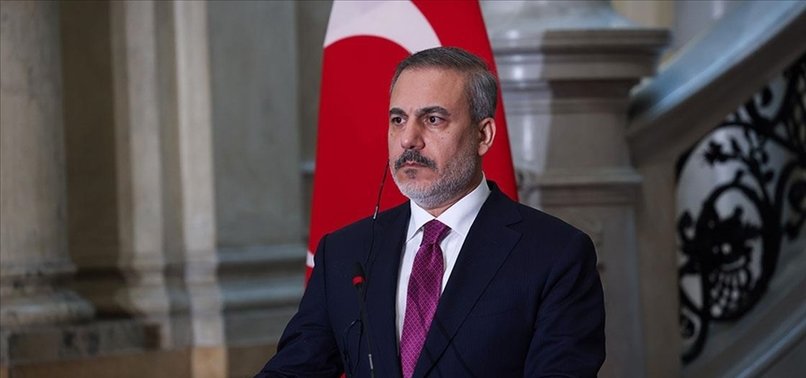
Ankara, The Gulf Observer: Türkiye stands ready to assume “any responsibility” in efforts to resolve the Palestinian issue, including participation in an International Stabilization Force in Gaza, Foreign Minister Hakan Fidan said in an interview with Al Jazeera Arabic on Thursday.
“With the political will of our President (Recep Tayyip Erdogan), Türkiye is ready to assume any responsibility in resolving the Palestinian issue and establishing peace,” Fidan said, adding that Ankara is prepared to deploy troops if required.
Fidan stressed that progress achieved so far in the Gaza peace process was the result of “tremendous effort, work and dedication,” noting that the humanitarian tragedy—marked by the deaths of 70,000 people and tens of thousands injured or missing—has left “a deep wound in humanity’s conscience.”
He acknowledged that while the situation has eased compared to the earlier phase of the conflict, many measures under the peace plan remain unfulfilled and Israeli attacks continue. He said the UN Security Council had already issued a resolution supporting the second phase of the peace plan and urged implementation.
Fidan emphasized the significant role of the United States and President Donald Trump, while also highlighting the involvement of Qatar, Saudi Arabia, Egypt, Jordan, and the United Arab Emirates in advancing regional peace efforts. He underscored the importance of establishing a Peace Council and transferring governance responsibilities to Palestinian institutions, including a technical committee and a new police force.
Türkiye’s Position on Stabilization Force
The foreign minister affirmed that Türkiye’s stance on joining an International Stabilization Force is “clear,” despite reported objections from Israel. “Israel is not the sole decision-maker,” he said, noting that Ankara would welcome progress in US-Israel negotiations but would proceed independently if necessary.
He added that discussions with Hamas indicated that a stabilization force could separate Israelis and Palestinians without major complications, provided the peace process—including humanitarian aid, returns, and economic steps—continues smoothly.
Fidan cautioned against imposing premature conditions that could undermine the peace roadmap. He said that over time, armed groups would no longer be needed as stability takes hold, with international mechanisms—such as the Stabilization Force and the Peace Council—helping facilitate the transition.
Israel Urged to Drop “Maximalist Demands”
Fidan criticized Israel’s “maximalist demands,” including talk of establishing new buffer zones in Gaza, calling them negotiation tactics aligned with Prime Minister Benjamin Netanyahu’s broader strategy. He stressed that genuine progress requires compromise, and welcomed a “more rational and constructive” approach recently observed from Washington.
He praised the efforts of Trump’s envoy Steve Witkoff, saying his team is working sincerely to advance the peace process.
Addressing concerns about a potential collapse of the Gaza peace plan, Fidan said such a risk always exists but warned that failure would lead to greater catastrophe. He accused Netanyahu of seeking to expel Palestinians from Gaza, similar to developments in the West Bank, and emphasized that Palestinians must remain on their land with dignity and security.
Views on the Syria Crisis
On Syria, Fidan welcomed the US decision to lift Caesar Act sanctions along with similar steps by the EU, saying these measures should give the Syrian people renewed hope after 15 years of conflict. He criticized Israel’s expanding operations inside Syria, including strikes reaching Damascus, calling them destabilizing and contrary to international efforts to support Syria’s new administration.
Influence on PKK/YPG and Regional Issues
Fidan said Israeli activity in Syria was encouraging the PKK/YPG—operating under the Syrian Democratic Forces (SDF)—to delay implementation of the March 10 agreement with Damascus. He noted that the group’s recent shift came after receiving “different signals from Israel,” adding that the YPG’s decisions are not taken independently.
On Sudan, Fidan said Türkiye has shifted its focus to humanitarian support and is backing diplomatic efforts led by Saudi Arabia, Egypt, the UAE, Qatar, and the United States.