HCM City Accelerates Shift to Green Transport to Tackle Air Pollution
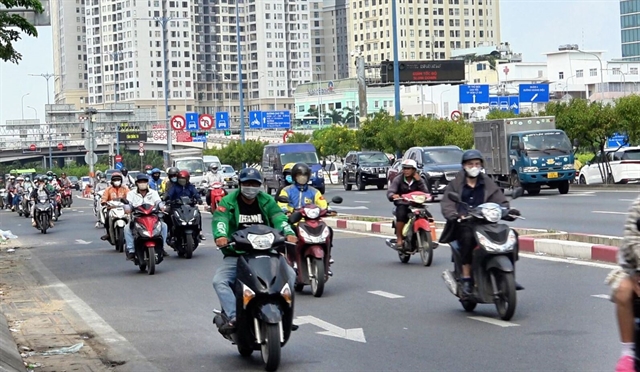
HCM City, The Gulf Observer: Amid rapid urbanisation and a sharp rise in vehicle numbers, Ho Chi Minh City has identified transport as a major source of air pollution and is stepping up efforts to transition towards greener and cleaner mobility to cut emissions, improve air quality and safeguard public health.
In recent years, the city has rolled out a comprehensive roadmap promoting low- and zero-emission vehicles, positioning green transport as a key pillar of its sustainable urban development strategy.
Vice Chairman of the municipal People’s Committee Bùi Minh Thạnh said scientific assessments show diesel-powered vehicles are among the main contributors to fine particulate matter (PM2.5), nitrogen oxides (NOx) and sulphur oxides (SOx), all of which have direct and serious impacts on public health and the urban environment.
To curb pollution, the city is focusing on multiple priority measures, including reviewing and updating emission standards, strengthening vehicle inspection and supervision, and enforcing stricter environmental discipline in transport activities. Businesses are being encouraged to upgrade engines, install exhaust treatment systems, switch to cleaner fuels and adopt internationally recognised emission-reduction technologies.
At the same time, the city is restructuring transport infrastructure by prioritising low-emission vehicles, optimising traffic flows and applying smart transport management solutions. Social resources are being mobilised, alongside enhanced cooperation with neighbouring southeastern provinces, to implement inter-provincial emission control programmes and expand public-private partnerships in environmental technology investment.
The transition to green vehicles has already delivered tangible results. The city’s bus network now comprises 176 routes with 2,386 buses, including 627 electric buses, accounting for 26.3 per cent of the fleet, and 451 buses powered by compressed natural gas (CNG), or 17.9 per cent.
In the taxi sector, 13,124 of the city’s 18,613 taxis are electric, representing about 71 per cent of the total fleet. Nearly 89,000 ride-hailing motorbikes are in operation, with around 28 per cent running on electricity. The number of electric cars has also risen sharply to 39,566, including approximately 25,000 used for transport services, alongside 86,978 electric motorbikes.
According to the city’s Department of Construction, these figures reflect growing momentum in the green transition, with clear benefits in reducing emissions and noise pollution. Many transport enterprises have proactively invested in electric taxis and electric motorbikes for commercial use.
Parallel to vehicle conversion, the city has prioritised the development of charging and battery-swapping infrastructure. It currently operates five charging stations for electric buses, equipped with 56 ultra-fast chargers, around 1,000 charging stations for electric cars, 300 fast-charging points for electric motorbikes and 50 battery-swapping stations.
In the next phase, the city plans to expand battery-swapping systems for electric motorbikes and install at least 1,500 additional fast chargers for electric cars in key areas to reduce charging times and further support the green transition.
Developing high-capacity public transport, particularly urban railways, is also viewed as a strategic solution to cutting transport-related pollution. Since the beginning of 2025, Metro Line No.1 connecting Bến Thành Market and Suối Tiên Theme Park has served more than 15 million passengers, helping ease congestion and improve air quality in central districts and the city’s eastern gateway.
Under the urban railway development plan linked to National Assembly Resolution No.188/2025/QH15, Ho Chi Minh City aims to complete the basic construction of six metro lines by 2030, encouraging a significant shift in travel behaviour and reducing reliance on private vehicles. The city is also expanding electric and green-energy bus networks and improving connections with metro stations, with the goal of raising public transport’s share to 15–20 per cent of total travel demand.
Following administrative consolidation, the city now has nearly 12.7 million vehicles, placing mounting pressure on the environment. Monitoring data from 2021 to 2025 show that levels of particulate matter, nitrogen dioxide and noise frequently exceed national standards in central districts, major intersections and industrial zones.
Nguyễn Toàn Thắng, Director of the city’s Department of Agriculture and Environment, said Ho Chi Minh City is implementing a pollution reduction plan through 2030, with air pollution identified as an urgent issue requiring immediate action.
Under the green transport roadmap, from 2025 all newly invested or replaced buses will use electricity or green energy. By 2030, all buses and passenger cars operated by State agencies are expected to run on clean energy. At least 50 per cent of ride-hailing and delivery motorbikes are to be electric by 2027, rising to 100 per cent by 2030, while from 2030 onwards all newly added taxis must use electricity or green energy.
The city is also preparing to pilot low-emission zones in central areas, Cần Giờ and Côn Đảo Island, enforce emission inspections for all motorbikes and gradually apply stricter vehicle emission standards citywide.
In cooperation with the United Nations Development Programme (UNDP) in Việtnam, Ho Chi Minh City is developing a roadmap for public charging infrastructure, expected to be completed in the fourth quarter of 2025, as it moves steadily towards a cleaner and more sustainable urban transport system.