Hànội Unveils VNĐ1.5 Quadrillion Plan to Curb Traffic Congestion by 2030
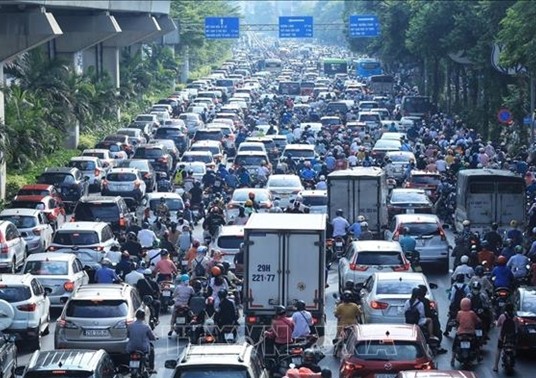
Hanoi, The Gulf Observer: The Hànội municipal authorities have announced an ambitious investment plan worth nearly VNĐ1.5 quadrillion (approximately US$57 billion) aimed at easing chronic traffic congestion in the capital by 2030.
The plan, detailed in Plan No. 330 issued by the municipal People’s Committee and signed by Standing Deputy Chairman Dương Đức Tuấn, outlines comprehensive measures for the 2026–2030 period and beyond, focusing on modernising the city’s transport infrastructure and strengthening traffic management.
According to the plan, the city will mobilise all available financial resources, deploy synchronised solutions and adopt advanced technologies to enhance traffic order and safety. The overarching goal is to build a modern, smart and fully integrated urban transport system centred on public transport development and effective traffic demand management.
Major Infrastructure Projects
Construction of Hànội’s ring road network remains a top priority, alongside 18 key arterial routes and 11 major bridges crossing the Hồng (Red) and Đuống rivers. Significant emphasis will be placed on nine critical bridges, including Tứ Liên, Ngọc Hồi, Trần Hưng Đạo, Thượng Cát, Hồng Hà, Mễ Sở, Giang Biên, Lệ Chi and Vân Phúc.
The plan also includes the construction of five flyovers at major intersections and improved connectivity across urban transport corridors. These infrastructure projects are expected to require total investment of VNĐ528 trillion (over US$20 billion).
Expansion of Urban Rail Network
A central component of the strategy is the expansion of Hà Nội’s urban railway system. The city aims to complete five metro lines spanning 100 kilometres by 2030. For the 2031–2035 period, an additional eight routes with a combined length of 301 kilometres—including seven urban rail lines and a satellite line connecting Sơn Tây, Hòa Lạc and Xuân Mai—are planned.
Total investment for the railway network is projected at US$37.7 billion. Funding will be sourced from the State budget, bond issuance, ODA loans and other capital channels.
Enhanced Public Transport and Parking Solutions
Hà Nội also plans to establish new inter-provincial coach stations in line with urban expansion, while gradually relocating existing stations outside Ring Road 3. The city will allocate land for new parking facilities tailored to local needs, with estimated investment reaching VNĐ10.2 trillion (US$387 million).
Development of the bus network will be accelerated through upgrades to routes, improved integration with metro systems, and promotion of shared and non-motorised mobility options. By 2030, the city aims for public transport to meet at least 30% of mobility needs, rising to 40% by 2035. Bus network enhancements are expected to require VNĐ13.6 trillion (US$516 million).
Smart Traffic and Digital Transformation
Information technology will play a pivotal role in the city’s traffic management system. Smart traffic models will be deployed in line with Hà Nội’s smart city agenda and the transport sector’s digital transformation strategy, with a total investment of VNĐ18 trillion (US$683 million).
Artificial intelligence will be used to manage traffic signals in real time and regulate vehicle flows at major intersections. The city will also adjust signal cycles according to real-time conditions, reduce conflict points by limiting selected left-turn phases and reorganise traffic patterns during road construction to minimise disruptions.
Targets and Guiding Principles
The plan outlines several key targets, including:
- Allocating 14–16% of urban land for transport, with at least 1% dedicated to static traffic.
- Ensuring public transport meets 30–35% of total travel demand.
- Launching at least 20 new ‘green bus’ routes.
- Increasing traffic capacity at 50 major intersections through improved traffic organisation and smart control systems.
Six guiding principles underpin the strategy, emphasising synchronised, scientifically grounded measures to increase transport supply, reduce excessive demand and promote sustainable mobility. Urban rail lines and green buses will serve as the backbone of the system, complemented by transit-oriented development and long-term smart traffic solutions.
City authorities affirm that the comprehensive plan is designed to address both current traffic challenges and future urban growth, marking a significant step toward building a modern, smart and sustainable transportation network for the capital.