Iranian Forces Fully Mobilized Amid Escalating Regional Tensions Before Muscat Nuclear Talks”
Tensions Escalate in the Middle East Ahead of Washington-Tehran Nuclear Talks in Muscat
Amid rising tensions across the Middle East, all eyes are on Oman, where a new round of nuclear negotiations between the United States and Iran is scheduled for Friday. The discussions come as Iran’s armed forces assert full readiness to respond to any potential threat.
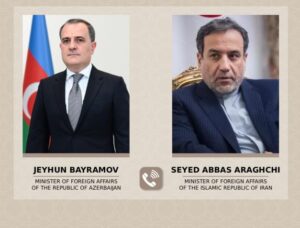
American news outlet Axios reported that the talks on Iran’s nuclear program were reinstated after urgent lobbying from several Middle Eastern leaders aimed at the Trump administration. Following repeated threats of military action by US President Donald Trump, Iranian Foreign Minister Abbas Araghchi confirmed that the negotiations are now officially “scheduled” in Muscat.
“I am grateful to our Omani brothers for making all necessary arrangements,” Araghchi said, highlighting Oman’s ongoing role as a mediator in indirect communications between Washington and Tehran.
Iranian Military Preparedness and Emphasis on Deterrence
Brigadier General Amir Akrami Nia, spokesperson for the Iranian military, told state television that Iran’s forces are fully prepared to defend against and repel any attack. He emphasized that access to US bases is “easy,” increasing their vulnerability and exposure to potential danger.
The general added that the Iranian military has integrated 1,000 strategic drones into its combat operations and has upgraded its air defense systems, signaling full readiness to counter any threat. He further underscored Iran’s preparedness for all contingencies, calling on the US president to choose between “reconciliation or war.” Akrami Nia clarified that any potential conflict could encompass the entire regional geography, including all US bases in the occupied territories, the Persian Gulf, and the Gulf of Oman.
White House officials have confirmed the time and place of the talks, which were initially proposed to take place in Turkey. Tehran, however, insisted on Oman to maintain continuity with previous discussions that focused strictly on its nuclear program, a regional official said.
Disagreement on Scope of Negotiations
The Iranian Foreign Ministry has maintained that the nuclear talks will be limited to the nuclear program. In contrast, the United States insists that the discussions should address all relevant issues, including Iran’s nuclear and ballistic missile programs, its support for groups Washington designates as terrorist organizations, and Tehran’s domestic policies toward its population.
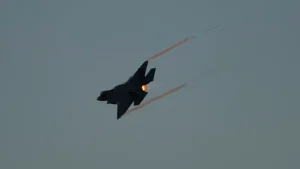
President Trump has warned against Iran’s attempts to resume its nuclear program, citing intelligence that Tehran has attempted to access previously destroyed nuclear facilities. He cautioned that establishing new nuclear sites would carry serious consequences and suggested the potential redeployment of US fighter jets if necessary.
International Reactions
France has reiterated its support for the diplomatic track, emphasizing that any steps toward lifting sanctions on Iran “can only be taken with European participation.” Meanwhile, Israeli officials highlighted the unprecedented level of coordination with the United States, affirming Israel’s commitment to restraint and avoiding preemptive military actions during the negotiation period.
Strengthening Iran’s Deterrent Capabilities
Iranian Armed Forces Chief of Staff, Major General Abdolrahim Mousavi, visiting missile sites operated by the Revolutionary Guard, noted that the development of ballistic missiles has significantly strengthened Iran’s deterrent capabilities. He explained that the country’s military doctrine shifted from defensive to offensive after the Twelve-Day War, adopting a strategy of asymmetric warfare and decisive responses to potential aggressors.
Political Analysis: Internal Divisions and the Challenge of Diplomacy
Analysts observe that the latest developments reflect a delicate balance of caution in the region, where military and diplomatic pressures converge. While Washington seeks to keep all regional issues on the table, Tehran remains intent on limiting negotiations to its nuclear program. The close US-Israel coordination introduces an additional strategic dimension, while European involvement seeks to mediate toward a balanced diplomatic outcome.
Internal Iranian dynamics further complicate diplomacy. Iran’s political landscape has long been marked by rivalries between Islamic liberals and religious hardliners, reformists and conservatives, and, more recently, between hardliners and moderates. For years, the Supreme Leader acted as a broker among factions, maintaining a degree of coherence. However, as power has centralized and alignments hardened, that balancing role has weakened.
Vested interests within the system have repeatedly obstructed, and at times undermined, diplomatic efforts—often motivated not by opposition to diplomacy itself, but by concerns over which factions would gain political credit from engagement with Washington. As former President Hassan Rouhani and other commentators have noted, this pattern has contributed to the repeated collapse of negotiations, even absent external pressures.
Outlook and Regional Implications
These developments unfold amid a significant US military buildup in the Gulf, underscoring the high stakes of the Muscat negotiations. The outcome of this round could determine the trajectory of Tehran-Washington relations and has the potential to directly influence the stability of the wider Middle.