Morocco Reaffirms Strong Commitment to Global Ocean Protection at COP30 in Belém
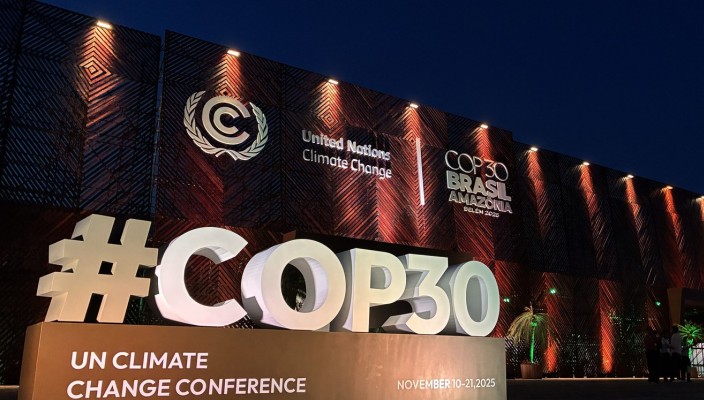
Rabat, The Gulf Observer: Morocco reaffirmed its firm commitment to advancing global ocean protection efforts during the COP30 climate conference held in Belém, Brazil, underscoring its alignment with the forward-looking vision of King Mohammed VI for sustainable and inclusive ocean governance.
Speaking at a side event titled “From Nice to Belém… and from Belém to New York: Towards COP1 for the Ocean” at the French Pavilion, Bouzkri Razi, Director of Climate and Biodiversity at the Ministry of Energy Transition and Sustainable Development, highlighted Morocco’s active role in the fight against climate collapse.
Razi noted that Morocco’s 3,500-kilometer coastline and its recognized environmental leadership position the country as a key voice in shaping Africa’s maritime future. He emphasized that protecting marine ecosystems has become indispensable as the international community prepares for the first-ever COP on the ocean (COP1), calling for stronger scientific research, particularly in deep-sea exploration and ocean biodiversity.
Vision Guided by King Mohammed VI
Razi recalled that Morocco has been championing the ocean agenda since the Africa for the Ocean Summit held in Nice, where King Mohammed VI outlined a comprehensive strategy for Africa’s maritime future. Delivered by Princess Lalla Hasnaa, the King’s message portrayed the ocean as not only an environmental asset but also a foundation for food security, climate resilience, energy opportunities and regional integration.
The King advocated for a “blue revolution” anchored in blue growth, enhanced South-South cooperation and the strengthening of Atlantic dynamics. Razi said this vision fully aligns with the “Nice to Belém” roadmap, co-signed by the presidents of France and Brazil in November 2024, which guides preparations for the upcoming UN Ocean Conference (UNOC3) and the future COP1 for the ocean.
Advancing a Sustainable Blue Economy
Razi stressed that Morocco participated in UNOC3 with a responsible and ambitious approach, prioritising the protection of the marine environment and the development of a sustainable blue economy in harmony with the 2030 Agenda and Sustainable Development Goal 14.
He highlighted Morocco’s flagship Blue Belt Initiative, describing it as a practical framework that improves resource efficiency, combats marine pollution, promotes circular economy principles and strengthens climate resilience across coastal regions.
Morocco has also made significant legal and institutional advances, including the adoption of Law 81-12 on coastal protection, the National Coastal Plan in 2022 and supporting regional plans. The country is implementing major projects in partnership with the Global Environment Facility, the World Bank and other international institutions, such as the “Coast Without Plastic” strategy aimed at reducing pollution and boosting circularity.
Linking Ocean Stewardship with Energy Transition
Razi underscored that Morocco’s ocean commitment is closely tied to its broader just energy transition. He highlighted the Africa–Atlantic Gas Pipeline as a strategic initiative that will expand access to clean and reliable energy, enhance regional integration and reduce emissions by promoting cleaner fuel alternatives.
The large-scale pipeline project is expected to support low-carbon industrial development, create employment opportunities, strengthen energy access in West Africa and contribute to Europe’s energy security through natural gas supply.
Integrated Vision for Global Ocean Governance
Concluding his remarks, Razi said Morocco’s integrated approach — combining ocean protection, sustainable energy transition and regional solidarity — reflects the long-term strategic vision of King Mohammed VI. It also reinforces Morocco’s position as a committed and forward-looking actor in shaping global ocean governance ahead of the landmark COP1 dedicated to the oceans.