Muhammad Ali Jinnah: From Hindu-Muslim Unity to Muslim Nationalism
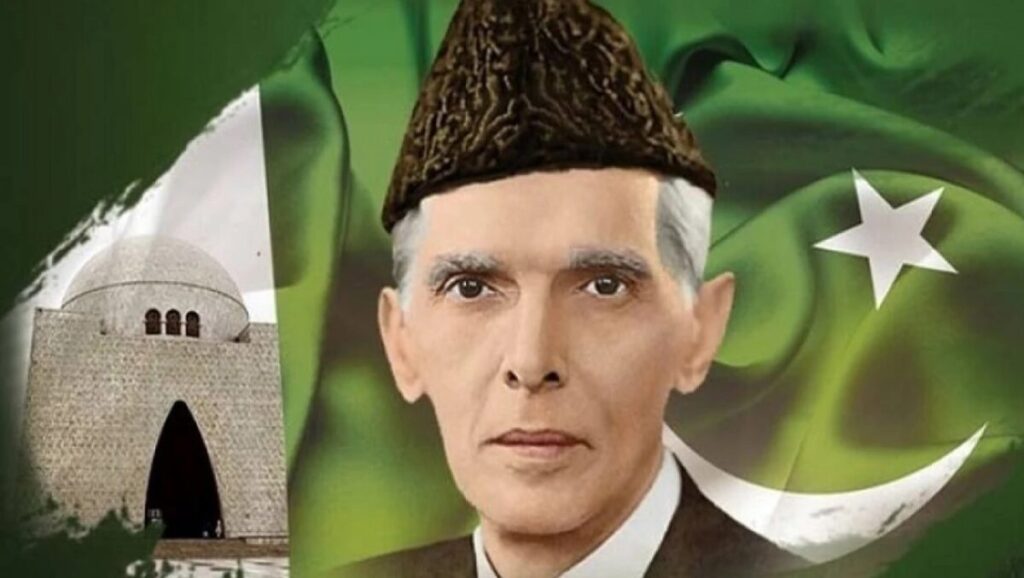

On 25th December 1876, while a large part of the world was celebrating the joy of the birth of Jesus Christ (peace be upon him), a blessed child was born in the Kharadar area of Karachi, in the household of a Muslim trader, Poonja Jinnah. The arrival of this newborn filled the home with happiness. The child was named Muhammad Ali Jinnah. Little did anyone know at the time that this child would go on to become the greatest leader of the Muslims of the Indian subcontinent and would achieve immortality in history with the title of Quaid-e-Azam.
The Lord of the Universe chose a completely non-political household, one associated with trade, to give birth to a great man who would change the course of South Asian history. This was a miracle and a decree of destiny that Muhammad Ali Jinnah was raised in a non-political environment. After receiving his early education at Sindh Madressatul Islam, founded by Agha Hasan Ali Afandi, he passed his matriculation examination from Mission High School. He then decided to travel to England for higher education in law.
In England, he chose Lincoln’s Inn as his institution of legal studies solely because, among the names of great legal luminaries displayed there, was also the revered name of the Holy Prophet Muhammad (peace and blessings be upon him). This choice reflected the depth of young Muhammad Ali Jinnah’s love and devotion to the Prophet (peace be upon him). By the blessing of this devotion, he not only completed his education within four years but also attained such mastery of law that, upon returning to his homeland as Barrister Muhammad Ali Jinnah, his reputation steadily rose within Bombay’s legal circles.
During this period, he decided to play a role in national politics and joined the Indian National Congress. This marked the beginning of the fulfillment of his youthful aspirations. His wealth, honor, and fame continued to grow, and the world came to recognize Muhammad Ali Jinnah as a wealthy barrister, a man of impeccable character, an outstanding lawyer, and a dignified politician. Well-dressed, principled, refined in thought, and highly successful, he became a respected and well-known figure in Bombay’s elite circles. Nationally, he began to gain recognition as an emerging Muslim leader within the Congress.
At this stage, he was a strong proponent of Hindu-Muslim unity, and his early political career was defined by efforts to achieve communal harmony. He was even referred to as the Ambassador of Hindu-Muslim Unity. During this time, he remained far removed from religion-based politics. Even when the purely religious Muslim movement known as the Khilafat Movement gained Congress support, Muhammad Ali Jinnah, adhering strictly to Congress principles, kept himself completely detached from it. In contrast, Mohandas Gandhi used the Khilafat Movement to elevate his political stature, introducing himself across India through its platform.
As a result, the Muslim religious movement transformed Gandhi into a popular all-India Hindu-Muslim leader. Going further, Gandhi cleverly adopted the appearance and practices of Hindu ascetics to establish himself as a Hindu religious leader, gaining popularity among the Hindu masses and eventually becoming known as Mahatma Gandhi. Consequently, Hindu society—both elite and masses—began aligning with Gandhi’s Hindu-centric ideology and dreaming of Ram Raj.
Due to Hindu numerical dominance within the Congress, the party became a follower of Gandhi’s policies and philosophy. To discerning Muslim minds, this trajectory clearly pointed toward Ram Raj. These developments served as a warning alarm for perceptive leaders such as Muhammad Ali Jinnah, Maulana Muhammad Ali Johar, and Allama Iqbal. They voiced Muslim concerns to Hindu leadership and proposed solutions, only to face disappointment at every step.
Gradually, the implications of territorial nationalism became evident to Muslims. Hindu dominance in education, government services, political awareness, material resources, and the strong Congress platform became a frightening reality for insightful Muslims. When the British sought proposals for constitutional reforms for India’s future, the Congress formed a committee under Motilal Nehru. The committee’s report was both alarming and eye-opening for Muslims. It effectively placed Muslims at the mercy of the Hindu majority and denied them any meaningful safeguards.
This denial played a crucial role in transforming a patriotic constitutionalist like Muhammad Ali Jinnah into a Muslim nationalist. Quaid-e-Azam consciously decided to revive the All-India Muslim League and devoted himself entirely to the constitutional struggle for Muslim rights.
Now, a Muslim nationalist Muhammad Ali Jinnah stood in the field to lead the Muslims—fully aware of the political cunning of Gandhi and the Congress. Disillusioned Muslim leaders pledged full support to Jinnah and resolved to work toward establishing the Muslim League as the sole representative party of Muslims.
To counter Congress deception and promote Muslim nationalism, the poetry of Allama Iqbal and the prose writings of Syed Abul A‘la Maududi were effectively used to awaken Muslim consciousness. The idea that Hindus and Muslims were two separate nations grew stronger with each passing day. Allama Iqbal’s Allahabad Address laid the foundation for an independent Muslim homeland.
Muhammad Ali Jinnah’s popularity continued to rise until the Muslim nation unanimously bestowed upon him the eternal title of Quaid-e-Azam.
The journey from Muhammad Ali Jinnah to Quaid-e-Azam was extremely arduous. Uniting Muslims divided by sects, schools of thought, languages, and regions—while suffering from educational backwardness, economic deprivation, and political marginalization—under the banner of the Muslim League was no easy task. Yet, a man of unwavering resolve like Quaid-e-Azam made the impossible possible. Iqbal’s dream of Pakistan, realized by Quaid-e-Azam, stands as one of the greatest miracles in human history—entirely credited to one man: Quaid-e-Azam Muhammad Ali Jinnah.
Quaid-e-Azam was a visionary leader with an exceptional ability to make the right decisions at the right time, expose Hindu leadership’s cunning tactics, and counter them effectively. He was the only Muslim leader who demonstrated wisdom over emotion and turned every situation into an opportunity to achieve his goal.
At the outbreak of the Second World War, the Congress attempted to blackmail the British by refusing cooperation, resigning from ministries, and launching the “Quit India” movement. As confrontation escalated, Quaid-e-Azam displayed extraordinary political insight by raising the slogan: “Divide India into Hindus and Muslims and Quit India”, while simultaneously declaring cooperation with the government. Muslim representatives were inducted into the Viceroy’s Council, while Congress leaders landed in jail.
During this time, Quaid-e-Azam embarked on extensive tours to unite Muslims under the Muslim League’s banner, spreading its message from Khyber to Rameshwaram. The call “If you are a Muslim, join the Muslim League” echoed everywhere, igniting Muslim hearts.
On 23rd March 1940, the annual session of the Muslim League was scheduled at Minto Park, Lahore, to present a clear future roadmap. Unfortunately, on 19th March 1940, a clash occurred between police and a Khaksar contingent, resulting in the martyrdom and injury of many Khaksars. The British banned the movement and arrested its leader Allama Inayatullah Mashriqi along with other leaders. Lahore was engulfed in mourning, fear, and sorrow.
Despite suggestions to postpone the session, Quaid-e-Azam refused, viewing the tragedy as an opportunity. Before attending the session, he visited Mayo Hospital, Lahore, to console the injured Khaksars. Beginning his presidential address, he stated that he had just returned from visiting his wounded sons. After passing resolutions condemning government actions and demanding the release of arrested Khaksars, he presented and secured approval of the resolution outlining the concept of Pakistan—later known as the Pakistan Resolution.
Thus, the blood of the Khaksar martyrs was not wasted; it was transformed into the strength of the Muslim League, setting the entire Muslim nation on the path toward Pakistan. This struggle culminated in the establishment of independent Pakistan on 14 August 1947.
When asked whether Pakistan could have been created without Quaid-e-Azam, the most accurate answer remains his own famous remark:
“Pakistan was made by me and Abul Hasan (my secretary) and his typewriter.”
When the creation of Pakistan became inevitable, the British proposed 15th August as the date of independence—coinciding with the anniversary of Japan’s surrender in World War II. Quaid-e-Azam rejected this proposal, considering it an insult to Japan, while Hindu leadership accepted it for India, reflecting Congress’s appeasement of the British.
After independence, Quaid-e-Azam rejected the proposal to appoint Lord Mountbatten as Pakistan’s Governor-General, viewing it as a continuation of British rule, and chose to assume the office himself. India, however, willingly accepted Mountbatten—a decision unworthy of a truly independent nation.
The entire life of Quaid-e-Azam Muhammad Ali Jinnah was a model of struggle, rule of law, freedom of thought, unity, faith, and discipline. His success in nation-building is a twentieth-century miracle, deserving immense pride. May Allah Almighty accept the great services of this benefactor of South Asian Muslims and grant him the highest place in Jannat-ul-Firdous.
Ameen.