Reviving Classical Linkages to Shape Future: Pak–China Prospects in Long-Term Trade, Technology, and Cultural Exchange
Modern developments of China in the region of Asia, Central Asia and South Asia, no doubt have a unique historical traditional framework. And China is going to link it with the classical times of India and China, which is in other meaning the revival of ancient relations of regional empires. China is now closely focusing the inescapable geographical influence on the international relations, which is very significant for understanding the historical context of relations and shaping them in the present and future context. Political dynamics which have been shifted from the Empire to nation states of modern times, but the geographical ties are still valuable to regain classical trade and cultural exchange design for present ties and shared future.
From ancient times, China has a unique historical link with this land, as Tansen sen in his research work Buddhism, Diplomacy, and Trade: The Realignment of India-China Relations (600-1400) had explored that the relations between India and China were direct and conditioned by routes, people, politics, and cultures of different regional Asian societies.
To provide a historical linkage to modern relation is very important to enhance trust and continuity of relations. In ancient and classical times cultural, commercial, diplomatic, intellectual and religious relations of China to this region had deep roots. Mauryan’s (322-185BCE) great king Ashoka (268-232BCE) built a connection of ‘Pataliputra’ (capital of Mauryan Empire, modern day Patna), Texila and Kabul region which later became part of ancient Silk Route. Formal development of Silk Route (138BCE) during the Han dynasty (206BCE-220CE) of China opened it for ‘karvan’ (Caravan), which was connected with Bactria (nearly modern day northern Afghanistan), and Texila under the Kushan Empire (1-3CE). Kushan of Central Asia served as the bridge between South Asia and China. Ghandhara region had served as the crossroad of art, culture and architecture during the time of Kushan Empire. Buddhism had played a critical part in shaping civilization in the region, now a days Pakistan (Sardar & Saeed, 2020). Gupta Empire (320-550CE) fostered great ties with China through supporting Buddhist culture and establishing Nalanda center of learning which attracted scholars like Faxian, Xuanzang and many pilgrims to study and stored many Buddhist scriptures. Later on from the 6th to the 20th century, the Tang, Song, Ming, and Qing dynasties of China maintained a series of fluctuating relations with various South Asian empires. These relations included trade, cultural exchanges, and diplomatic missions, though the nature of contact varied over time depending on political and economic circumstances of the region.
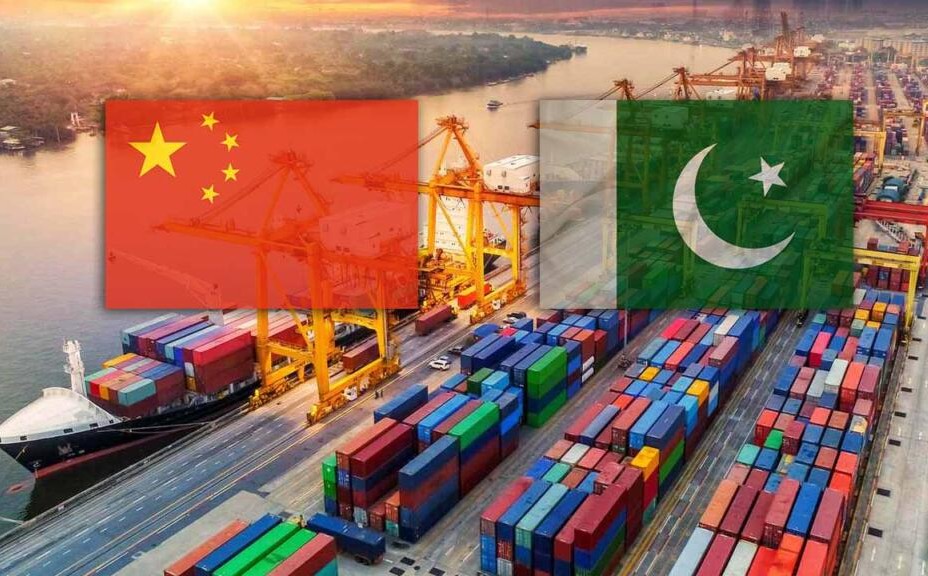
Contemporary Pak-China relations reflected in CPEC (New Silk Road). Trade growth and advancement, defense dealing and cooperation, science and technology agreements, and educational exchange are linked deeply with the revival of historical linkage that once connected the region through Silk Route.
CPEC has now entered in phase II (2020-2030); the main focus will be industrialization and socioeconomic development. During phase I (2015-2020) the major focus was the infrastructure and energy, which laid a solid foundation for Pakistan’s future industrialization and socio-economic development, many of the projects of phase I are still continue to move toward completion. In terms of future prospects, CPEC is expected to entice increasing investment from oil-rich states, particularly those seeking new trade routes and economic opportunities. Ultimately their growing strategic engagement with Pakistan will revolutionize the trade; these states may also look toward Pakistan for affordable defense cooperation, further deepening bilateral and regional partnerships.
In terms of long-term trade prospects, the China-Pakistan free trade agreement originally signed in 2007 and rescheduled in 2019, is ever first trade agreement of China with any other country, which provide an opportunity to Pakistan to export its product in a huge market of China, however, Pakistan needs to enhance production capacity and to ensure that its products meet the requirement of international market.
In terms of strategic partnership prospects, since 2011 after the official recognition by the both countries, the relationship became the cornerstone of the foreign policy of Pakistan. Future goal of Pakistan is to grow these relations and partnership more positively, ensuring that, this unique partnership will remain stable and undisputed alliance throughout history. Up to so extent Pakistan and China strategic partnership will maintain the balance of power in south Asia, as India move forward. China always defends the stance of Pakistan regarding Kashmir. As India build the narrative after Kargil war in 1999, that Pakistan will misuse the nuclear weapon, in this sense India want to isolate Pakistan diplomatically but China strategically supports Pakistan.
Lastly the bilateral relations between both nations will deepen more and more as prospects for cultural enrichment and exchange will continue to grow positively. Despite extensive growth in intergovernmental relations, communication gap remains, which lack people to people cultural exchange, this communication gap is due to language barrier, as very few people are aware of Chinese language. China does positively to bridge the communication gap and enhancing cultural exchange through non-refundable aid to Pakistan. Now many institutes of Chinese language and Confucius schools are working at different universities of Pakistan, also providing opportunities to physically visit China. Deeper understanding of culture will strengthen the future relations of both countries.
Trade with neighboring countries will greatly benefit Pakistan’s local industry. It will encourage industrial growth and economic development, improve production standards, and make it easier for Pakistani manufacturers to export their products on low cost (Asian Development Bank, 2017). This land has close ties with ancient, medieval and modern China; it is clear from the historical and geographical domains. Continuity of trade, exchange of technology and culture is the need of time to step forward into shared future and global governance. In a nutshell regional cooperation will reshape the domains of local industry.
Revival of classical linkage will secure the current and future relations; it is now the focus of both government’s (China and Pakistan). This is evident from the working of China-Pakistan Economic Corridor as a part of ancient Silk Road. Reshaping these historical connections emphasized the positive growth of present and future bilateral relationship. Enhancing trade relations, technology for mutual advancement and promotion of cultural exchange is now linked with past to survive in present and to get more strengthen in future.