Sheikh Abdullah bin Zayed Holds Calls with Foreign Ministers on Regional Security After Iranian Missile Attacks
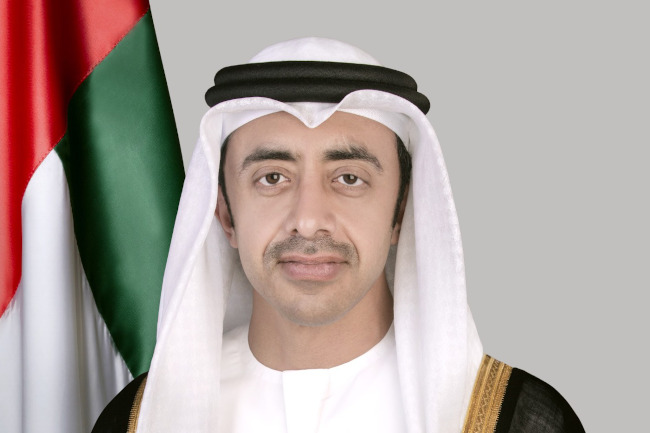
Abu Dhabi, The Gulf Observer: Abdullah bin Zayed Al Nahyan, Deputy Prime Minister and Minister of Foreign Affairs of the United Arab Emirates, held a series of phone conversations with several foreign ministers to discuss the latest regional developments and their implications for security and stability following Iranian missile attacks targeting the UAE and several countries in the region.
According to official statements, Sheikh Abdullah spoke with Mohammed bin Abdulrahman bin Jassim Al Thani, Prime Minister and Minister of Foreign Affairs of Qatar; Mihail Popșoi of Moldova; Constantinos Kombos of Cyprus; Mauro Vieira of Brazil; Petr Macinka of the Czech Republic; Paulo Rangel of Portugal; Péter Szijjártó of Hungary; Arnoldo André Tinoco of Costa Rica; and Kaja Kallas, High Representative of the European Union for Foreign Affairs and Security Policy and Vice-President of the European Commission.
During the calls, the ministers discussed the repercussions of the ongoing escalation in the region and the significant risks it poses to regional and international peace and security, as well as its potential negative impact on the global economy and energy security.
Sheikh Abdullah and the ministers strongly condemned the Iranian missile attacks on the UAE and other countries in the region, emphasizing their rejection of actions that violate international law. They also affirmed the right of the targeted states to take necessary measures to protect their sovereignty, security, territorial integrity, and the safety of their citizens and residents.
The UAE foreign minister expressed appreciation for the solidarity shown by his counterparts and reassured them that all residents and visitors in the UAE remain safe.
The discussions also highlighted the importance of coordinated international efforts at this critical time to contain tensions and prevent further escalation, while prioritizing political solutions, diplomatic engagement, and responsible dialogue to strengthen security and stability across the region.