Tokayev Urges Inclusion of Abai’s The Book of Words in UNESCO Documentary Heritage Register
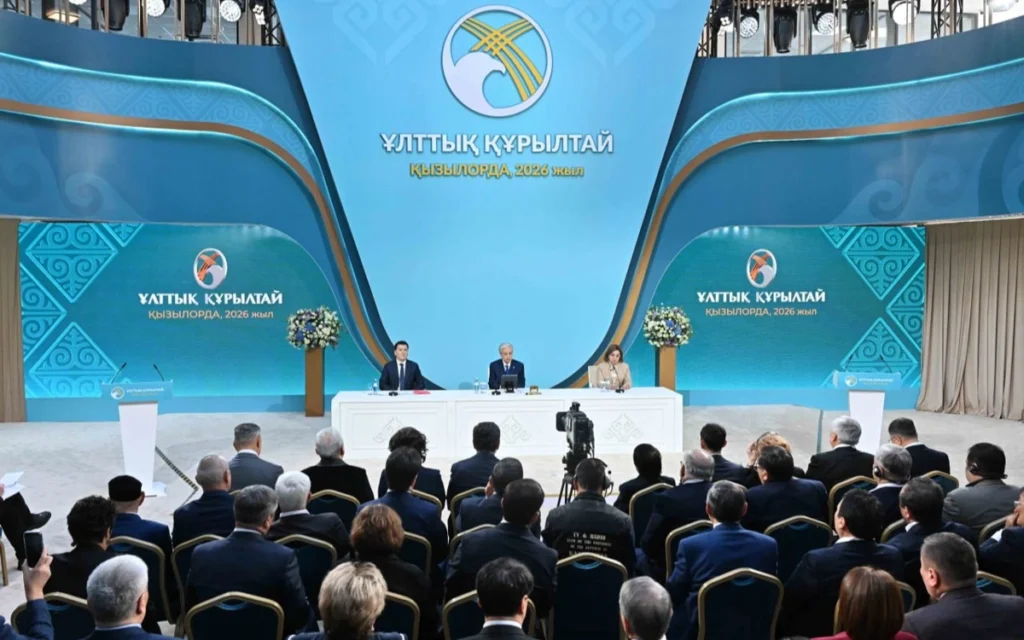
Kyzylorda, The Gulf Observer: President of Kazakhstan Kassym-Jomart Tokayev has called for the inclusion of Abai Kunanbayev’s renowned work, The Book of Words, in the UNESCO Memory of the World Register, describing it as a cornerstone of the nation’s spiritual and intellectual heritage, according to media reports.
Addressing the 5th session of the Ulttyq Qurultay in Kyzylorda on Tuesday, the President emphasized that Abai’s teachings should form the core of Kazakhstan’s national identity. He noted that Abai’s philosophical ideas remain highly relevant in the modern era, regardless of the passage of time.
“Abai’s teachings must be the core of our national identity. His insights remain as relevant today as ever. Today’s concept of Adal Azamat (Honest Citizen) is deeply linked to the thinker’s idea of Tolyq Adam (Complete Human). We must include Abai’s The Book of Words in the UNESCO Memory of the World Register,” President Tokayev said.
The Head of State also highlighted the enduring significance of the teachings of Al-Farabi and Khoja Ahmed Yasawi, describing them as key pillars of the nation’s spirituality. He stressed that Kazakhstan should move beyond commemorating great thinkers only on anniversary occasions and instead adopt a more systematic approach to preserving and promoting their intellectual legacy.
“To be honest, we remember the legacies of our great ancestors only during their anniversaries. This is the wrong approach,” he said, calling for regular scientific events and sustained scholarly efforts to comprehensively promote the teachings of Al-Farabi, Yasawi, and Abai. He added that national humanitarian institutes should play a leading role in advancing their ideas.
President Tokayev underscored that safeguarding the country’s cultural and philosophical heritage is a national responsibility, stressing the importance of passing these invaluable treasures on to future generations.
The 5th session of the Ulttyq Qurultay brought together prominent public figures, representatives of political parties, the non-government sector, business leaders, experts, and members of regional public councils to discuss key issues related to national development and identity.