Türkiye Warns of Wider Regional and Global Instability Amid Escalation in Iran
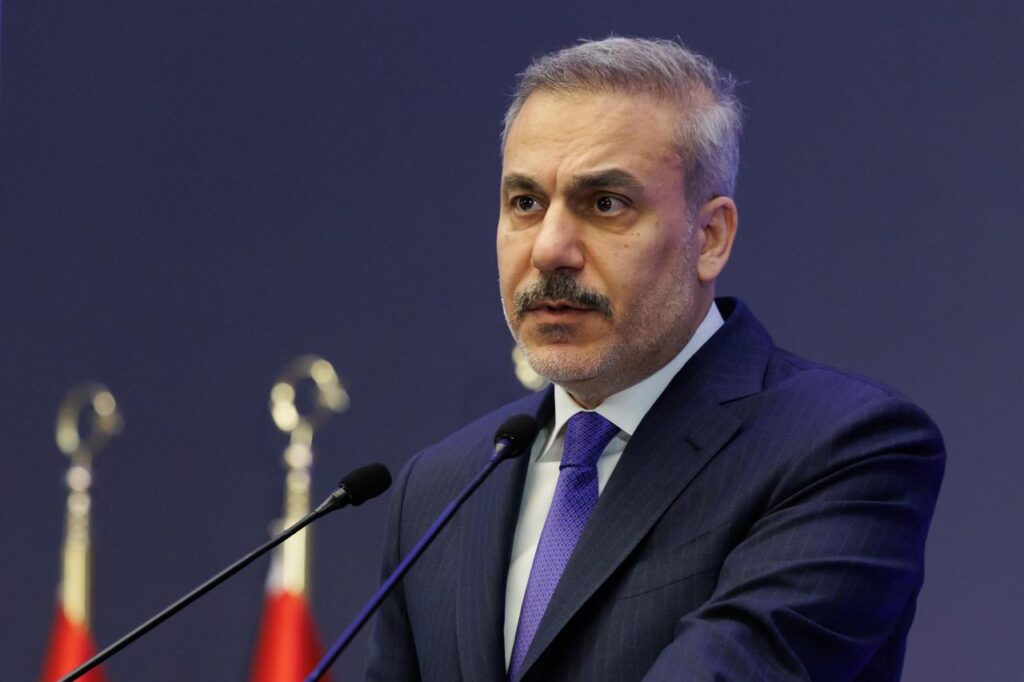
Ankara, The Gulf Observer:Turkish Foreign Minister Hakan Fidan on Monday emphasized that preserving stability in Iran and across the Middle East is critical, warning that the latest US and Israeli strikes on Iran risk triggering broader regional and even global instability.
Speaking to reporters during an iftar event held to mark the Muslim holy month of Ramadan, Fidan said Türkiye is exerting intense diplomatic efforts to restore calm and return the parties to negotiations.
“We are making intense efforts to ensure calm and reestablish a climate of peace,” he stated, underlining Ankara’s call for an immediate halt to hostilities and a resumption of dialogue.
Fidan noted that while Iran’s regional proxy groups have not demonstrated large-scale mobilization so far, limited activity has been observed. He added that there is currently no visible internal upheaval in Iran at a level suggesting regime change. However, he described the most concerning scenario as a prolonged escalation that could engulf the entire region.
Referring to Israeli leadership, Fidan said that Benjamin Netanyahu appears to be expanding his objectives from neutralizing Iran’s military capabilities to potentially targeting the regime itself.
“Netanyahu wants the threat posed by Iran to be completely eliminated — both for today and for the future. He used to define the threat as Iran’s capabilities. Now he has gone beyond capabilities and is defining the threat as the regime itself. There is an objective of regime change,” Fidan remarked.
He suggested that the minimum condition for ending the war would involve degrading Iran’s core military infrastructure, while the maximum scenario could entail regime change.
Attacks Viewed as Betrayal of Diplomacy
Fidan revealed that Ankara had previously worked through diplomatic channels to delay the outbreak of hostilities. However, renewed military action interrupted ongoing negotiations, which Iranian officials perceive as a betrayal of diplomacy.
He warned that the interruption of natural gas flow from Iran could pose a significant threat to global energy supply security. Any disruption in Iranian exports or instability affecting Gulf energy supplies, he said, could create serious global supply shocks.
Particular concern was expressed over the Strait of Hormuz, with Fidan cautioning that its potential closure could trigger serious volatility in international energy and financial markets.
“Closure of the strait could cause serious volatility in global financial and energy markets,” he said, adding that Iran may attempt to raise the cost of conflict by targeting Gulf energy infrastructure, though the broader international reaction remains uncertain.
Fidan also stressed that instability linked to the Iran crisis could spill over into Syria and Iraq, upsetting broader regional security balances.
Intensified Diplomatic Contacts
According to Fidan, Türkiye has stepped up diplomatic contacts with multiple international actors, maintaining communication with representatives from the European Union, Germany, France, Gulf states, Oman, and the United States.
He described the current environment as involving multilayered negotiations aimed at preventing further escalation and reiterated Ankara’s consistent message: the attacks must stop immediately and diplomacy must resume.
Addressing the humanitarian implications, Fidan said that an expanded regional conflict would likely worsen conditions in Gaza, noting reported restrictions by Israel on entry and exit points. He added that key regional actors such as Saudi Arabia, Qatar, Egypt, and Jordan are increasingly preoccupied with the Iran-related crisis.
Türkiye, he affirmed, continues to provide humanitarian assistance and remains open to supporting international peace mechanisms if requested.
Fidan confirmed that approximately 20,000 Turkish citizens, including dual nationals, are currently in Iran, and that no Turkish citizens have been injured or killed. Border crossings remain operational, with Turkish authorities coordinating closely across relevant institutions. However, airspace closures in parts of the region have caused temporary travel disruptions, particularly for citizens returning from the Gulf.
On the possibility of a migration wave from Iran, Fidan said there is currently no such movement, as Iranian authorities are not permitting large-scale departures. Turkish institutions, including the Interior Ministry and disaster management agencies, have contingency plans in place should the situation change.
He also touched on broader geopolitical matters, including discussions related to US CAATSA sanctions and evolving debates within Europe on defense autonomy and security architecture. Fidan emphasized that Ankara intends to remain actively involved in any regional security framework affecting its neighborhood.