Uzbekistan to Elevate Sports Sector with Comprehensive Reforms and Mass Participation Drive
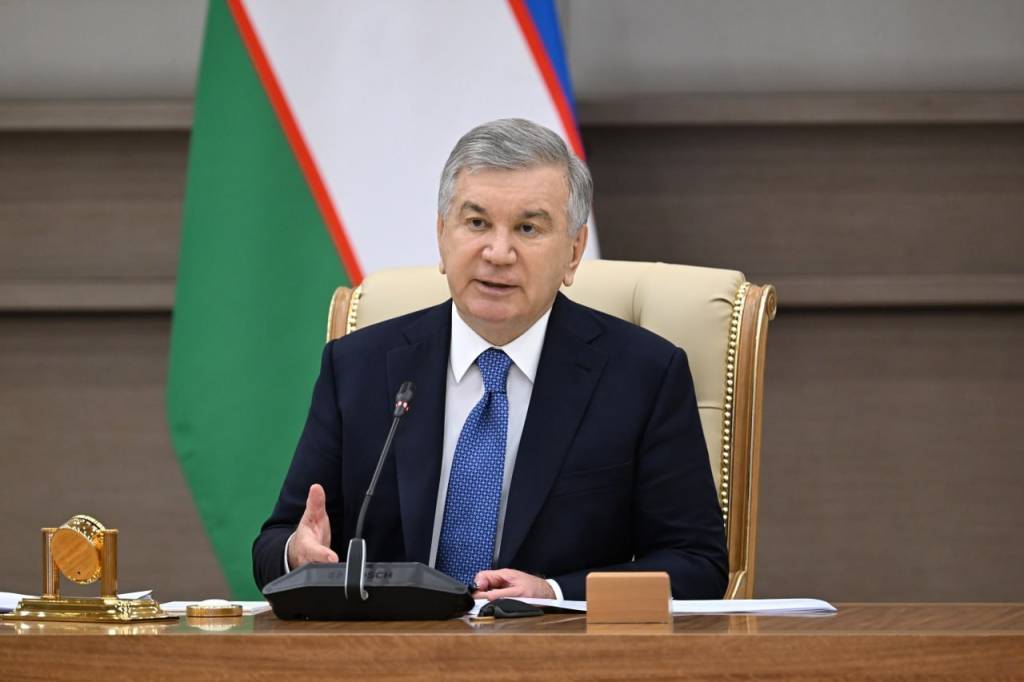
Tashkent, The Gulf Observer: Shavkat Mirziyoyev chaired a high-level videoconference meeting to review and accelerate reforms in Uzbekistan’s physical culture and sports sector, emphasizing the need to transform sports into a driver of public health, national pride, and economic growth.
Addressing officials, the President underlined that sport is not merely about competition but a powerful tool for promoting healthy lifestyles, discipline, patriotism, and enhancing the country’s international reputation.
Over the past nine years, Uzbekistan has made significant progress in sports development, with 1,774 modern sports grounds constructed across more than 1,500 districts, over 200 large sports facilities and nearly 4,000 private sports clubs established nationwide. The number of young people engaged in professional sports has doubled, while participation in Olympic and Paralympic teams has increased substantially.
In the past year alone, Uzbek athletes secured 452 gold, 418 silver, and 501 bronze medals in international competitions, with more than 50 athletes setting world and Asian records. Despite these achievements, the meeting highlighted systemic shortcomings, including underutilization of local potential and weak performance in several regions and sports federations.
The performance of leadership in 26 Olympic sports federations and regional administrations came under scrutiny for failing to maximize available resources. Authorities noted that better use of existing infrastructure—including 207 higher education institutions, 15 Olympic and Paralympic centers, and over 300 sports schools—could significantly improve athlete development and international competitiveness.
Successful local initiatives, such as those in Zarbdar district, were cited as models for replication nationwide. Officials were instructed to expand such practices to boost grassroots participation and improve sports infrastructure and accessibility across all regions.
The President directed regional authorities to ensure that sports facilities and programs are effectively implemented in schools, addressing low participation rates and inadequate physical fitness levels among students in several provinces. Reforms will also focus on improving the performance of specialized sports schools, linking staff remuneration to measurable results and introducing new incentive mechanisms for high-performing institutions.
In higher education, rectors have been tasked with strengthening collaboration with sports federations and enhancing student participation in physical activities. Institutions are required to develop annual sports development plans based on best practices observed in leading universities.
The meeting also addressed gaps in certain sports disciplines, including fencing, tennis, equestrian sports, and winter sports, where existing potential remains underutilized. To support athletes, Uzbekistan plans to enhance domestic sports medicine capabilities, reducing reliance on foreign specialists by strengthening cooperation between medical centers and sports federations.
A series of new initiatives were introduced to promote mass participation. The effectiveness of sports programs in local communities will now be evaluated based on public health outcomes. Volunteer networks will be established to promote healthy lifestyles, while top-performing communities will receive incentives and sports equipment.
The government also announced the introduction of CrossFit programs in all schools and technical colleges, reflecting global fitness trends, and designated one day each week as “Sports Day” across government institutions to encourage physical activity among employees.
To further institutionalize sports development, a new “district–school–sports institution–federation” model will be implemented, supported by tripartite agreements between local authorities, educational institutions, and sports federations.
The reforms aim to double the number of citizens actively participating in sports to one million within the year. A unified digital platform powered by artificial intelligence will also be developed to monitor athlete performance and optimize training systems.
Special emphasis was placed on strengthening the Olympic and Paralympic movements, including expanding the number of disciplines in the Presidential Olympics and improving support systems for para-athletes. For the first time, expenses for companions of para-athletes during training and competitions will be covered, alongside financial incentives.
In addition, measures were announced to boost the commercial viability of sports, including tax incentives for businesses investing in sports infrastructure and initiatives to increase attendance at football matches by rescheduling games and enhancing fan experiences.
The meeting also addressed infrastructure challenges, with plans to rehabilitate underutilized sports facilities through public-private partnerships and transform them into modern complexes.
Concluding the session, President Mirziyoyev reaffirmed that sport in Uzbekistan must evolve into a pillar of national development—promoting health, achieving international success, and contributing to economic growth.