Vietnam PM Orders Faster Completion of Key Infrastructure Projects Ahead of 14th Party Congress
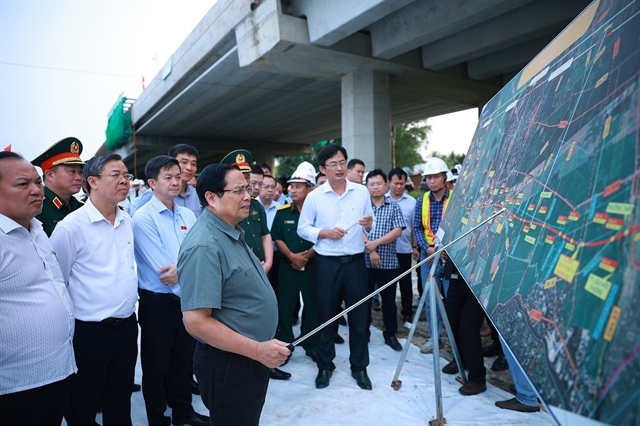
Hanoi, The Gulf Observer: Prime Minister Phạm Minh Chính on January 2 signed Dispatch No. 02/CĐ-TTg, calling for stronger and more effective management and the accelerated completion of investment and construction projects in celebration of the 14th National Party Congress.
The dispatch noted that in 2025, ministries, sectors, and localities successfully organised three major rounds of inauguration, groundbreaking, and technical traffic-opening ceremonies for large-scale, nationally significant socio-economic infrastructure projects. These events marked the 50th anniversary of the Liberation of the South and National Reunification (April 19), the 80th anniversary of the August Revolution and National Day (August 19), and celebrations for the 14th National Party Congress alongside the 79th anniversary of National Resistance Day (December 19).
A total of 564 projects were implemented across 34 provinces and centrally governed cities, with total investment exceeding VNĐ5.14 quadrillion (approximately US$195.44 billion). Private-sector investment accounted for about VNĐ3.84 quadrillion, or 74.6 per cent of the total, while state investment stood at around VNĐ1.3 quadrillion, or 25.4 per cent.
According to the Prime Minister, projects launched and inaugurated during these periods not only highlighted achievements in infrastructure development but also fostered unity and responsibility, generating momentum for nationwide emulation movements linked to major national events. They contributed to socio-economic growth and reaffirmed the determination of the Party, the State, and the people to build a strong, civilised, prosperous, and thriving Việt Nam.
To further enhance investment and construction management, accelerate project completion and commissioning, and maximise efficiency while preventing corruption, waste, and group interests, the Prime Minister instructed ministers, heads of ministerial-level and government-affiliated agencies, and chairpersons of provincial and municipal People’s Committees to urge investors, project management units, and contractors to act with greater responsibility, stronger determination, and in a “faster and bolder” manner.
For projects required to complete final works or achieve technical traffic opening by December 19, 2025, relevant stakeholders were directed to mobilise maximum resources to ensure completion and operation before the opening of the 14th National Party Congress on January 19, 2026.
For ongoing projects, investors and contractors were asked to adopt scientific and feasible construction plans, strengthen human and technical resources, and accelerate progress, aiming to shorten timelines by three to six months while strictly ensuring quality, compliance with procedures, environmental protection, and labour safety.
Projects launched on December 19, 2025, must urgently complete all legal procedures to ensure immediate and continuous implementation, with no tolerance for formalism, bureaucracy, or inefficiency, the dispatch said.
Local authorities were urged to mobilise the entire political system to address bottlenecks, speed up land clearance, and ensure timely supplies of construction materials. Delays caused by site clearance issues, material shortages, or negative practices such as favoritism and “ask-give” mechanisms were strictly prohibited.
The Prime Minister also instructed agencies to strengthen cost and quality management, ensuring strict control from project surveying and formulation to design, appraisal, and approval, in full compliance with regulations to guarantee economic and technical efficiency. Total investment and cost estimates must be closely monitored, with zero tolerance for losses or waste, while contractor and investor selection must strictly follow legal requirements.
Relevant agencies were further tasked with reviewing and adjusting technical norms to reflect actual conditions and regional characteristics, updating meteorological and hydrological data—particularly following recent floods—to ensure the long-term stability and sustainability of projects.
Inspection, auditing, and supervision of all projects, both ongoing and planned, are to be intensified, closely linked to efforts to prevent corruption, waste, and other negative practices, the dispatch concluded.