Vietnam Reaffirms Commitment to Peaceful Nuclear Cooperation at World Nuclear Energy Summit
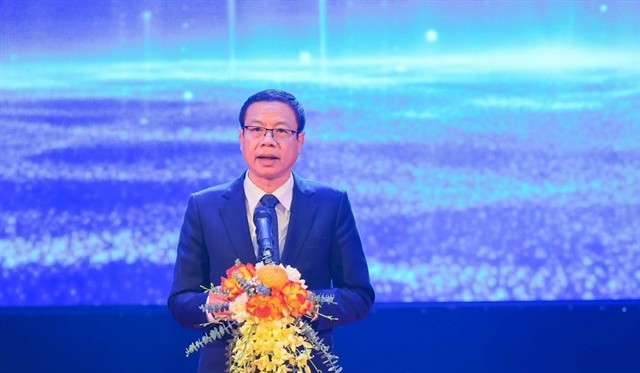
Hanoi, The Gulf Observer: A Vietnamese delegation led by Deputy Minister of Science and Technology Lê Xuân Định participated in the World Nuclear Energy Summit in Paris on Tuesday, reaffirming the country’s commitment to strengthening international cooperation in atomic energy for peaceful purposes.
The summit, the second global gathering on civilian nuclear power following the inaugural meeting held in Brussels in 2024, brought together leaders and representatives from nearly 60 countries, as well as international organisations, financial institutions, businesses and leading energy experts.
Opening the event, French President Emmanuel Macron highlighted the growing importance of nuclear power in national energy strategies, particularly as global electricity demand rises due to rapid advancements in digital technologies and artificial intelligence.
Macron noted that nuclear energy provides stable and large-scale electricity with low carbon emissions, helping countries enhance energy security while supporting the global transition toward cleaner energy systems.
Director General of the International Atomic Energy Agency (IAEA), Rafael Mariano Grossi, also stressed that nuclear energy could play a major role in achieving global climate targets. He said reaching carbon neutrality by the middle of the century would require a significant expansion of nuclear power capacity alongside renewable energy, while maintaining strict compliance with international safety, security and non-proliferation standards.
Delegates at the summit discussed a wide range of issues shaping the future of nuclear energy, including next-generation reactor technologies, the development of small modular reactors (SMRs), stronger nuclear fuel supply chains and financing mechanisms for large-scale energy projects.
Many participants highlighted the complementary role of nuclear and renewable energy in building resilient, low-emission and sustainable energy systems in the long term.
Speaking to reporters on the sidelines of the event, Nguyễn Hoàng Linh, Director of the Agency for Radiation and Nuclear Safety, said Việtnam’s participation demonstrated its support for international initiatives promoting the development and peaceful use of atomic energy.
He described nuclear power as a clean, reliable and low-carbon energy source that aligns with Việtnam’s long-term energy development strategy amid rising electricity demand and the country’s goal of achieving net-zero emissions by 2050.
On the sidelines of the summit, the Vietnamese delegation held working sessions with international organisations, nuclear regulatory authorities and energy partners to exchange expertise, promote professional training and enhance technical cooperation.
The delegation also met with the Nuclear Energy Agency (NEA) under the Organisation for Economic Co-operation and Development (OECD) and France’s Nuclear Safety and Radiation Protection Authority (ASRN) to discuss strengthening Việtnam’s regulatory capacity, particularly in safety and security evaluation and the development of legal frameworks for advanced reactor technologies.
Vietnamese representatives further engaged with major French nuclear energy companies and organisations to gain insights into developing technical infrastructure and conducting safety assessments during nuclear power project implementation.
These exchanges are expected to further advance Việtnam–France energy cooperation, as both countries continue to deepen their comprehensive strategic partnership.
In recent years, Việt Nam has actively participated in working groups and specialised committees of the OECD Nuclear Energy Agency, gradually gaining access to international methodologies for assessing the safety of emerging nuclear technologies.
According to Linh, the country is also studying international experience in establishing legal and regulatory frameworks for advanced nuclear technologies, particularly small modular reactors, as part of preparations for future nuclear power development.