World Radio Day- My Journey with Radio Pakistan
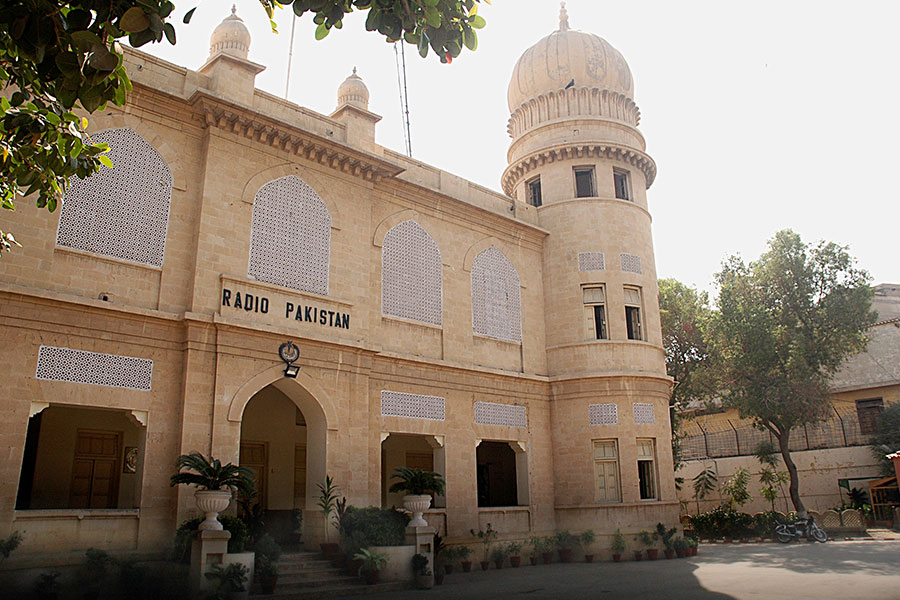
World Radio Day should not be reduced to a ceremonial acknowledgment of an aging technology; it must be seized as a political and ethical moment — a space to interrogate how communication shapes power, how voices are authorized or silenced, and how public memory is constructed. Radio is never innocent. It is a pedagogical force. It teaches us who belongs, who speaks, and whose suffering counts. My own journey with Radio Pakistan, beginning in 2002 and maturing during the politically charged atmosphere of 2007, unfolded within this contested terrain where broadcasting was both a state apparatus and a fragile site of democratic possibility.
Radio Pakistan’s mission — to inform, educate, and entertain — was never simply administrative language. It carried within it a moral vocabulary anchored in the Qur’anic principle “Wa Qoolo Linnaasi Husna” — speak to the people gently. That injunction suggests more than politeness; it gestures toward an ethics of communication grounded in dignity, dialogue, and responsibility. Yet even noble missions operate within material conditions. Broadcasting institutions do not float above politics; they are embedded within state structures, economic priorities, and ideological struggles. The question has never been whether radio teaches, but what it teaches, in whose interests, and toward what futures.
When I entered Radio Pakistan in the early 2000s, the global media environment was undergoing profound restructuring. The rise of private FM channels in Pakistan signaled liberalization, energy, and youth engagement. These FM stations were vibrant, conversational, interactive. They disrupted the formal cadence of state broadcasting and redefined what immediacy sounded like. Their popularity reflected broader economic transformations after 2000, when market-driven reforms reshaped institutions worldwide. Communication became entangled with neoliberal rationalities that treated audiences as consumers, culture as commodity, and public discourse as a marketplace.
In semi-authoritarian contexts, such reforms produced a paradox. While markets were liberalized, political authority often remained centralized. The airwaves became hybrid spaces: commercially dynamic yet politically circumscribed. The language of freedom coexisted with invisible boundaries. Broadcasting institutions learned to navigate this terrain through negotiation, self-regulation, and strategic silence. The state did not need to speak loudly to assert control; structural dependency ensured compliance.
Within this landscape, my work in outdoor broadcasting assumed deeper significance. “Chalta Phirta Microphone” was more than a program; it was an experiment in democratic listening. We stepped outside studio walls and invited citizens — laborers, teachers, vendors, students — to articulate their grievances and imagine solutions. In those moments, the microphone shifted from an instrument of authority to a conduit of lived experience. The everyday became political. The ordinary became visible. Such acts may seem modest, but they disrupt the pedagogies of passivity that often dominate public life.
Similarly, “Mahol Zindagi Hay” sought to render environmental degradation intelligible as a social justice issue. Long before climate discourse saturated policy arenas, we framed environment as inseparable from survival, health, and dignity. Radio drama, with which I occasionally engaged, offered another pedagogical space. Through narrative and affect, drama can unsettle common sense, reveal contradictions, and cultivate empathy. Entertainment, when rooted in critical awareness, becomes a form of cultural resistance rather than distraction.
Yet it would be naïve to romanticize these efforts. Broadcasting institutions are structured by political economies that shape what can be said and how far critique may travel. During the Musharraf era, the boundaries of permissible discourse were elastic but present. Producers internalized these limits. The most insidious forms of control are not always overt censorship but the normalization of caution. The result is a managed public sphere where systemic inequalities remain largely intact while surface debates circulate freely.
Globally, the transition from state-led developmental paradigms to market-centered economic thought altered the mission of public broadcasting. Earlier models, for all their flaws, imagined radio as a vehicle for collective uplift. Under neoliberal regimes, communication increasingly mirrored corporate logics. Growth became a mantra; inequality became collateral; dissent became noise. The language of development was often stripped of questions about justice. Media systems participated in this reframing, sometimes consciously, often structurally.
From a critical perspective, broadcasting must be understood as a terrain of ideological struggle. It can reproduce dominant narratives that legitimize concentrated power, or it can nurture counter-publics that challenge exclusion. The subaltern voice does not automatically emerge simply because a microphone is present. It requires institutional commitment, editorial courage, and structural reform. Token participation is not empowerment. Empowerment demands sustained inclusion in agenda-setting and knowledge production.
Today, artificial intelligence complicates this landscape further. Algorithmic systems curate information, generate synthetic voices, and personalize content streams. Traditional broadcasting faces fragmentation as audiences migrate to digital platforms governed by opaque corporate infrastructures. AI can archive radio history, translate programs into marginalized languages, and enhance accessibility. But it can also automate propaganda, intensify surveillance, and amplify dominant ideologies under the guise of neutrality. Technology does not escape politics; it encodes it.
If radio is to remain relevant in the twenty-first century, it must embrace AI without surrendering its public mandate. It must deploy technology in the service of sustainable development, not market spectacle. It must strengthen investigative journalism, community reporting, and participatory formats. It must cultivate media literacy so audiences can critically navigate both analog and digital environments. Informing, educating, and entertaining must be reclaimed as radical commitments rather than institutional clichés.
World Radio Day compels us to ask difficult questions. Who controls the narrative of the nation? Whose suffering becomes newsworthy? Whose aspirations shape policy debates? The airwaves legally belong to the public, yet structurally they often reflect elite interests. Bridging this contradiction requires democratizing governance structures within broadcasting institutions. Editorial independence must be protected from political interference. Funding models must insulate public service from commercial capture. Community radio initiatives should be expanded, especially in rural and marginalized regions.
My years at Radio Pakistan taught me that radio’s power lies in its intimacy. A voice traveling through static can still unsettle complacency. A conversation recorded in a village can still challenge metropolitan arrogance. A drama performed without visuals can still ignite imagination. Radio does not require spectacle to matter; it requires trust. And trust emerges when communication is rooted in respect — in speaking gently, truthfully, and courageously.
In an age saturated with images and algorithms, radio’s simplicity is its strength. It can foster slow dialogue in a culture of instant reaction. It can build solidarity in a time of fragmentation. It can connect sustainable development goals with everyday struggles — water access, health care, climate resilience, education, labor rights. It can transform listeners from passive recipients into engaged citizens.
World Radio Day should therefore be reclaimed as a call to action. Broadcasting must not merely echo authority or entertain distraction. It must function as a democratic public sphere where critical thought is nurtured, marginalized voices are centered, and hope is organized. The mission to inform, educate, and entertain must be infused with a commitment to justice. “Wa Qoolo Linnaasi Husna” must guide not only tone but purpose — communication as an act of ethical solidarity.
Radio has survived wars, political upheavals, and technological revolutions. Its survival in the AI age will depend on whether it aligns itself with market imperatives or with the unfinished project of democracy. The choice is not technological; it is moral and political. If radio reclaims its role as a critical educator and a platform for the people, it will not fade into nostalgia. It will continue to serve as the conscience of a nation, reminding us that communication, at its best, is an act of collective responsibility and transformative possibility.