Tejas: Exposes the Flaws in Indian Aviation Industry
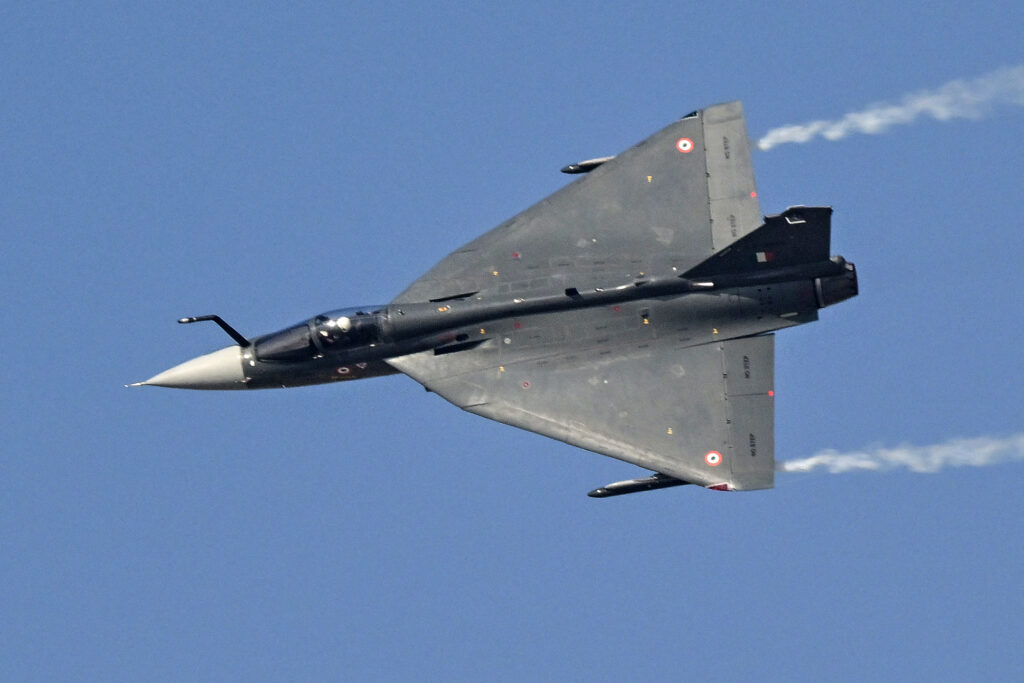

India’s Tejas programme began in 1983 as the Light Combat Aircraft (LCA), envisioned as a modern indigenous fighter to replace ageing MiG-21s. To advance the project, the Aeronautical Development Agency was set up under Defence Research and Development Organisation (DRDO), working with the Hindustan Aeronautics Limited (HAL) for production. The inaugural flight of the Tejas (TD-1) took place in January 2001. At that time, I was in India and at a ceremony in Hyderabad, I met the father of the LCA programme, Air Chief Marshal (ACM) Idris Hasan Latif. He told me that there are three major issues with the programme: the bureaucratic hindrances, the quality of HAL, and the constant change in the design and performance parameters which did not lead to the freezing of the design phase. Overambition coupled with the aforementioned affected the timelines of the Tejas, making India’s pursuit of strategic aerospace self-reliance illusive.
At the heart of the myriad problems faced by the Tejas programme is its sheer size and heaviness. This means that a much powerful engine is required to propel the aircraft. When India’s indigenous Kaveri engine faltered, New Delhi turned to the USmade F404, originally built for the F/A-18 Hornet, as an interim solution for the Tejas Mk1 and Mk1A. However, this imported engine also proved to be underpowered in performance, causing India to pursue US’s GE Aerospace to collaborate with HAL to domestically license produce F-414 engines via technology transfer to power the Tejas Mk-2 LCA.
This deal, however, remains stalled over pricing, the scope of technology transfer by the original equipment manufacturers (OEM), and the enduring tariff spat between Washington and New Delhi. Issues faced by the Tejas during the developmental stage causing missed delivery timelines also made India’s Air Chief Marshal Amar Preet Singh to cast aspersions on the HAL, saying he lacked confidence in the company and did not see it in “mission mode”. Additional statements by senior Indian Air Force (IAF) officials further underscore the inadequacy of the Tejas, warning that the Tejas is not ready as it still requires years of refinement. The perception of the aircraft was, however, irrevocably damaged after its crash in the Dubai Airshow.
Air Marshal M. Matheswaran (Retd), former Deputy Chief of Integrated Defence Staff, feels Tejas is not a 4.5 Generation fighter, is underpowered and overloaded. Air Marshal BK Pandey (Retd) opines that LCA Tejas has serious limitations as it lacks endurance, payload, and range. One of India’s top defence journalists call Tejas overweight and decades late, while some analysts highlight its manoeuvrability, structural, and weapon integration issues. Those who were involved in the LCA programme are of the opinion that the LCA was launched without a stable design and that they kept modifying the aircraft for years, something ACM Idris Hasan Latif was fearful of two decades ago.
After India’s humiliating defeat in the May 2025 war at the hands of the Pakistan Air Force (PAF), New Delhi was under pressure to compete with Pakistan and the Dubai Airshow provided them with this opportunity. Secondly, India was probably pressured to appear in this air show, particularly after its absence was highlighted by the media in the Royal International Air Tattoo (RIAT). The air event, held in the UK in July 2025, concluded with the PAF winning two awards, including one by the JF-17 of No. 8 Squadron. During the Dubai Airshow, the JF-17, which had its maiden flight on 2 September 2003, proved to be a champion due to its status as a war-proven machine during the May 2025 war as it destroyed two Indian S-400 systems and fully supported the J-10 fleet during its operations. As of yet, JF-17 has been sold to Nigeria, Azerbaijan, Myanmar, and there are two deals in the pipeline.
On the other hand, Tejas has not been able to make a mark in the aviation market and is still trying to make its debut to revive the IAF and Indian aviation industry’s image. Also, more than 150 JF-17 have been manufactured whereas Tejas is still struggling to cross the figure of 50. This Tejas crash during the Dubai Airshow has proven to muddy the repute of the IAF as well as further defaming the HAL. Nonetheless, air accidents take place because of two issues. One is technical and second is human error. For the Tejas, the technical issues emerge because of the aircraft’s prolonged struggle with design, engine, control system, and its avionics. History also shows that 70 per cent of air accidents are caused due to human error, be it air crew, or ground crew related.
While performing aerobatics and flying in operationally compressed environments wherein the aircraft is flown to its extreme limits of operating envelope, the major challenges the likes of lower altitudes, management of aircraft’s speed / energy, and close proximity to ground levels, human limitations, if not handled professionally, lead to an accident. It is premature who caused the accident: man, or machine? It is tragic that during the air display, the IAF aircraft crash was fatal. My sympathies go for the pilot and the bereaved family as he became the victim of a programme which has suffered because of bureaucratic delays, manufacturing strategies, underpowered engine, design and other system issues. However, the exact facts will only be determined on the completion of the inquiry.