Saudi Arabia and Seven Islamic Nations Reject Any Attempt to Displace Gaza’s Palestinians
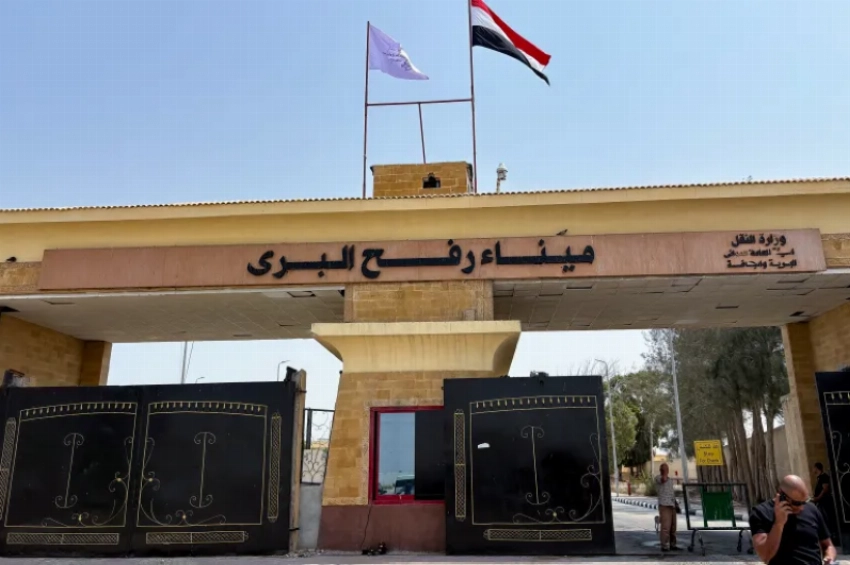
Riyadh, The Gulf Observer: The foreign ministers of Saudi Arabia and seven other Islamic countries reaffirmed their firm opposition to any attempts to expel the Palestinian people from the Gaza Strip, issuing a joint statement on Saturday expressing deep concern over recent Israeli remarks on unilaterally opening the Rafah Border Crossing to transfer Palestinians into Egypt.
The statement was released following consultations among the foreign ministers of Saudi Arabia, Egypt, Jordan, the United Arab Emirates, Indonesia, Pakistan, Türkiye, and Qatar.
The ministers emphasized the necessity of full adherence to the Gaza Peace Plan proposed by U.S. President Donald Trump, particularly its provisions to keep the Rafah Crossing open in both directions, ensure freedom of movement for Gaza’s population, and prevent any forced displacement of residents.
They stressed the importance of creating conditions that allow Palestinians to remain on their land and contribute to rebuilding their homeland within a comprehensive framework aimed at restoring stability and improving humanitarian conditions.
The ministers also expressed appreciation for President Trump’s commitment to achieving regional peace, urging the swift and unobstructed implementation of the “Trump Plan” to consolidate security and strengthen the foundations of stability across the region. They underlined the importance of maintaining the ceasefire, alleviating civilian suffering, and ensuring the unrestricted flow of humanitarian aid into Gaza.
They further called for early recovery and reconstruction efforts and for enabling the Palestinian Authority to resume its responsibilities in the Gaza Strip, laying the foundation for a new phase of security and stability.
The statement affirmed the readiness of the eight nations to continue coordinating with the United States and other regional and international partners to ensure the full implementation of UNSCR 2803 and all relevant UN Security Council resolutions, paving the way for a just, comprehensive, and lasting peace.
The ministers reiterated that such peace must be grounded in international legitimacy and the two-state solution, leading to the establishment of an independent Palestinian state based on the June 4, 1967 borders, encompassing the occupied territories in Gaza and the West Bank, with East Jerusalem as its capital.