President Shavkat Mirziyoyev Upcoming Visit to Pakistan – A New Era of Strategic and Economic Integration
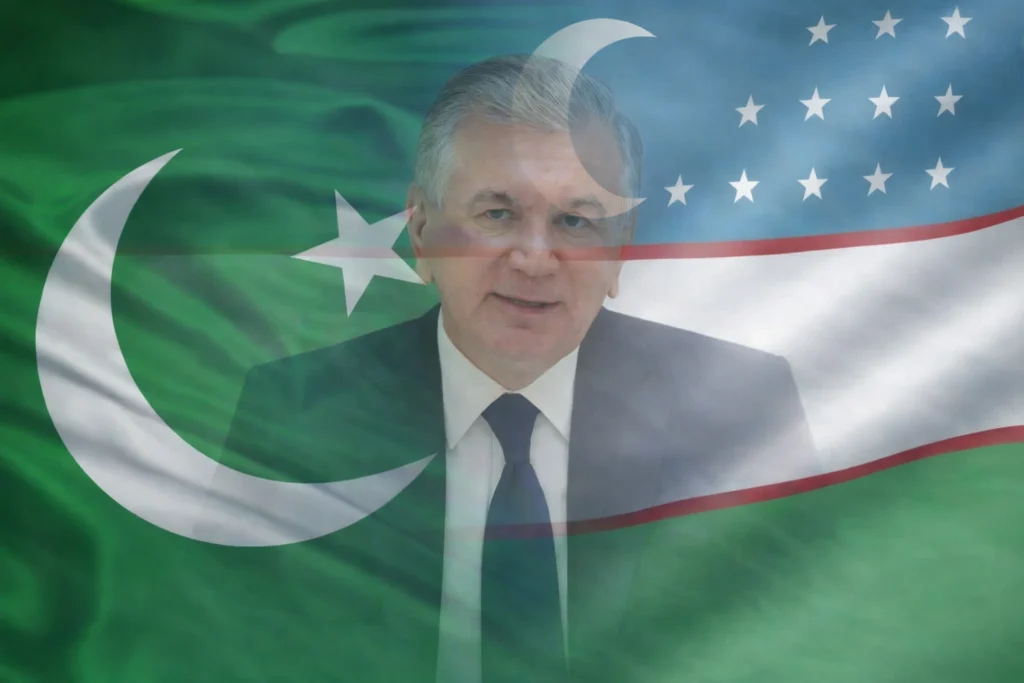

The upcoming Presidential visit of the Republic of Uzbekistan by President Shavkat Mirziyoyev to the Islamic Republic of Pakistan in February 2026 is a historical milestone in the development of Uzbekistan Pakistan relations. It will not only mark a new phase of vigorous diplomatic interaction, but also a decisive shift to the results-oriented, future-based strategic relationship based on the economic modernization, industrial affiliation, and regional connection.
In the center of the high-level discussions is a monumental and radical vision, which is to take bilateral trade to a level of 2 billion dollars. This aspiration is a testament to the positive political confidence between Tashkent and Islamabad and their mutual desire to get the complete economic and resource potential out of their relationship. It is moving away with old commodity exchange and towards building integrated industrial value chains, collaborative high-tech production and systematic elimination of factors limiting access to markets.
Strong Growth
The credibility of this future-oriented agenda is highlighted by the recent trade performance. By the end of 2024, bilateral trade turnover was at $404 million and between January and November 2025, it was on $434.4 million, which is an impressive year-on-year gain of 16.9 percent. It was an impressive growth of 22 percent compared to the same period in 2023 showing the strength of economic relations despite the volatility of the world economy.
These statistics are a strong base of the further stage of cooperation. Coming to appreciate the fact that the present volumes are yet to attain their full potential, both governments have embraced definite performance levels, with a target of immediate $1 billion of trade being a stepping stone to the strategic $2 billion target. This rigorous, KPI-based model shows a sophisticated and realistic paradigm of economic diplomacy.
Financial Infrastructure
The establishment of a branch of the National Bank of Pakistan in Uzbekistan which will be active in 2026, is a breakthrough of financial integration. This establishment will deal with the old issues of cross-border settlements, decrease the use of third-party countries, and develop a secure platform of trade finance.
By the gradual involvement of the central banks and the key commercial institutions, both parties are preparing the foundations of a new and contemporary, transparent, efficient financial ecosystem that empowers small and medium-sized companies and facilitates the development of industrial collaboration.
Driving Industrial Modernization
The strength of the partnership is its depth with regard to the industry. In the field of textile, the strategy of deepening the processing of cotton by Uzbekistan is perfectly fitted with the experience of the world in the field of producing and selling garments, which is concentrated in Pakistan. This synergy is already being manifested with over 130 joint ventures and will continue to grow with new investment and transfer of technology.
The localization of the production in Uzbekistan due to the innovative clusters like Tashkent Pharma Park is also a strong opportunity to Pakistani investors in the pharmaceuticals. This high-value and knowledge intensive industry and its momentum are exemplified by active projects and signed memorandum with leading companies.
The new collaboration in the mining sector, agricultural machinery, electrical appliances, leather processing, and high-technology manufacturing makes the partnership more and more diversified, both countries being able to become competitive partners in the regional and global market.
Pakistan is the largest receiver of the Uzbek fruit and vegetable exports, and the level of the mutual exchange of tropical fruits, rice, potatoes and meat products strengthens the balance of the supply chain. In addition to trade, the increased focus on collaborative research, seed innovations, livestock innovation and other sophisticated cultivation technologies is a form of partnership where knowledge sharing is of equal importance as access into market.
Connectivity and Strategic Vision
The most visionary aspect of the bilateral agenda is perhaps the Trans-Afghan railway project. It is more than a transport corridor, and reflects a geo-economic strategy to redefine regional trade flows. Connecting Uzbekistan to the ports of Karachi and Gwadar, the project will help not only decrease the cost of transport but also increase the competitiveness of the state and establish Pakistan as a critical transport node between Central Asia and South Asia and the rest of the Eurasian area.
Conclusion.
The Uzbekistan-Pakistan alliance is transforming into a model of the contemporary regional cooperation, which is a mix of political trust, economic realism, as well as strategic infrastructure building. The state visit in February 2026 by President Shavkat Mirziyoyev will be the milestone event in this process, as it will become the time of shifting the great purposes to the long-term integration of the system into its sustainable form. The two, Tashkent and Islamabad are not only enhancing bilateral relations, but also building a more interconnected, stronger and economic region.


