Gold and the Silent Burden on Ordinary Families
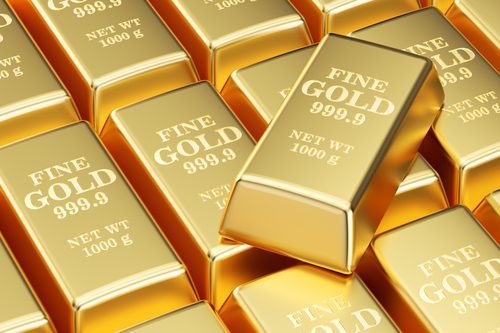

Gold has occupied a place of reverence in human history that few substances can rival. From the earliest stirrings of civilisation, mankind has been irresistibly drawn to its soft glow and enduring purity. Unlike other metals that demanded fire, technique, and labour to reveal their usefulness, gold appeared in nature in a ready and welcoming form—shining nuggets resting in riverbeds, untouched by rust or decay. It was perhaps for this reason that gold became the first metal known to humankind and the earliest symbol of wealth, permanence, and aspiration. Over thousands of years, its meaning has evolved, yet its power over the human imagination has remained remarkably unchanged.
Archaeology confirms that humans were not merely collecting gold as a curiosity but shaping it into ornaments and symbols of status more than six and a half millennia ago. The remarkable discoveries at the Varna Necropolis in present-day Bulgaria reveal that prehistoric societies were already crafting gold jewellery with surprising sophistication during the fifth millennium before Christ. These artefacts—beads, bracelets, and ceremonial adornments—suggest that gold was linked not only with beauty but also with authority and reverence. Soon after, ancient Egypt raised gold to near-divine status, associating it with immortality and the gods, while other great civilisations across Mesopotamia, the Indus Valley, China, and later the Mediterranean world incorporated gold into ritual, trade, and governance. When the first gold coins were minted in Lydia around 600 BC, gold moved decisively from ornament to economic anchor, shaping commerce for centuries to come.
In South Asian societies, gold acquired an additional layer of meaning rooted in family structure and social responsibility. It became inseparable from marriage traditions, particularly for daughters. For generations, parents regarded gold jewellery as a form of long-term security—an asset that could be relied upon in moments of hardship, illness, or widowhood. Bangles and necklaces were not merely decorative; they represented foresight, care, and dignity. This tradition endured even among families of modest means, who saved patiently to fulfil what was considered both a social and emotional obligation.
Today, however, that delicate balance between tradition and affordability has been deeply disturbed. The extraordinary escalation in gold prices has placed even modest jewellery beyond the reach of the middle class. Where once a bridal trousseau included substantial ornaments, many families now struggle to afford even the most basic pieces. Religious teachings impose no requirement for such displays, yet parental love and social expectation continue to exert pressure. As a result, many settle for symbolic gestures—a single ring or small ornament—offered not as a measure of wealth, but as an expression of affection and continuity.
Alongside this economic strain, a new social dynamic has emerged, intensified by the age of digital display. Lavish weddings hosted by the affluent, widely circulated on social media, have transformed private celebrations into public exhibitions of prosperity. These spectacles, while harmless in intent, often deepen feelings of inferiority among those who cannot compete with such extravagance. The comparison is relentless and unavoidable, fostering dissatisfaction and, at times, unhealthy financial decisions. In this way, gold has become a silent participant in widening social divides, highlighting disparities rather than bridging them.
Beyond social customs, the current surge in gold prices reflects deeper global anxieties. In late January 2026, gold climbed to unprecedented levels, a clear signal of widespread economic and geopolitical unease. History shows that gold’s value tends to rise when confidence in political stability, currencies, and financial systems falters. Wars, trade disputes, inflationary pressures, and policy uncertainty all drive investors toward assets perceived as safe. Gold, unlike paper currency or government bonds, carries no promise dependent on institutions; its value rests on collective trust forged over millennia.
Modern examples reaffirm this pattern. From the oil shocks and geopolitical turmoil of the 1970s to more recent conflicts in the Middle East and Eastern Europe, gold has repeatedly surged during times of crisis. Wars disrupt trade routes, inflate energy prices, and compel governments to increase spending, often at the cost of currency stability. In such conditions, gold emerges as a hedge against inflation and devaluation. In the present era, this traditional role is reinforced by aggressive purchasing by central banks seeking to diversify reserves, as well as expectations of lower interest rates that reduce the opportunity cost of holding non-yielding assets like gold.
Yet it would be simplistic to view gold’s ascent solely through the lens of profit. Its enduring appeal lies in the reassurance it offers during uncertainty. For individuals, institutions, and even nations, gold represents continuity in a rapidly changing world. Its weight in the vaults of central banks and its presence in family heirlooms speak to the same instinct: the desire for something that outlasts turmoil.
Thus, gold today stands as both a blessing and a burden. It remains a symbol of beauty, security, and historical continuity, yet its soaring price has strained cherished traditions and exposed social inequalities. For families, it prompts difficult choices between custom and capacity. For societies, it serves as a quiet commentary on economic imbalance and global instability. And for the world at large, gold continues to perform its ancient role—as a mirror reflecting human fears, hopes, and the timeless search for certainty in uncertain times.