Indonesia Targets 2027 Launch for Blue Carbon Projects on Global Market
Jakarta, The Gulf Observer: Indonesia is aiming to introduce its first blue carbon pilot projects to the international carbon market by 2027, leveraging the country’s extensive mangrove forests and seagrass ecosystems as part of its climate mitigation strategy.
Ahmad Aris, Director of Coastal and Small Islands at the Ministry of Marine Affairs and Fisheries, confirmed in Jakarta on Monday that the government expects at least two pilot projects—focused on mangroves and seagrass—to be market-ready within the next three years.
“The Minister’s target is 2027. We hope that by then there will already be pilot projects, both in seagrass and mangroves,” Aris said, noting that the timeline reflects the rigorous preparation, validation and verification requirements associated with international carbon trading standards.
Harnessing Blue Carbon Potential
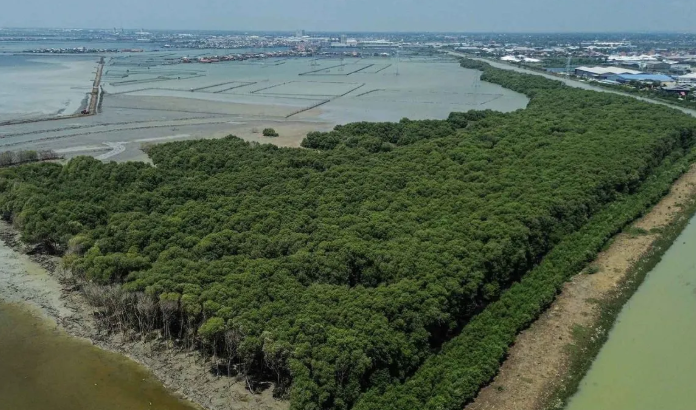
Blue carbon refers to carbon dioxide captured and stored by coastal ecosystems such as mangrove forests and seagrass beds. These ecosystems are considered highly effective natural carbon sinks and play a crucial role in mitigating climate change while protecting coastal communities.
According to the ministry, Indonesia holds approximately 17 percent of the world’s blue carbon reserves, forming a key component of the global blue economy valued at an estimated USD 1.3 trillion.
In preparation for market entry, the ministry is prioritizing seagrass ecosystems, which were not included in Indonesia’s second Nationally Determined Contribution (NDC) for emission reductions under global climate commitments.
“National seagrass bed data is already available, covering 660,000 hectares. We are now calculating the potential emission reductions,” Aris explained.
Regulatory Framework and Site Selection
To meet the 2027 target, the ministry is working with relevant institutions to finalize derivative regulations under Presidential Regulation No. 110 of 2025 by June 2026. The regulation will govern carbon economic value instruments and national greenhouse gas control mechanisms.
Beyond the financial aspects, Aris emphasized that blue carbon trading is fundamentally about preserving the ecological functions of coastal ecosystems, ensuring that environmental protection remains at the core of policy implementation.
The ministry has identified 18 indicative sites for its Blue Carbon Reserve Zoning Plan, covering both Specific National Strategic Areas and provincial locations. Among the targeted areas are the waters of Kotabaru, the Derawan Islands, the Tanimbar Islands, Toli-Toli, Supiori Island, the Lingga waters, and the northern coast of Java in Central and East Java.
The initiative signals Indonesia’s growing ambition to position itself as a leader in blue carbon development while strengthening its contribution to global climate action.