Islamabad Talks
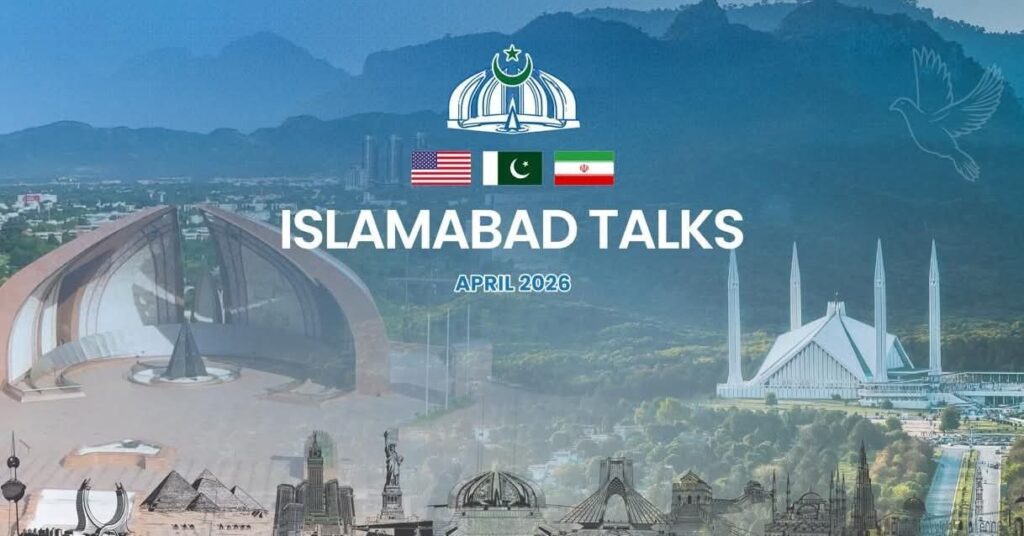

The reported talks in Islamabad between the United States and Iran – if they proceed as indicated-represent a cautious but strategically significant attempt to de-escalate tensions through indirect or mediated diplomacy.
Islamabad as a venue is itself telling: Pakistan maintains working relations with both Washington and Tehran, and its involvement signals a preference for a neutral, less politically charged environment compared to traditional negotiation hubs.
In terms of substance, the most realistic outcome of these initial dialogues is not a comprehensive agreement, but rather the establishment of a framework for continued negotiations. This could include confidence-building measures such as informal understandings on avoiding military escalation in the Persian Gulf, limited sanctions flexibility, or discussions around nuclear transparency.
Another possible outcome is a tactical de-escalation rather than a strategic reconciliation. However, such de-escalation would likely be fragile and reversible, as it would depend heavily on political calculations in both capitals.
At the same time, the risk of failure remains high. If the talks produce no tangible progress, it could reinforce hardline narratives on both sides and increase the likelihood of renewed escalation. Regional actors will also be closely watching, and their reactions could either support or complicate the process. Ultimately, Islamabad may serve as the beginning of a diplomatic track.