Vietnam and Japan Agree to Boost Economic Connectivity, Target $80 Billion Trade by 2030
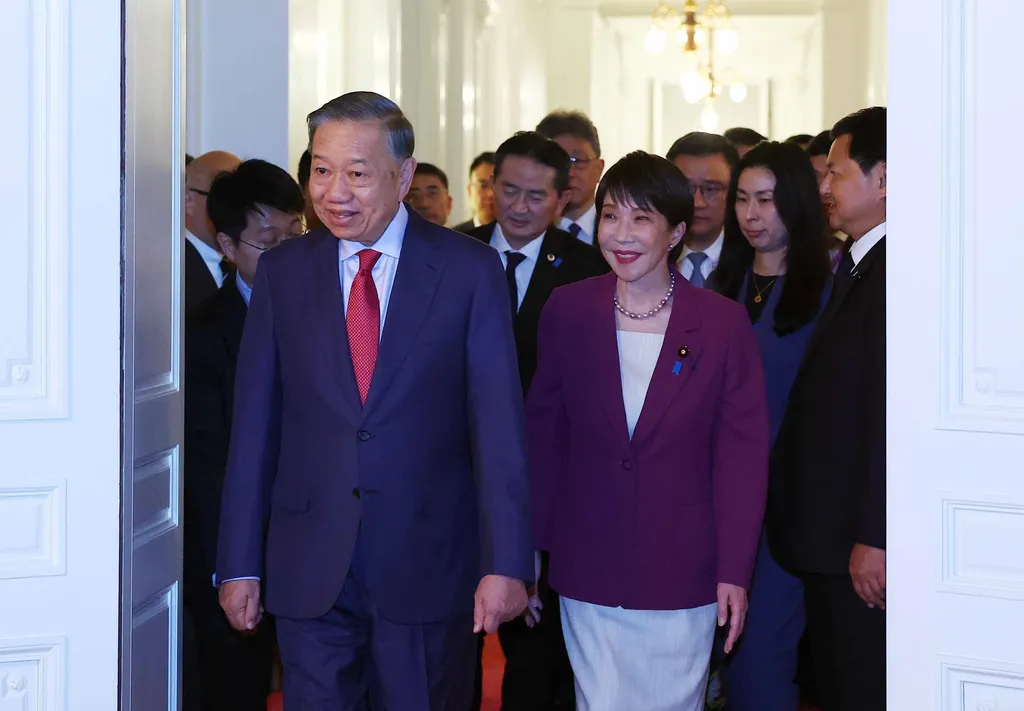
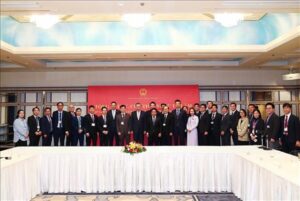
Tokyo, The Gulf Observer: Vietnam and Japan have agreed to strengthen economic connectivity to safeguard economic security and enhance strategic autonomy, while working towards raising bilateral trade to US$80 billion by 2030. The agreement was reached on Monday in Tokyo during talks between Vietnam’s Party General Secretary and State President Tô Lâm and Japanese Prime Minister Takaichi Sanae.
The two leaders agreed to promote high-quality Japanese investment in Vietnam, accompanied by technology transfer and the training of highly skilled personnel. They also agreed to expand next-generation official development assistance (ODA) cooperation in areas such as artificial intelligence, semiconductors, energy, digital transformation and the green transition.
Prime Minister Takaichi confirmed that Vietnam is a priority partner in Japan’s foreign policy and that Tokyo would work to help implement Vietnam’s new growth strategy. General Secretary and President Tô Lâm said Vietnam consistently regards Japan as one of its most important strategic partners and a sincere, trusted friend in pursuing sustainable development goals. He added that Vietnam supports Japan in playing a more active role in regional and international affairs and in successfully carrying out its own new growth strategy.
Vietnam and Japan Elevate Comprehensive Strategic Partnership
The two leaders confirmed that the Vietnam–Japan Joint Vision Statement would serve as an important basis for elevating their Comprehensive Strategic Partnership to a new level. The partnership will be guided by a vision of co-creation and mutual benefit, high-quality growth, strategic autonomy and resilience.
They expressed satisfaction with the substantive development of bilateral ties since the relationship was upgraded to a Comprehensive Strategic Partnership in 2023, noting that nearly 80 per cent of commitments and agreements between the two countries have been implemented or have made progress.
The leaders agreed to maintain high-level exchanges and contacts at all levels, and to promote cooperation through Party, State, Government and parliamentary channels, as well as people-to-people exchanges and local-level cooperation. They underscored the role of the two countries’ parliamentary friendship groups and agreed to improve the effectiveness of dialogue mechanisms in diplomacy, defence and security.
President Tô Lâm welcomed the signing of an agreement to facilitate the implementation of Japan-funded grant aid projects in Vietnam, and called on both sides to ensure that the Vietnam–Japan University and Chợ Rẫy Hospital projects get under way on schedule.
Supply Chains and Energy Security
Prime Minister Takaichi highlighted Vietnam’s important role in Japan’s efforts to diversify and upgrade its supply chain networks. She said Japan would create favourable conditions for Vietnamese businesses to participate more deeply and substantively in supply chains led by Japanese companies.
The Japanese side also expressed readiness to cooperate in ensuring energy security and strengthening energy reserves. Both countries will work to accelerate the implementation of LNG and gas-fired power projects in Vietnam involving Japanese companies, while advancing cooperation on energy reserves under the Partnership on Wide Energy and Resources Resilience (POWERR) initiative.
Vietnam and Japan Make Science and Technology a Key Pillar
The two leaders agreed to advance science, technology and innovation as a pillar of bilateral cooperation, with an emphasis on partnership, co-creation and public-private collaboration. They identified a wide range of areas for cooperation, including space technology, marine and ocean affairs, AI, digital technology, semiconductors, medical technology, advanced biotechnology, high-tech agriculture and critical minerals.
They further agreed to strengthen joint research projects, expand doctoral researcher exchanges under the NEXUS programme into semiconductors and AI, and carry out 14 projects under the Joint Crediting Mechanism.
General Secretary and President Tô Lâm proposed establishing a network of Vietnamese and Japanese scientists in six fields: robotics, semiconductor chips, energy technology, biotechnology, high-speed rail and quantum technology. Prime Minister Takaichi said Japan would actively support Vietnam’s plan to train 100 PhD holders in artificial intelligence.
Workforce, Healthcare and People-to-People Ties
The two sides agreed to strengthen workforce connectivity and promote people-to-people exchanges, local-level cooperation and collaboration in healthcare, labour and education. They will work closely to organise the third Vietnam–Japan Local Cooperation Forum in 2027, expand education and training cooperation, and develop highly skilled personnel.
The leaders also agreed to promote healthcare collaboration, particularly in elderly care, and to accelerate negotiations towards signing a bilateral social security agreement. They said they would launch consultations on an Agreement on Consular Notification and Access.
President Tô Lâm called on Japan to facilitate travel and ease visa requirements for technology engineers from Vietnam. In response, Prime Minister Takaichi said the Japanese government is developing an information channel to assist Vietnamese citizens who encounter difficulties in Japan.
The talks in Tokyo mark a significant step forward in Vietnam and Japan’s efforts to deepen economic integration, strengthen supply chain resilience and expand cooperation in emerging technologies, as both nations work to build a more resilient and forward-looking partnership.