Constitutional Referendum in Kazakhstan
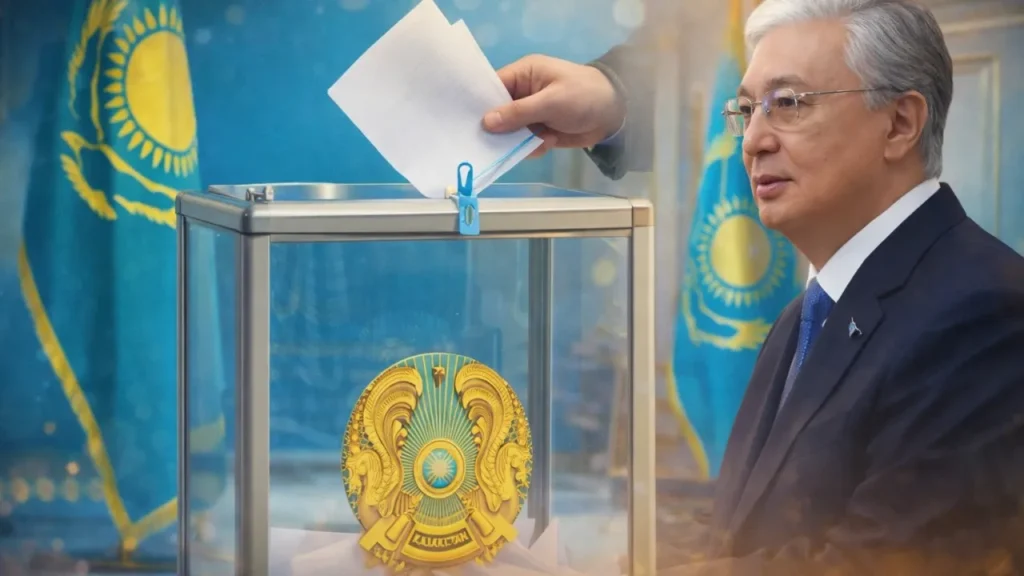
“Constitutional reform is necessary to build a fair and just state where every citizen has a voice in determining the future of our country.” This statement by Kassym-Jomart Tokayev, President of Kazakhstan, captures the political vision behind the constitutional referendum held on 15 March 2026. In official discourse, the referendum was presented not merely as a technical revision of legal provisions but as a historic democratic exercise designed to strengthen governance, expand political participation, and align the constitutional structure with the country’s long-term development goals. The referendum therefore stands at the intersection of political reform, governance restructuring, and sustainable development. Kazakhstan’s constitutional referendum of 2026 is particularly significant because of the scale of participation involved. According to the Central Referendum Commission, 12,416,759 citizens were eligible to vote, making it one of the largest democratic exercises in the country’s historyThis voter population represents a substantial share of the country’s approximately twenty million residents and reflects the expansion of political participation in the post-Soviet political landscape. Voting was conducted at 10,411 polling stations across the country and at diplomatic missions abroad in more than sixty countries, ensuring that citizens living overseas could also participate in shaping the constitutional future of the state.
From a procedural perspective, the referendum followed the constitutional law governing republican referendums. Voting took place from early morning until evening across thousands of polling stations, while absentee voting mechanisms allowed citizens who had relocated temporarily to participate. The result would be considered valid only if more than half of the registered voters participated, and the new constitution would be adopted if a majority of participating voters supported the proposal. These legal conditions were designed to ensure that constitutional change reflected broad national consensus rather than a narrow political decision.
The scale of voter registration illustrates why the referendum is
often described as the largest democratic exercise in Kazakhstan’s recent history. The process involved millions of citizens across seventeen regions and major cities including Astana, Almaty, and Shymkent. Election authorities also prepared more ballots than the number of registered voters to accommodate administrative contingencies and ensure transparency in the voting process. In addition, international observation missions were invited to assess the referendum process, reflecting Kazakhstan’s attempt to demonstrate compliance with international electoral standards.
Public awareness and engagement with the referendum were also notable. Surveys conducted before the vote indicated that more than eighty percent of citizens were aware of the constitutional referendum, and around seventy percent expressed an intention to participate. Such figures highlight a significant level of political awareness and indicate that the referendum had become a national political event rather than a limited institutional procedure. Particularly striking was the high level of interest among young citizens and educated urban populations, groups that often play a crucial role in shaping political discourse in transitional societies.
The political leadership framed the referendum as part of a broader project of institutional modernization. According to President Tokayev, the proposed constitution would transform Kazakhstan into a political system characterized by “a strong president, an influential parliament, and an accountable government.” This formulation suggests an attempt to rebalance the relationship between executive authority and representative institutions. The new constitutional draft reportedly affects more than eighty percent of the existing constitutional provisions, effectively replacing much of the legal framework that has guided the country since the adoption of the 1995 constitution.
Understanding why Kazakhstan turned to a referendum requires examining the political trajectory of the country since independence. Constitutional reform has repeatedly served as a mechanism through which the state adjusts its institutional framework in response to political and social pressures. Earlier referendums in 1995 and subsequent constitutional amendments were also used to redefine the structure of governance. For example, the referendum of 1995 that approved the current constitution recorded a turnout exceeding ninety percent of registered voters, demonstrating the historical role of referendums in legitimizing major political decisions in Kazakhstan.
In the contemporary context, the 2026 referendum is closely linked to Kazakhstan’s ambition to build stable governance capable of supporting sustainable development. The government argues that modern economic transformation requires a political system that ensures accountability, efficient decision making, and citizen participation. Kazakhstan’s development strategy seeks to move the country beyond reliance on natural resources toward a diversified economy based on human capital and innovation. Constitutional reform is therefore presented as a necessary step for creating institutional frameworks capable of supporting this transformation.
However, the politics of referendums often reveal tensions between democratic participation and political consolidation. In Kazakhstan’s case, supporters of the reform argue that the new constitution will reduce excessive centralization and introduce stronger institutional checks. Critics, however, warn that some provisions could potentially reinforce presidential authority rather than limit it. Such debates illustrate the complex nature of constitutional referendums in transitional political systems where political reforms are negotiated between aspirations for democratization and concerns about stability.
Historically, referendums have served as powerful instruments of mass mobilization. In many countries governments use referendums to demonstrate public legitimacy during periods of political transformation. From constitutional plebiscites in Europe to institutional reforms in Latin America and Asia, referendums often function as moments when citizens are invited to participate directly in shaping the constitutional order of the state. Yet political theory also suggests that the democratic value of referendums depends heavily on the broader political environment, including media freedom, civic engagement, and genuine political competition.
Central Asia provides an instructive regional context for analyzing Kazakhstan’s referendum. Several states in the region have relied on constitutional referendums to restructure political systems after independence. In Uzbekistan and Kyrgyzstan, for example, referendums have been used to alter presidential powers or redefine the balance between executive and legislative institutions. In many cases these processes combined elements of public participation with strategies of political consolidation. Kazakhstan’s referendum therefore forms part of a broader regional pattern in which constitutional plebiscites serve as instruments of institutional experimentation.
The 2026 referendum also offers important lessons about governance and democratic participation. The scale of voter mobilization demonstrates that constitutional politics can become a focal point for national debate. When millions of citizens participate in constitutional decision making, the process can contribute to the development of political consciousness and civic engagement. Even within systems where political authority remains strong, referendums can provide citizens with symbolic opportunities to express their preferences regarding national governance.
At the same time, the long term significance of constitutional referendums depends not only on the act of voting but also on the implementation of the adopted constitutional framework. If the reforms strengthen institutions, encourage transparency, and promote accountability, they may contribute to more sustainable governance. If they merely reproduce existing power structures, the promise of constitutional renewal may remain largely symbolic.
The referendum of 15 March 2026 thus represents both an opportunity and a test for Kazakhstan’s political development. It is an opportunity because millions of citizens have been invited to participate directly in shaping the country’s constitutional future. It is a test because the success of the reform will ultimately depend on whether the new constitutional framework genuinely enhances democratic governance and supports sustainable development. In this sense the referendum illustrates the evolving political identity of Kazakhstan as a state experimenting with institutional reforms while navigating the complex realities of regional geopolitics and domestic transformation. The involvement of more than twelve million voters makes the referendum one of the most extensive democratic exercises in the country’s history. Whether it becomes a turning point toward deeper political participation or simply another stage in the evolution of Kazakhstan’s political system will depend on how the principles articulated by President Tokayev are translated into practical governance in the years ahead.