CPEC: A Game Changer for Pakistan
Introduction
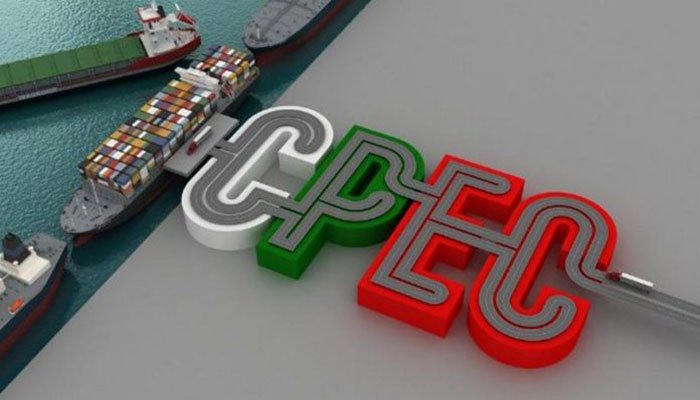
The China–Pakistan Economic Corridor (CPEC) can be regarded as the most dramatic bilateral development project of the twenty-first century. Introduced in 2013 under the broader vision of China’s Belt and Road Initiative (BRI), CPEC can be seen as the symbolic representation of the cooperation of the economic, political, as well as strategic, interests of China and Pakistan. CPEC is going to revamp the infrastructure in Pakistan, enhance the production of energy, and develop trade opportunities, all the while offering Chinese companies an alternative and shorter and safer exit to the Arabian Sea in the form of the Gwadar port city.
Since the last decade, CPEC has emerged as a multilateral platform on regional integration, economic upgrading, and geopolitical change. The agenda has, up to 2025, attracted close to US$25.4 billion in Chinese direct investment and has produced seminal milestones in the energy and transportation sectors of Pakistan. With the corollary of CPEC 2.0 now steering the partnership towards industrial cooperation, digitalization, and sustainable development, the project is being realized in the prism of a transnational development and regional integration architecture.
Historic Roots of China–Pakistan Friendship
The China-Pakistan bilateral has also being referred to as an “all-weather strategic partnership”, underpinned by trust, shared interests and long-term cooperation. Since the formal commencement of diplomatic relations in 1951, the Asian neighbors sustained relations founded upon defense cooperation, economic exchange and political convergence. During the Cold War years, Pakistan acted as China’s indispensable interlocutor in order to gain entry into the West, particularly in the early 1970s, while China, in its turn, provided Islamabad with diplomatic cover as well as infrastructure aid.
The partnership, over the years, transformed as a broad-based strategic partnership, and the outcome was the 2013 Pakistan tour confirmation by the Chinese premier of CPEC. The corridor was, thus, not sudden in its emergence, but the culmination of long-standing bilateral trust and strategic convergence.
During much of its existence, Pakistan’s infrastructure gap and indigenous energy shortage constrained industrial production and competitiveness. The CPEC set out to eradicate these bottlenecks by injecting foreign direct capital into sectors of strategic choice. In the first decade of the project, the project was focusing on the so-called “early harvest projects” by investing in the power sectors and transportation infrastructure in an effort to create the foundation of industrialization and trade facilitation.
Until 2023, the nation had added around 6,000 megawatts (MW) of electrical output production and constructed more than 510 kilometers of roads and 886 km of transmission lines under CPEC. These initiatives significantly alleviated the nationwide shortage of crisis of power, reduced industrial shut-down time, and ensured the easy movement of domestic and regional consignments.
CPEC and the Trigger to Economic Transformation
- Energy Security and Industry Development
Energy security has also been among the cornerstones of CPEC’s success. The power outages in Pakistan during the pre-2015 period had reached 4,000-6,000 MW daily and resulted in humongous financial losses. Through the CPEC’s energy plans; predominantly coal, hydro, as well as solar and wind-based power plants, the country was in a position to fill the gap and normalize the electrical dispatches. An estimated 76 percent of the overall CPEC investment in the first decade of its life was channeled into the energy sector where the Sahiwal Coal Power Plant, the Port Qasim Power Plant, as well as the Quaid-e-Azam Solar Park contributed an estimated installed capacity of 5,520 MW by 2023.
Most of these plans were fueled based on non-renewable energy sources, yet they provided the way ahead for future investment in green energy based on the expanded scope of CPEC 2.0. Supplementing the energy infrastructure, the CPEC has expedited industrial rejuvenation by introducing the development of Special Economic Zones (SEZs). Like Khyber Pakhtunkhwa’s Rashakai and Faisalabad’s Allama Iqbal Industrial City, the SEZs attract Chinese as well as indigenous industrialists, create employment opportunities, and expand exports. In Pakistan, an estimated US$1.22 billion worth of Chinese foreign direct investment has entered until 2025, increasing by 90 percent over the previous year.
These inflows demonstrate new investor optimism as well as the strategic significance of Pakistan in China’s long-term economic vision. These industrial parks, as they come into their prime, can diversify Pakistan’s foundation of exports, create value addition, and increase regional competitiveness.
- Infrastructural Linkages and Facilitation of Trade
Infrastructural construction remains the center of the transformation vision of CPEC. It has a transportation system that allows transportation that links Gwadar Port on the southern coast of Pakistan and northwestern province of China, Xinjiang by an interlinked network of highways, rail and oil pipelines. The north-south axis of transportation has not just reduced Chinese intrusion into the markets of the Middle East by approximately 12000km, but it has also transformed Pakistan into an Asian passage zone between Central Asia and the Middle East and the Indian subcontinent.
Such milestones as the completion of Multan-Sukkur Motorway (M5) and the Karakoram Highway were critical infrastructural goals by 2024. This was sanctioned by the Pakistani government at Rs 12.295 billion under its 2025–26 Public Sector Development Programme to continue its projects related to CPEC, including Rs 6.5 billion to transfer Karakoram Highway segments and Rs 4 billion to construct the New Gwadar International Airport. These all come under the remit of upgrading the connection and strengthening the efficiency of the logistics in Pakistan’s industrial belts.
Furthermore, Gwadar’s rise as a deep sea-port has been one of the highlight achievements of CPEC. The terminal is yet another big regional hub of maritime trade with broader infrastructure development in the offing as well as cargo handling in the works. Industrial parks as well as the Gwadar Free Zone are also witnessing investment in the sectors of logistics bases, seafood processing, as well as manufacturing. The infrastructure of connectivity of CPEC is therefore central to Pakistan’s long-term aspirations of being a regional trade enabler as well as economic gateway to Central Asia.
CPEC 2.0: Second Wave of Interconnection
Marking the beginning of the second decade, Pakistan and China both re-map the future trajectory of CPEC under the vision of the “CPEC 2.0”. New investment memorandums totaling US$8.5 billion were signed by the two governments in September 2025 onwards and entail build-out of new corridors to take the cooperation into new sectors such as agro, digital economy and steel production and renewables. The new trajectory foresees industrialization and innovation to drive beyond social and economic inclusion and infrastructure build-out.
The agricultural corridor, for instance, is focused on reviving the modes of farming in Pakistan with technology transfer, precision farming, and water resource management. The digital corridor aims at expanding the reach of broadband and electronic trade. The green corridor is concerned with alternatives to renewable energy and services in order to respond to the risks of climate hazards. These areas of cooperation are timely for Pakistan’s Vision 2035 as well as China’s dual-carbon objectives and plans, reflecting their dedication to sustainable development. In addition, the completion of more fiber-optic connections is designed to expand Pakistan’s engagement in the international digital economy, reduce the incidence of the digital divide, and enhance digital literacy, particularly in the less-developed regions, under the CPEC 2.0.
The CPEC 2.0 also places an emphasis on human development through the promotion of vocational studies, scholarships, and exchanges in capacity-building. These aim at providing the Pakistan youths the capacity that the market requires and is increasingly to demand due to the industrial and technological changes. The strategic development of the CPEC, in that case, forms a comprehensive strategy to connectivity that involves the physical, economic, as well as the human aspect of development.
Regional and Geopolitical Implications
Apart from its bilateral role, CPEC is of great regional and global importance. In its own right, the corridor is an expedient and safe trade corridor by which China can reduce its reliance on the Malacca Straits through which nearly 80 percent of its current oil imports pass. For Pakistan, the corridor puts the nation at the heart of the regional trade corridor connecting the resource-owning Central Asian republics to the Arabian Sea. The strategic geography positions Pakistan at the cusp of being the logistic hub connecting Asia and the Middle East and Africa.
The geopolitical effects of CPEC extend beyond the economic domain. These enhance the Chinese profile in South Asia and give Pakistan an edge in regional foreign policy. The project has the potential for collaboration with other regional neighbors such as Iran and Afghanistan, who also regard inclusion in the CPEC-linked infrastructure and trade networks. Connecting the latter can contribute to cross-border energy exchange, rail connection, and economic stability equally. In these, CPEC becomes both the development agenda, as well as the geopolitical engine to usher in interdependence and multipolar exchanges in the region.
Strengths and Limitations
CPEC has several structural, financial, and political challenges, though it has been a success. Bureaucratic inefficiencies and lack of communication between provincial and federal governments that result in project implementation delay are one of the persistent problems. Security issues are another factor whose presence has been experienced in Balochistan and along the highways leading to the main highways that weighs down on investor confidence and project schedule. The political instability of the Pakistani economy such as the pressure of external debts and decline in currency value also makes it difficult to maintain foreign funded large projects.
Environmental sustainability is another important problem. Having depended on coal-powered plants in CPEC’s first phase has caused environmental and health objections. With an effort to move towards green energy by Pakistan, shifting the energy mix will be important to ensure long-lasting sustainability. CPEC 2.0’s thrust on green power and the transfer of technology can be used to overcome these challenges efficiently.
Further, the questions about whether Pakistan can get the full socio-economic payoff of CPEC, also exist. Even though the project has created thousands of jobs and enhanced infrastructure, the indigenous industries must become more competitive to have the possibility of exploiting the increased connectivity. The success of the complete potential of CPEC is thus dependent on open governance, diversity of policy, and long-term policy continuity.
Socio-Economic Implications on Pakistan
CPEC has contributed to the socio-economic life of Pakistan greatly. The corridor has offered employment opportunities directly and indirectly, improved accessibility to energy, and accelerated the growth of the far-flung region. During the maiden decade, CPEC-associated projects offered over 200,000 employment opportunities to the advantage of engineers, skilled workers, and technicians. Stabilization in the power sector has also improved the performance of small and medium enterprises in the country.
In Balochistan, Gwadar’s transformation has stimulated economic activity, leading to the establishment of educational institutions, hospitals, and desalination plants. The Gwadar Free Zone has also promoted migration of industries and facilitation of trade. The Karakoram Highway and fiber-optic internet upgrades have facilitated market, education and communication accessibility in the north of Pakistan. The overall effect of these developments is that CPEC is doing a great job of decreasing regional inequalities and expanding marginalized regions to the national economy.
Moreover, the macroeconomic power of Pakistan has also been boosted by CPEC through raised level of efficiency of infrastructure and establishment of consistent FDI inflows. In the year FY 2023-24, China provided 29.9 percent of the total bilateral economic FDI in Pakistan and hence revitalized the interest in bilateral economic relations. As the inflows continue to increase with the further growth of industrial cooperation in the form of CPEC 2.0, such inflows will also provide more employment and trade opportunities and cement the long-term economic stability of Pakistan.
CPEC and Sustainable Development Goals
Cooperation with the United Nations Sustainable Development Goals also gives CPEC credibility. The project has direct implications on goals on cheap energy, industrial innovation and infrastructure through investing in energy, transportation, and digital infrastructure. The future focuses on renewable energy, learning, and technology transfer also has implications on climate action, decent employment, and economic growth.
The green development agenda of China under the Belt and Road Initiative is a complement to the needs of sustainable modernization in Pakistan. Projects such as the Kohala Hydropower Plant and Sindh’s wind power projects indicate the direction towards the harnessing of solar and other renewable energy sources. Integrating environmental management systems and social safeguards among future initiatives will tend to make CPEC more supportive of sustainable and inclusive development.
Gwadar Port: Center of Connecting Hubs
Gwadar port is the key to the CPEC located on the southwestern coast of Pakistan bordering the Straits of Hormuz. Through linking Gwadar with Xinjiang via highway systems, rail and pipelines, China and Pakistan are optimistic that they will open the expressway that will enable inter-continental trade and energy interdependence. Gwadar’s deep-sea berths and special economic zone will be hubs to induce investment in manufacture, logistically intensive industry and services.
For Pakistan, Gwadar is about maritime empowerment: an export center, transit portal and economic hub of hitherto underserved western provinces. For China, an alternative to busy sea routes is provided by Gwadar to improve access to the Middle East and Africa. Beyond infrastructure, the development of the port has wider regional implications regarding the region’s logistics sector, supply-chain diversification and connectivity-led industrialization.
The Future of Regional Connectivit
For the future, the direction that CPEC and the region will take is that of diversification and multilateral engagement. Geographic coverage by the corridor has tremendous potential to connect Central Asia, the Middle East, and Africa within an integral trade network. Greater connectivity by road, rail track, and digital highway can allow trade to take place between otherwise geographically or politically isolated regions. With the emergence of new trade routes around the world, the strategic placement of the country can make it an important transit base for energy and digital trade.
Additionally, digital interconnectivity will be poised to redefine the conception of “bridging horizons.” CPEC’s digital corridor via smart infrastructure and fiber-optic expansion can potentially enable Pakistan to enter the world’s digital economy. It will also make possible new collaborations on artificial intelligence, cybersecurity, and cloud computing between China and Pakistan. Such a shift is also an indication of the growth in the relevance of technological interconnection to the character of the alignments of power globally and the competitiveness of economies.
Conclusion
CPEC can be regarded as a proof of the enduring resilience of good relations between China and Pakistan and shared vision of development of the region. It has changed the infrastructure profile of Pakistan within the past decade, revitalized its energy industry, and expanded the industrial base. Injecting US$25.4 billion worth of investment, adding power capacity by 6,000 MW, and building thousands of roads and transmission line kilometers marks the transformative effect of the corridor. As the partnership enters the era of CPEC 2.0, the focus on innovation, sustainability, and inclusivity will improve bilateral cooperation and benefit more in Asia. The project is not merely a development project but a general approach of developing the region which links horizons together in terms of common development, confidence with each other and progress.