Echoes of War in the Desert
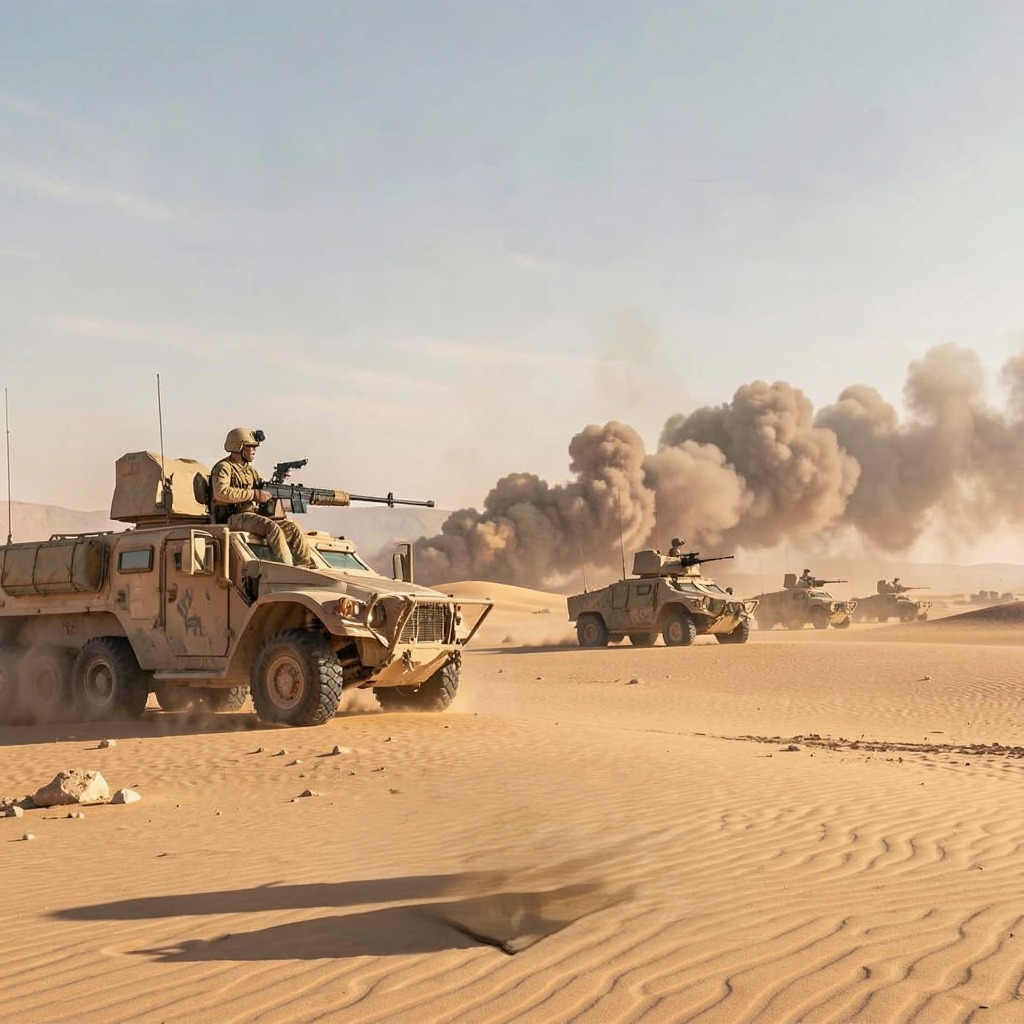

The world watches with apprehension as the turbulent politics of the Middle East threaten to erupt into a conflict of devastating proportions. Recent developments in that fragile region have cast a long shadow over global peace and security, drawing stark warnings from capitals across continents. At the heart of these tensions lie the persistent standoff between the United States and Iran, the ever-volatile Israeli-Palestinian conflict, and the complex web of alliances and rivalries that define contemporary geopolitics in West Asia. What unfolds there in the coming weeks and months will reverberate far beyond the desert sands.
In recent weeks, the United States has intensified its diplomatic and military posturing toward Iran, issuing unmistakable threats of punitive action and setting tight deadlines for Tehran to accede to American conditions in their nuclear negotiations, warning of “really bad things” if those conditions are not met. American warplanes and aircraft carriers have been repositioned in the region, signaling Washington’s readiness for a confrontation that could rapidly spiral out of control. Tehran, for its part, has responded with equally stark language. Iranian leaders have declared that any military assault on their territory will be met with force and insisted that American bases and assets in the Gulf would be legitimate targets for retaliation, brick by brick, in defence of national sovereignty.
Complicating this dangerous standoff are the shifting stances of global powers and alliances. It is noteworthy that the United States’ long-time ally, Britain, has indicated that it will not participate in military action against Iran. British officials have publicly stated their absence from any such operation, reinforcing the principle of adherence to international law.
Into this volatile mix comes a controversy that has ignited further alarm across the Arab and Muslim world. The United States Ambassador to Israel, Mike Huckabee, in an interview referenced a biblical justification for extensive Israeli territorial claims, suggesting it “would be fine if they took it all,” a remark interpreted by many as endorsing expansive Israeli control over Arab lands. The statement provoked swift and forceful condemnation from more than a dozen Islamic and Arab nations, including Saudi Arabia, Egypt, Jordan, Qatar, Kuwait, and Pakistan itself, as well as regional organisations such as the Organisation of Islamic Cooperation, the League of Arab States, and the Gulf Cooperation Council. These governments jointly affirmed that such rhetoric not only contravenes the principles of international law and the UN Charter but also risks inflaming tensions further in an already fragile region.
Indeed, questions are being raised about international reactions to perceived unilateral actions in other contexts. If the world accepted or tacitly tolerated episodes such as the dramatic arrest of Venezuela’s President and his wife, and if ambitions toward territories like Greenland, reportedly entertained by American leadership, failed to draw substantive global censure, observers fear that similar actions by other states in the Middle East could set worrying precedents. Critics warn that if Israel attempts to enforce territorial changes by force in the region, situations may get out of control.
The reality on the ground illustrates the complexity of this crisis. Despite the formation of peace boards and diplomatic initiatives intended to ease the suffering in Gaza, hostilities continue unabated. Israel’s military operations in Palestinian territories show no sign of abating, highlighting the disconnect between international peace frameworks and the grim reality of ongoing conflict.
At the same time, events back in the United States have added another layer to this already intricate tableau. The US Supreme Court recently declared certain measures by the President to increase tariffs unconstitutional, prompting a reassessment of domestic and foreign policy priorities. Undeterred, President Trump has moved to impose new global tariffs under alternative legal authority, a show of economic assertiveness that raises questions about broader strategic intent.
Amid these tensions, the revelation of names involved in major cover-ups, including personalities associated with the Epstein case, has created a media storm that some commentators believe may encourage diversionary tactics. There is speculation in certain quarters that actors connected to these scandals might hope for global attention to shift further, even towards chaos in the Gulf, as a means of overshadowing unresolved controversies closer to home.
In the broader geopolitical landscape, political strategists are also watching closely the impending visit of India’s Prime Minister to Israel. Though ostensibly a diplomatic engagement, some analysts fear it could be interpreted as a symbolic endorsement of Israeli policy at a time when regional sensitivities are acute.
Pakistan is keeping a close eye on these matters. Islamabad has aligned itself with other Muslim and Arab nations in condemning inflammatory rhetoric and affirming support for international law and territorial integrity. But a wider conflagration in the Gulf would carry grave implications for Pakistan’s security and economy. Any disruption in oil supplies would strain an already fragile balance of payments, exacerbate inflation, and escalate the cost of imports. An intensification of conflict could also trigger larger refugee movements and heighten sectarian tensions within and beyond the region.
Moreover, the spectre of great power politics looms large. As the United States presses its diplomatic and strategic agenda, and as Iran makes clear its willingness to defend its interests, the risk of miscalculation increases. Europe’s apparent reluctance, and that of some American allies, to be drawn deeper into confrontation underscores the possibility that this crisis could spiral beyond diplomatic control.
Yet, there remains a slender thread of hope in diplomacy. Negotiations on nuclear issues continue, accompanied by appeals from global leaders for restraint and dialogue. The only sustainable resolution to these tensions will come through patient diplomacy, mutual respect for sovereignty, and the recommitment of all parties to international norms. War would achieve no lasting peace; it would only deepen wounds and displace countless lives across the region.
As these complex and interlinked dynamics unfold, Pakistan’s policymakers and citizens alike must maintain vigilance and clarity of purpose. The Gulf’s stability is not merely a distant concern; its turbulence could send ripples through our own national life. Only time will reveal the course that events will take. But for now, the world watches uneasily, aware that the fate of millions may hinge on the choices made in capitals from Washington to Tehran, Riyadh to Jerusalem, and beyond.