Global Civilization Initiative (GCI): Real-World Impact
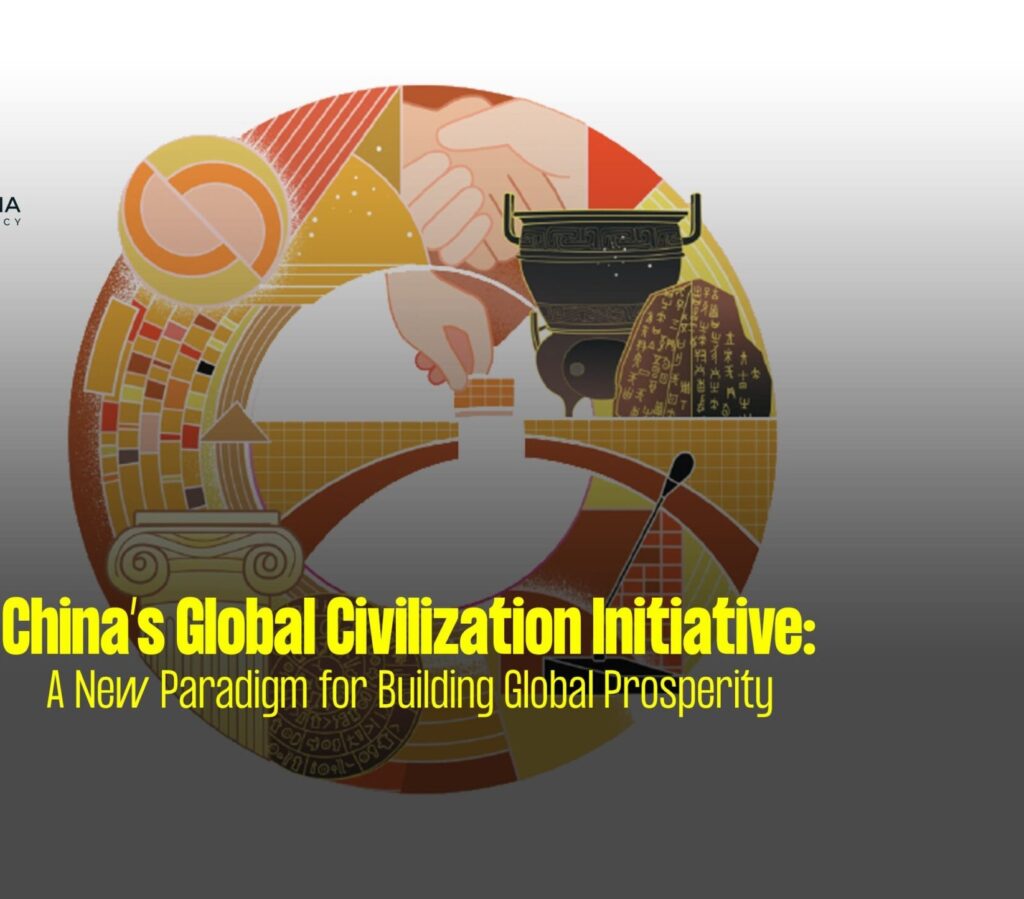
Empirical Evidence of the Global Civilization Initiative.
Global Civilization Initiative (GCI) is among the numerous international strategies of China, which is designed to develop mutual understanding, exchange of culture, and peaceful relations between nations. Its name might seem abstract, but it has numerous applications to real life, cutting across education, culture, media, tourism, religion, and youth participation. The article is about the most noticeable and significant instances of GCI in practice and demonstrates its impact on individuals, community, and global affairs.
Cultural Exchange Programs
The GCI is made up of cultural exchange programs. Through these programs, students, academics and professionals are able to learn and gain first-hand experience with the culture of other nations. As an illustration, student and academic exchange scholarships allow youths to study in foreign countries, take part in research activities and receive new worldviews. Such programs are especially necessary to bring cross-cultural understanding particularly between China and African, Asian and Latin American countries.
The other feasible case is the arrangement of cultural festivals, art shows, and film weeks. Such events enable artists and people to introduce their tradition, art and history to the world. They not only generate opportunities whereby people of other countries can relate and cooperate. Likewise, archaeological and heritage-preservation projects are performed together to preserve and research historical sites on the continents. Through collaboration in heritage projects, countries keep their past intact as they forge long-term cultural ties.
It also conducts seminars on language-learning abroad. It is not only communication but rather knowing the worldview, values and traditions of other societies that makes one learn a foreign language. Such programs facilitate close connection with others, as well as enhance international collaboration.
Academic and Educational Cooperation.
Education is an effective instrument in making cultural bridges. GCI encouragesuniversity-to-university collaborations which enable students, faculty and researchers to share ideas. It is also characterized by partnerships in the humanities and social sciences in which scholars collaborate on studying issues such as culture, history, and social development. Another method of encouraging academic cooperation is through think-tank forums and intercultural dialogue seminars. Such events unite professionals to address the issues on a global level, exchange knowledge, and suggest solutions. They establish an interconnection of professionals who are dedicated to knowing and appreciating other civilizations. Cultural programs which are distance learning have also become popular. They enable country students who might not be able to take physical exchange programs to subscribe to online courses and seminars. This increases the coverage of GCI and makes more individuals gain access to cross-cultural education.
The Restoration and Preservation of Heritage.
Cultural heritage protection is one of the most viable features of GCI. In Asia, Africa and the Middle East, restoration projects conserve the historical monuments to be used by future generations. These activities are usually done in conjunction with UNESCO World Heritage schemes which offer professional advice and global acknowledgement. It is also important to protect endangered cultural landmarks including ancient buildings, temples and monuments. A lot of these locations are either threatened by urbanization or natural catastrophes or abandoned. Local training and supplying of conservation equipment are one of the technical supports used in conservation practice in order to make conservancy of cultural artifacts sustainable and efficient. By preserving heritage, not only is history preserved, but the global feeling of shared responsibility and cooperation is enhanced.
Media, Communication and Public Diplomacy.
The media and communication are to be crucial in propagating the values of GCI. Documentaries, movies and other cultural materials produced together are used to tell the stories about the civilizations and traditions to the audience in large numbers. These are the projects in the media that are not merely entertainment purposes; they teach the viewers the variety of human experience and promote cross-cultural awareness. Another viable practice is international broadcasting partnership. Through collaboration, the countries are able to exchange information and viewpoints which might be restricted by geographical or political boundaries. Training in cross-cultural journalism enables the journalists to be responsible when writing about the cultures of the world, reducing stereotyping and misunderstandings. Campaigns about civilizational dialogue are becoming more significant in social media. They travel to the youth and world markets anywhere and anytime, and open platforms of dialogue and exchange of culture, tradition, and international values.
Tourism and People to People Connections.
The best method of interaction with a culture is through tourism. GCI also supports culturally-focused tourism routes in which it focuses on historical, religious, and artistic sites. These trails bring tourists, boost local economies and foster the education of other civilizations. Cultural exchanges are also supported with visa facilitations thereby enabling students, researchers, and tourists to travel to the foreign countries. Streamlined visa applications will eliminate obstacles and enable increased human diversity to travel the world. The other example of active participation is the sister-city programs. The cities of other nations collaborate to share in the exchange of cultural events, government concepts and communal projects. Projects of cultural interaction on a community level also enhance the local bonds, and the citizens are now more inclined to engage in cultural exchange at a personal level, directly.
Intercultural and Interfaith Dialogue.
One of the main components of GCI is interfaith dialogue. Religious forums unite religious leaders and followers of various religions to discuss common values, peace and social harmony. Such discussions prevent misunderstanding and clashes that might occur due to differences in religion. Interfaith peace conferences also mention feasible cooperation among the religious groups. They present the examples of projects in which faith groups collaborate in spheres of education, poverty eradication, and disaster recovery. The cooperation with the religious organizations around the world is a guarantee that their efforts will be more widespread, and their effect will be permanent.
Young and Grassroots Engagement.
The success of GCI depends on the next generation. Youth leadership programs enable the youth to participate in cultural exchange programs, establish networks and train them on how to collaborate internationally. Volunteer exchange is an opportunity to make a contribution into community work in other countries where the young people get experience by giving back to the community. Cultural innovation competitions and workshops promote creativity and problem solving in the cultural projects. They offer feasible grounds on which the youth can present ideas that enhance intercultural sensitivity.
Conclusion
The Global Civilization Initiative is not a mere abstract idea but its practical application can be observed in the spheres of culture and society. GCI works at various levels, through student exchange programs, heritage conservation, media cooperation with tourism, interfaith dialogue, youth engagement and many other mechanisms with a view to ensuring mutual understanding and international cooperation. These projects are feasible as they are more hands-on in nature and they generate tangible results as well as establishing long term relationships between nations and cultures. In the globalized world that is marked by misunderstandings and conflicts that could be occasioned due to cultural differences, such practical programs as GCI are crucial in establishing trust, esteem, and harmony. They show that global civilization is not an ideology but is practiced in education, art, heritage, dialogue and person to person nexus. These operational expressions are some of the ways that the Global Civilization Initiative enhances cultural diversity, cooperation, and leads to a more peaceful and interconnected world.