GLOBAL ORDER BUILT ON DISORDER

Why a New World Order Cannot Survive When Thought, Values, Law, Morality and Economics Are Broken based on “Carl Jung and Plato Observations”
A World Searching for Order While Living in Anxiety
The world today speaks frequently about a New World Order. The phrase appears in political speeches, global forums and strategic documents. It suggests control, stability and a future that is somehow more secure than the past. Yet for most people across the globe, daily life tells a very different story. Instead of stability people experience anxiety. Instead of security they feel uncertainty and Instead of progress, they face rising prices, shrinking savings and growing fear about tomorrow.
The idea of a New World Order is not in itself a threat. At its best, it represents humanity’s aspiration to move beyond chaos, unmanaged conflict and historical repetition toward a world that is more predictable, cooperative and humane. The problem does not lie in the ambition for order but in the pathway chosen to reach it.
Wars and conflicts dominate headlines but beneath them lies something deeper and more troubling: a world that has lost inner order. Thought is confused, values are inconsistent and Laws are applied unevenly. Morality changes with interest and the global economy once promised as a path to shared prosperity has become unpredictable and deeply unequal. The central question is no longer political. It is philosophical and human:
How can a New World Order survive when its foundation is built on disorder of thought, values, law, morality and economic justice?
While writing this article, I imagined a conversation over coffee with Plato and Carl Jung not as historical figures but as observers of the present. Plato pointed to truth bending under power, values applied selectively and law losing legitimacy when equality disappears. Jung focused on the inner consequences: widespread anxiety, exhaustion and the psychological strain of living in permanent uncertainty. From different paths, both reached the same conclusion: order cannot emerge from disorder. This article begins there. It examines how disordered thinking and misinformation blur the line between truth and falsehood, weaken public judgment, fragment values and reduce law to an instrument of power. It then traces the material consequences, economic instability, inflation, volatile markets and debt-driven governance that quietly shift the cost of disorder onto the majority undermining mental stability and confidence in the future. Plato warned long ago that societies collapse not first through violence but through confusion of reason. Carl Jung later reminded humanity that when inner order breaks down, outer chaos follows. Today, both warnings feel painfully relevant.
Recent global developments including tensions surrounding Greenland and other strategically sensitive regions reveal a troubling pattern: order is increasingly pursued through pressure rather than dialogue, speed rather than reflection and power rather than legitimacy. These moments should not be treated as isolated crises. They are signals, early indicators of a deeper systemic imbalance.
These failures are not isolated. Confusion weakens judgment, weakened judgment enables injustice, injustice fuels economic anxiety and prolonged anxiety destabilizes societies from within. This is not a prediction of collapse but a reform-oriented inquiry. It asks where coherence has been lost and how it can be restored moving from reaction to reflection, from control to legitimacy and from fragmented power to quality operational value where systems function because they align truth, law, economics, morality and human psychology.
Plato believed justice begins in the soul before it appears in the state. Jung believed peace begins in awareness before it appears in institutions. Read together, they suggest that sustainable global reform must begin with clear thinking, consistent values, fair law, economic stability and respect for human mental limits. The question is therefore practical not ideological: Can a New World Order endure without first restoring order in how it thinks, governs, values truth and protects human stability?
A New Voice for a New Order: Why Scandinavia Can Lead the Global Conversation
For decades, the discourse on global order has been dominated by the traditional powers, the United States, China, Russia and a handful of others whose visions of world order are often inseparable from their own strategic, ideological and economic interests. Yet, despite their influence unfortunately these nations have been unable to forge a framework that meaningfully addresses the deep disorders of thought, value, law, morality and economics described in this article. The result is a stagnant debate trapped in old paradigms of power and control rather than advancing toward genuine coherence and human stability.
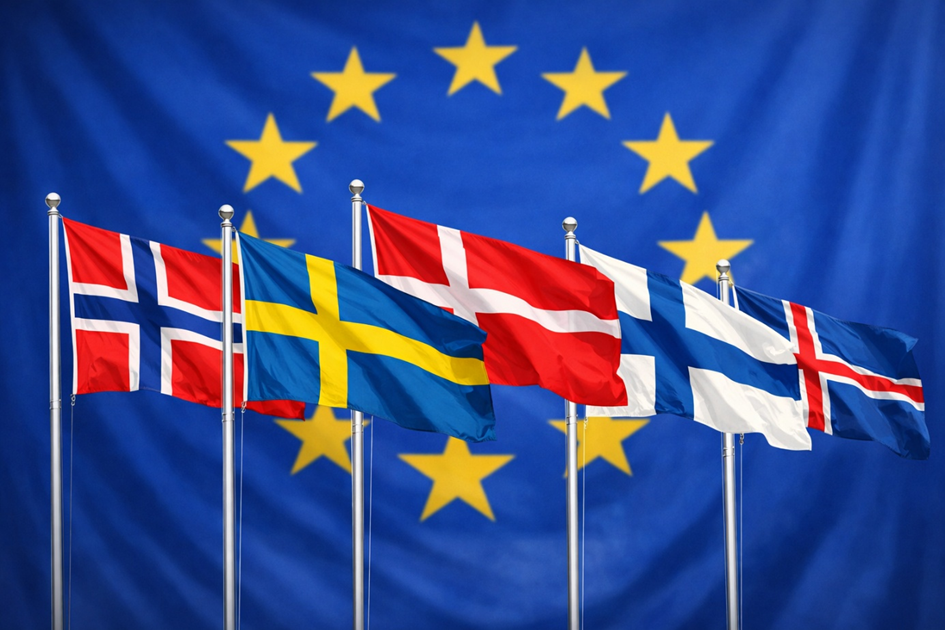
As hope wanes for leadership from the usual suspects, the question arises: if not the superpowers then who can initiate the design of a better world order? In my humble opinion, it is the Scandinavian nations Norway, Sweden, Denmark, Finland, and Iceland that are uniquely positioned to step forward and champion this essential global recalibration. These societies have not only theorized but practically realized social welfare, equality, trust-based governance and economic stability within their own borders. They have built systems where law is largely perceived as fair, where economic policies prioritize human security over mere growth and where social cohesion is nurtured through consistent values and institutional legitimacy. Having successfully navigated the delicate balance between individual freedom and collective responsibility, the Scandinavian model offers a lived experiment in coherence, the very foundation this article argues is missing globally. Their experience equips them to understand the indicators of order and disorder not as abstract concepts but as measurable outcomes of policy and social choice. Furthermore, their historical role as mediators, advocates for multilateralism and champions of human dignity often independent of great power blocs grants them a credibility and moral authority that larger more conflicted powers lack. It is time for these nations to move from being admired examples to active initiators placing on the global table a concrete humane blueprint for an order built not on domination but on the operational principles of predictability, fairness and psychological safety. The world does not need another order imposed by force; it needs one demonstrated by example. Scandinavia, by virtue of its proven practice can be the catalyst for that long-overdue debate.
This article is not written to condemn, accuse or dismantle. It is written to reform, to recalibrate and to remind. History shows that durable order is never born from disorder. It emerges when thought is clear, values are consistent, law is fair, economies are stabilizing rather than exhausting and human psychological limits are respected. What follows is a comprehensive reform-oriented reflection on the foundations of global order organized around thirty-eight interconnected points. Each point is not a criticism but an invitation: to strengthen what exists, correct what is misaligned and ensure that any emerging world order is built on coherence rather than contradiction.
1. The Idea of a “New World Order”: New in Power, Old in Confusion
A true world order is not simply about who holds power. It is about shared understanding. It requires agreement on basic ideas: what justice means, what law demands, what human dignity requires and what responsibility power carries. What we call the New World Order today is largely a rearrangement of power not a renewal of meaning. Old structures weaken, new alliances emerge and global influence shifts. Yet the underlying confusion remains untouched.
Plato, in The Republic warned that when leadership is separated from wisdom, societies mistake noise for knowledge and popularity for truth. He wrote: “The heaviest penalty for declining to rule is to be ruled by someone inferior to yourself.”
In today’s global system, decisions that affect billions are often made without moral clarity or philosophical depth. Strategy replaces wisdom, speed replaces reflection and Image replaces substance. An order that is “new” only in structure but old in its intellectual disorder cannot last. Without a shared foundation of meaning, global systems become fragile even if they appear strong.
2. Global Conflicts: Signs of Deeper Disorder, Not Isolated Events
Modern conflicts are often explained in simple terms: territory, security, ideology or resources. But these explanations only scratch the surface. At their core, today’s conflicts are “conflicts of interpretation”. Each side believes it is justified. Each claims legality, morality and necessity. International law is cited by all, yet agreed upon by none.
Plato described this condition clearly when he warned that injustice becomes normalized when societies lose the ability to define justice itself. Without shared definitions conflict becomes endless. What we are witnessing globally is not just war, it is the “collapse of a shared moral language”. When there is no common framework to judge right and wrong, violence becomes permanent and peace becomes temporary. A New World Order that ignores this deeper disorder treats symptoms while allowing the disease to spread.
3. Disorder of Thought: When Reason Is Replaced by Emotion and Narrative
Perhaps the most dangerous crisis of our time is the crisis of thought. Today, societies do not merely disagree, they think differently about thinking itself. Facts are filtered through emotion, truth is shaped by loyalty and information is consumed not to understand but to confirm beliefs.
Carl Jung warned: “Thinking is difficult that is why most people judge.”
This insight explains much of today’s global dysfunction. Political decisions are driven by fear, anger, pride and collective emotion rather than careful reasoning. Social media accelerates reaction while discouraging reflection. Leaders respond to public pressure instead of long-term reality. A world that cannot think clearly cannot build order. A world that cannot agree on reality cannot manage peace. The New World Order assumes rational coordination among states but rationality itself has become fragmented.
4. Disorder of Values: When Principles Become Tools
Values are meant to guide behaviour. Today, they are often used to justify it. Human rights, democracy, freedom and justice are applied selectively. Their meaning changes depending on who is speaking and whose interests are at stake. This creates deep moral confusion especially among ordinary people who see contradictions but are rarely allowed to question them.
Plato warned that when values lose consistency, societies fall into moral relativism where power decides what is right. This selective morality teaches the world a dangerous lesson: values matter only when they serve interest. A New World Order built on such values does not inspire trust. It produces resentment, cynicism and silent anger especially among those who suffer while principles are debated.
5. Legal Disorder: Law Without Equality Is Not Law
International law is often described as the backbone of global order. In reality, it has become one of its weakest pillars. Law today is uneven. Some violations trigger sanctions and outrage; others result in silence. Some states are held accountable; others are protected by power.
Plato argued that laws lose legitimacy when they serve rulers instead of reason. When law becomes flexible for the strong and rigid for the weak, it ceases to be law, it becomes control.
This legal disorder creates instability not order. It tells the world that justice is negotiable and accountability optional. A New World Order cannot survive when law is seen as an instrument of power rather than a guardian of fairness.
6. Global Economics: Disorder, Inflation and the Silent Suffering of the Majority
Beyond politics and war lies a quieter crisis: economic insecurity. Across the world inflation rises, prices increase faster than wages and savings lose value. Housing becomes unreachable and energy costs fluctuate unpredictably while Governments accumulate debt while ordinary people absorb the cost. This economic disorder is not accidental. It is deeply connected to global instability, sanctions, trade disruptions, militarization and financial speculation. The New World Order promises growth and stability yet delivers uncertainty and loss. Most people on the planet are not living in a comfortable state of mind (unwanted cognitive dissonance). They worry about jobs, food, healthcare and the future of their children therein psychological insecurity has become global.
Carl Jung warned that when societies ignore the inner suffering of the majority, they create conditions for collective breakdown. Anxiety, frustration and hopelessness do not disappear, they accumulate. The price of global disorder is paid not by elites but by ordinary people.
7. Loss of Trust: When Governments Lose Moral and Financial Credibility
As money loses value, trust erodes and People see governments spending billions on conflict while asking citizens to accept austerity while resolving one conflict and 10 more are created. They hear promises of stability while experiencing instability. This creates a dangerous gap between authority and legitimacy.
Plato warned that when rulers lose moral credibility, laws no longer command obedience, they require force and force once normalized becomes the enemy of order. A New World Order cannot survive without trust. Trust cannot exist where economic pain is ignored and moral contradictions are defended.
8. The Psychological Cost: Living in Permanent Insecurity
The greatest cost of this global disorder is psychological. People live with constant uncertainty: Fear of war, Fear of economic collapse, Fear of social breakdown and Fear of the future. This is not normal because A stable order should reduce anxiety not spread it.
Jung believed that societies project unresolved inner conflict onto the world. Today’s global chaos reflects a deep collective imbalance between reason and emotion, power and responsibility, growth and meaning.
9. The Core Truth: Order Cannot Grow from Disorder
This brings us back to the central truth: Order cannot be built on disordered thinking, inconsistent values, unequal law, moral hypocrisy and economic injustice. Power can delay collapse but it cannot prevent it. A New World Order that ignores these foundations will not fail suddenly but it will fail inevitably. Humanity faces a choice, not between nations or systems but between control without wisdom and order built on coherence.
Plato believed that societies survive only when reason leads power. Jung believed that peace is impossible without inner balance. Until the world addresses its disorder of thought, values, law, morality and economics, every “new” order will repeat old failures. The future will not be decided by who dominates but by whether humanity can restore meaning before disorder becomes irreversible.
Disorder as a System: How Global Structures Reproduce Instability
10. When Power Replaces Wisdom: Plato’s Old Warning in a New World
Plato never believed that power alone could create order. For him, power without wisdom was not strength, it was danger. In The Republic, he warned that societies decline when leadership is guided by desire, ambition and fear rather than reason and understanding. He wrote: “There are three classes of men: lovers of wisdom, lovers of honour and lovers of gain. “Plato believed that when societies are ruled by the lovers of gain disorder becomes inevitable. Today’s global system reflects this concern clearly. Economic growth is prioritized over human well-being. Strategic advantage is valued more than moral responsibility. Short-term wins replace long-term stability.
The New World Order claims to manage complexity, yet it is increasingly driven by reaction instead of reflection. Decisions are made quickly, publicly and emotionally often to satisfy markets, voters or allies rather than to maintain balance. This shift away from wisdom has consequences. When leadership loses depth, systems lose direction and when direction is lost, disorder spreads quietly but steadily.
11. The Economy as a Source of Anxiety Not Security
One of the greatest promises of the modern global order was economic stability. People were told that globalization would reduce poverty, expand opportunity and create predictability. For a small segment of the world, this happened. For the majority, the reality has been far more fragile. Today, the global economy feels unstable and unfamiliar even to experts. Inflation rises unpredictably, Currency values fluctuate and Energy prices jump without warning, Supply chains break and Debt grows quietly but relentlessly. For ordinary people, this means: Salaries that no longer match living costs, Savings that lose value over time, Housing that feels permanently out of reach and a future that cannot be planned. This is not just an economic issue, it is a psychological one.
Carl Jung understood that economic insecurity damages the human psyche. When people cannot predict tomorrow, anxiety becomes a permanent condition, fear becomes normalized and Hope shrinks. World order that produces constant financial stress cannot call itself stable. Economic disorder does not remain in markets, it enters homes, families, relationships and minds.
12. Governments, Money and the Crisis of Credibility
Another critical problem lies in the relationship between governments and money. Across the world, states spend enormous resources on: Military expansion, Conflict management and Strategic competition and Crisis response. At the same time, citizens are asked to accept: Higher taxes, reduced services, Austerity measures and “Necessary sacrifices”. This contradiction is deeply damaging. People begin to feel that money exists for power not for protection. That resources are available for conflict but limited for welfare, education and health.
Plato warned that when rulers become detached from the lived reality of citizens, resentment grows quietly until it explodes unexpectedly. Trust, once lost is extremely difficult to restore.
A New World Order cannot survive when people believe the system works against them rather than for them.
13. Inflation as a Hidden Tax on the Poor and Middle Class
Inflation deserves special attention because it is often misunderstood. On paper, inflation is an economic indicator. In real life, it is a silent transfer of pain. It erodes purchasing power without formal consent. It punishes those who live on fixed incomes. It benefits those with assets and political access. For the majority of the global population, inflation feels like running faster just to stay in the same place or falling behind no matter how hard one tries. This produces a deep sense of injustice. People may not understand monetary policy but they understand loss. They understand when life becomes harder without explanation. A global order that allows inflation to spread while offering no psychological or moral reassurance creates insecurity at scale.
14. Living in an Unpredictable World: The Mental Cost
Beyond economics, people today live in a permanent state of uncertainty. News cycles are filled with: War warnings, Economic forecasts of crisis, Political instability and Environmental fear. This constant exposure creates what psychologists call chronic stress. Carl Jung warned that prolonged stress without meaning leads to collective exhaustion and irrational behaviour.
When people feel powerless, they search for certainty sometimes in dangerous ideas, extreme politics or blind loyalty. A New World Order that does not protect mental stability cannot protect peace. Order is not only external. It must exist inside people.
15. Moral Confusion and the Normalization of Injustice
Perhaps the most damaging effect of global disorder is how easily injustice has become normal.
Civilians suffering in one region are called victims. In another, they are called collateral damage. Economic hardship in one country is described as tragedy; in another as necessary adjustment. This inconsistency creates moral fatigue.
Plato warned that when injustice becomes routine, societies stop recognizing it as injustice. At that point decline accelerates. A New World Order that teaches people to accept suffering as normal will eventually face resistance not always organized but always disruptive.
16. Jung’s Insight: Outer Chaos Reflects Inner Disorder
Carl Jung believed that societies project their unresolved inner conflicts onto the external world. When fear, aggression and denial are not addressed internally, they appear as war, division and instability externally. Today’s global disorder reflects a deep psychological imbalance: Fear replaces trust, Control replaces understanding and Speed replaces wisdom. The New World Order focuses heavily on managing external systems, borders, markets, institutions but neglects the inner condition of humanity. No system can remain stable if the people within it feel unsafe, unheard and exhausted.
17. The Price Paid by the Majority
The most important truth is also the most uncomfortable:The cost of global disorder is paid primarily by those who have the least power to influence it. The majority of humanity: Does not shape global policy, Does not benefit from financial complexity, Does not profit from conflict and Does not feel represented Yet they absorb the consequences. A world order that survives by transferring pain downward is not sustainable. History shows this clearly. Plato knew it. Jung confirmed it psychologically.
18. A System That Produces Instability Cannot Promise Order
At this stage, the contradiction becomes undeniable. A system that: Confuses thought, Selects values, Bends law, Weakens morality, Destabilizes economies and Exhausts minds cannot produce lasting order, no matter how advanced it appears. Power may hold things together temporarily but without coherence collapse is only delayed.
Why the “Rules-Based Order” Fails Without Shared Meaning
19. The Problem with a “Rules-Based World” Without Agreed Rules
Modern global leaders often speak of a “rules-based international order.” The phrase sounds reassuring. It suggests predictability, fairness and restraint. But the question rarely asked is simple and uncomfortable: Whose rules? Interpreted by whom? Enforced against whom?
Rules only function when they are understood and accepted as legitimate. Today, global rules exist on paper but not in shared belief. Different states interpret the same rule in completely different ways. What is considered lawful by one is seen as aggression by another.
Plato warned that laws lose authority when they are no longer rooted in common reason. When rules are disconnected from shared understanding, they become instruments of control rather than guides for justice. A rules-based order without shared meaning is not order, it is negotiation under pressure.
20. Selective Enforcement and the Collapse of Legitimacy
One of the deepest weaknesses of the current global system is selective enforcement. Some violations trigger immediate punishment. Others are ignored or justified. Some actors are labelled threats; others are described as partners even when their actions are similar. This inconsistency damages the very idea of law.
Carl Jung believed that humans have a strong psychological sense of fairness. When people repeatedly see injustice defended as necessity, they stop trusting both the system and its language. A New World Order that enforces rules unevenly creates obedience without respect and obedience without respect does not last.
21. Control Versus Legitimacy: A Critical Distinction
There is a crucial difference between control and legitimacy. Control relies on pressure, fear and enforcement. Legitimacy relies on trust, fairness and moral credibility. Modern global governance increasingly depends on control, economic pressure, sanctions, surveillance and strategic isolation. These tools can force compliance but they cannot create belief.
Plato understood this deeply. He argued that a state survives not because people fear punishment but because they believe the system is just. When legitimacy disappears, control must increase and when control increases, resistance grows sometimes quietly and sometimes violently. A New World Order based on control alone is always temporary.
22. Emotional Diplomacy Versus Strategic Hostility
One of the great failures of modern international relations is the absence of emotional intelligence. States speak in legal terms, military terms and economic terms but rarely in human terms. Fear, humiliation, historical trauma and collective memory are ignored or dismissed as irrational.
Carl Jung warned that ignored emotions do not disappear; they return in destructive forms. Nations like individuals carry emotional histories. When those histories are denied conflict becomes inevitable. A sustainable world order requires emotional diplomacy, the ability to understand how policies are felt not just how they are justified. Without this negotiations remain technical while resentment grows underneath.
23. The Global South and the Experience of Exclusion
For much of the world, especially in the Global South, the New World Order does not feel new at all. It feels like: Old hierarchies with new language, Old power with new institutions and Old inequalities with modern justification. Economic systems often extract more than they develop, political systems demand alignment without representation and financial systems punish instability while contributing to it. This creates a deep sense of exclusion.
Plato warned that societies fracture when large segments feel permanently unheard. Jung added that exclusion breeds shadow emotions, anger, bitterness and distrust that eventually surface.
A world order that does not include the lived experience of the majority is building instability into its foundation.
24. Economic Zones of Uncertainty and Permanent Crisis
Another defining feature of the current global order is permanent crisis. Markets no longer move in cycles of recovery and stability. Instead, they exist in overlapping emergencies: Financial crises, Energy crises, Supply chain crises and Debt crises
This creates what can be called an unpredictable economic zone a condition where long-term planning becomes impossible. People cannot plan families, careers or futures when the ground constantly shifts beneath them. This destroys confidence not only in markets but in society itself. A New World Order that produces constant economic shock cannot claim to be an order. It is a system of managed instability.
25. The Psychological Weight of “Living on Hold”
Across continents, millions of people live with the feeling that life is on hold. They delay decisions. They postpone dreams and they wait for stability that never arrives. This creates quiet despair.
Jung believed that meaning is essential to psychological health. When people feel trapped in endless uncertainty, they lose a sense of purpose. This leads to withdrawal, anger or radicalization. A world order that cannot offer psychological safety cannot offer peace.
26. Technology, Speed and the Loss of Reflection
Modern systems operate at incredible speed. Decisions are made quickly, markets react instantly and information spreads globally in seconds. But wisdom requires slowness.
Plato emphasized reflection, dialogue and reasoned debate. Jung emphasized inner work and awareness. Both would recognize today’s problem: speed has replaced understanding. Fast decisions made without depth increase mistakes and mistakes multiplied by global scale create chaos. A New World Order built on speed rather than wisdom amplifies disorder instead of correcting it.
27. Why People Are Losing Faith in the Future
Perhaps the most dangerous signal is not protest or rebellion but apathy. When people stop believing that systems can improve, they disengage, retreat into survival mode and focus only on immediate needs. This is already happening in many parts of the world.
Plato warned that when citizens lose faith in the future, societies decay from within. Jung warned that hopelessness creates fertile ground for destructive ideologies. A world order that cannot inspire hope cannot endure.
28. The Central Insight Revisited
At this point, the conclusion becomes unavoidable: A world order that: Lacks shared meaning, Applies rules selectively, Produces economic anxiety, Ignores psychological reality and Relies on control over legitimacy is not building order, it is managing decline.
Rebuilding Order: From Power Without Wisdom to Coherence With Meaning
29. What Real Order Actually Means
Order is often misunderstood. Many assume it means control, discipline or dominance. But true order is something far deeper and quieter .Order means 1.Predictability without fear, 2.Rules that make sense, 3.law that feels fair and 4.A future people can imagine without anxiety.
Plato understood this clearly. For him order was not imposed from above, it emerged when reason guided power. He believed that a just society was not one where force was strong but where understanding was shared. He wrote: “Justice means minding one’s own business and not meddling with other men’s concerns.”
In modern terms, this means balance. It means restraint. It means knowing where power should stop. A New World Order that confuses order with control misunderstands the very thing it claims to build.
30. Coherence: The Missing Foundation
If there is one word that explains why the current global order struggles, it is incoherence. Thought is incoherent when truth changes with interest, values are incoherent when they apply only to some, law is incoherent when power determines enforcement, economics is incoherent when growth produces insecurity and morality is incoherent when suffering is justified as strategy. No structure no matter how powerful can stand on incoherence.
Carl Jung believed that coherence between inner values and outer action was essential for both individuals and civilizations. When this alignment breaks, anxiety spreads and systems begin to fail quietly before they collapse openly. A sustainable world order must first restore coherence within itself.
31. Reordering Thought Before Reordering the World
The most difficult reform is not just institutional, it is intellectual. Before the world can agree on rules, it must agree on how to think. This does not mean agreement on ideology but agreement on basic principles of reasoning: Evidence matters, truth is not optional, Complexity requires humility and Emotion must not replace reason.
Plato believed education was the foundation of any just society. Not education for skill alone but education for wisdom. A New World Order that does not invest in clarity of thought will remain trapped in reaction, crisis management and contradiction.
32. Restoring Moral Consistency
Moral consistency does not mean moral perfection. It means honesty. It means admitting when principles are violated even by allies. It means acknowledging suffering without ranking victims. It means refusing to disguise interest as virtue.
Jung warned that moral denial creates a collective “shadow” as a hidden accumulation of guilt and resentment that eventually erupts. A world order that cannot face its own contradictions will be haunted by them because moral consistency restores trust, trust restores legitimacy and legitimacy reduces the need for force.
33. Law as a Shield Not a Weapon
Law must return to its original purpose: protection not punishment. When law is used selectively, it teaches cynicism and when law is universal, it teaches responsibility.
Plato argued that law must serve reason not rulers. When law becomes a tool of power, it ceases to command respect and must rely on fear. A New World Order that wishes to survive must choose equality before law even when it is inconvenient.
34. Rethinking Global Economics: Stability Before Growth
Economic systems should reduce anxiety not increase it. The current global order often treats instability as acceptable even necessary. Markets are allowed to fluctuate wildly while people are told to adapt endlessly. This is unsustainable. A coherent economic order would: Prioritize price stability, protect basic living standards, reduce speculative shock and treat inflation as a moral issue not only a technical one.
Jung understood that economic fear damages the psyche as deeply as physical danger. A society that keeps its people in permanent economic stress cannot remain healthy. Order requires economic predictability not constant crisis.
35. Addressing the Mental State of Humanity
Perhaps the most neglected issue in global governance is the mental state of people. Today, the majority of humanity lives with: Economic worry, political uncertainty, fear of conflict, loss of trust and emotional exhaustion. This is not accidental. It is the result of a system that manages power efficiently but neglects human stability. A New World Order that ignores psychological well-being is building on fragile ground. Peace is not only the absence of war, it is the presence of mental safety.
36. The Cost of Ignoring the Majority
History is clear on one point: systems fail when the majority feels sacrificed for stability they never experience.
Plato warned that injustice tolerated for too long becomes rebellion. Jung warned that suppressed frustration eventually turns destructive. The current world order often survives by shifting cost downward onto workers, consumers and future generations. This is not order. It is delay.
37. Control Is Easier Than Wisdom And More Dangerous
Control is tempting because it works quickly. Wisdom is difficult because it requires restraint.
Modern systems choose control: Sanctions instead of dialogue, Pressure instead of understanding and Speed instead of reflection
Plato would have recognized this as a sign of decline. Jung would have recognized it as fear masquerading as strength. True order does not fear openness. It does not fear criticism. It does not fear reflection.
38. The Final Choice Facing the World
The world now stands before a quiet but decisive choice. Not between nations and not between systems. But between coherence and contradiction. A New World Order built on disorder may survive for a time but it will never feel stable, just or humane. An order built on coherent thought, consistent values, fair law, moral honesty, economic stability and psychological care may be slower but it will endure.
Final Reflection: Order Begins Before Power
Plato believed that justice begins in the soul before it appears in the state. Jung believed that peace begins in awareness before it appears in politics. Until the world restores order within its thinking, every attempt to impose order from above will reproduce chaos below. The question is no longer whether a New World Order will emerge, the question is whether humanity will choose wisdom over control before disorder becomes irreversible.
Indicators of Disorder: When Breakdown Becomes Observable
Disorder does not emerge suddenly. It accumulates quietly and becomes visible through repeatable signals. These indicators do not require ideological interpretation; they can be observed across political systems, cultures, and economies. When such indicators appear simultaneously and persistently, they signal structural imbalance rather than temporary crisis.
At a theoretical level, indicators of disorder function like symptoms in medicine. A single symptom may be misleading but a constellation of symptoms reveals an underlying condition. Political systems often misread these signs because they interpret them in isolation rather than as part of a systemic pattern. Disorder becomes dangerous precisely when it is normalized and treated as background noise. Key indicators include:
Erosion of Trust: Declining public confidence in institutions, law, media and leadership accompanied by rising cynicism and disengagement. Trust is not merely emotional; it is a rational judgment about predictability and fairness. When trust declines compliance increasingly depends on pressure rather than legitimacy.
Volatility as Normality: Increasing frequency of economic shocks, political emergencies, legal exceptions and security alerts replacing periods of stability. Volatility becomes a governing condition rather than a deviation signalling that systems are no longer absorbing stress effectively.
Inflation Without Recovery: Persistent cost-of-living increases without proportional wage growth or improvement in living standards. Theoretically, this represents a breakdown in the social contract between labour, value and reward.
Selective Accountability: Visible asymmetry in how rules, laws and norms are enforced across actors. This undermines the principle of universality which is essential for any legal or moral system to function.
Psychological Saturation: Rising levels of anxiety, burnout, social withdrawal and future pessimism across populations. These are not private issues but collective signals that systems are exceeding human adaptive limits.
Shortened Time Horizons: Governance and planning increasingly focused on immediate reaction rather than long-term coherence. This reflects a loss of confidence in the future and an inability to imagine stability.
When these indicators align, they reveal not isolated failure but systemic disorder. Any world order that ignores such signals mistakes endurance for health and survival for legitimacy.
Institutional Fatigue: When Systems Lose the Capacity to Self-Correct
Institutions like individuals can become exhausted. Institutional fatigue occurs when systems operate continuously in crisis mode, relying on emergency measures, improvisation and pressure rather than reflection, learning and reform. Over time, this depletes institutional judgment, memory and moral authority.
From a theoretical perspective, institutions are designed to process complexity through rules, procedures and norms. When they are forced into constant exception-handling, they lose their ability to distinguish between the urgent and the important. Crisis becomes the organizing principle rather than coherence.
Symptoms of institutional fatigue include:
- Permanent emergency governance replacing normal deliberation
- Reactive policymaking driven by headlines rather than structure
- Overreliance on enforcement, sanctions or control mechanisms
- Loss of institutional memory and long-term vision
- Normalization of exception as standard practice
Fatigued institutions may still function operationally but they no longer self-correct intelligently. Instead of learning, they repeat patterns and instead of reforming, they reinforce existing behaviours. This creates brittle systems that appear active yet lack resilience.
A world order built on exhausted institutions may maintain surface order, but it steadily loses legitimacy, adaptability and moral coherence. Eventually, even minor shocks can produce disproportionate disruption.
Stability Versus Resilience: A Critical Distinction
Modern governance often confuses stability with strength. Stability is typically pursued through control, rigidity and suppression of disruption. It seeks to prevent visible disorder, often at the cost of flexibility. Resilience by contrast is the capacity to absorb shock, adapt and recover without losing coherence or legitimacy.
Theoretically, stability is a static concept while resilience is dynamic. Stable systems resist change; resilient systems integrate it. This distinction is crucial because complex systems cannot eliminate disruption, they can only manage how disruption is processed.
Stability without resilience produces brittle systems that appear orderly until they fracture under pressure. Resilience without coherence produces chaos and Resilient order emerges when rules, values and institutions are trusted enough to flex without breaking.
Plato’s concept of order was inherently resilient: reason guiding power, balance restraining excess. Jung’s psychology reinforces this insight: systems that repress tension eventually collapse while those that integrate it remain whole. A sustainable world order does not eliminate disruption; it prepares for it. It does not enforce silence; it preserves meaning under strain and adapts without panic.
Generational Transfer of Disorder: The Silent Inheritance
Disorder is not confined to the present. It transfers quietly from one generation to the next through normalized instability, diminished expectation and eroded imagination. This transfer occurs not through dramatic events but through everyday adaptation to uncertainty.
Theoretically, societies reproduce themselves through institutions, education and cultural expectations. When instability becomes permanent, these transmission mechanisms no longer pass on confidence, continuity or purpose. Instead, they pass on caution, delay and resignation.
Younger generations increasingly inherit:
- A world where uncertainty is expected rather than temporary
- Economic precarity as a baseline condition
- Institutions perceived as distant or unresponsive
- Education oriented toward survival rather than wisdom
- Futures postponed indefinitely
This inheritance is dangerous not because it produces immediate rebellion but because it produces lowered aspiration. When instability is normalized, ambition narrows and social imagination contracts. Societies begin to manage decline rather than pursue progress.
Any world order that fails to protect generational continuity undermines its own future legitimacy because no system can endure if those who inherit it no longer believe it can improve.
Governance Principles for a Sustainable World Order
If a world order is to endure, it must be guided not merely by power or efficiency but by governing principles that preserve coherence across time, institutions and human psychology. These principles operate at a structural level; they shape how decisions are made rather than what decisions are made.
At a theoretical level, principles function as constraints on excess. They limit the misuse of power, reduce systemic contradiction and provide continuity across changing leadership and circumstances.
- Coherence Before Expansion
Systems must align thought, values, law, economics and human limits before seeking greater reach or influence. Expansion without coherence multiplies contradiction.
- Legitimacy Before Enforcement
Authority must be grounded in fairness and trust. Enforcement should support legitimacy not replace it. When force becomes foundational, order becomes fragile.
- Stability Before Growth
Economic systems must first secure predictability and dignity before pursuing expansion or competition. Growth that increases anxiety undermines social order.
- Psychological Safety Before Compliance
Order cannot rely on fear, exhaustion or chronic stress. Mental stability is not a social luxury; it is a governance prerequisite.
- Wisdom Before Speed
Rapid decision-making without depth multiplies error. Sustainable order requires reflection, restraint and long-term vision.
Together, these principles form a minimal ethical and structural baseline. Any order that violates them may function temporarily, but it will not endure.
A Call to Coherence
We stand at a precipice not of one nation’s making but of our collective inheritance. We have mistaken control for order, speed for wisdom and power for legitimacy. We have built towering systems of astonishing complexity upon foundations of sand disordered thought, inconsistent values, law bent to power, morality traded for interest and economies that exhaust rather than sustain the human spirit.
This is not a forecast of doom but a diagnosis of disarray. The anxiety you feel, the uncertainty that shadows your plans, the quiet frustration as principles are debated while people suffer, these are not personal failings. They are the symptoms of a world operating on a broken logic. They are the price we pay for a global order that manages decline rather than cultivates life.
Plato and Jung, across the centuries, offer the same profound truth: order cannot be built on disorder. True stability does not come from force but from coherence. It emerges when the inner world of thought and value aligns with the outer world of law and action. It is felt as predictability without fear, fairness without exception and a future imagined not with dread but with hope.
This article is an invitation and a plea for recalibration. It is a reminder that before we can redesign the world, we must restore order within our thinking. We must choose coherence over contradiction, wisdom over control and legitimacy over force. The choice before us is not between East and West or old powers and new. It is between a fragile, fear-driven control and a resilient trust-based order that honours human dignity.
Look not only to the traditional centres of power for leadership but to those societies that have in practice woven coherence into their social fabric like the Nordic nations, who have made tangible the ideals of trust, equality and psychological safety. Their example proves that a better logic is possible for a peaceful, prosperous, sustainable and progressive global world order.
The question that remains is not for governments alone. It is for every citizen, every thinker and every individual who feels the weight of this disorder. Will we continue to adapt to chaos or will we demand a foundation of coherence? The future of our shared world, its justice, its peace and it’s very humanity depends on the answer we build together from the clarity of our thought to the integrity of our global systems.
The journey to a true New World Order does not begin with a treaty. It begins with a thought, a clear honest and courageous commitment to rebuild from the inside out. Let this be our starting point for a new global order.