Powering the People: The Politics of Pakistan Awami Quwat
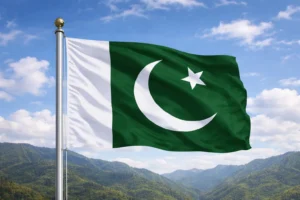
Pakistan stands at a critical moment in its political and developmental history. For decades, politics in the country has largely revolved around slogans, emotional mobilization, and promises of transformation that rarely translate into structural change. Every election cycle produces powerful narratives about prosperity, justice, and reform, yet the social realities confronting ordinary citizens remain stubbornly unchanged. Poverty continues to affect millions, access to quality education and healthcare remains limited, and opportunities for youth and women remain constrained. The widening gap between political rhetoric and everyday realities has produced deep mistrust toward traditional political parties and career politicians.
Against this backdrop, the emergence of Pakistan Awami Quwat represents an attempt to redefine the meaning of politics in Pakistan. Instead of relying on promises to gain power, the party advances a philosophy grounded in practical action and measurable development outcomes. Its central message is simple yet transformative: real political legitimacy comes not from slogans but from empowering people with knowledge, health, skills, and economic opportunities.
The ideological foundation of Pakistan Awami Quwat rests on the belief that the strength of a nation lies in the intellectual, creative, and productive capacities of its people. For decades, Pakistan’s development model has concentrated resources and decision-making power within narrow elite structures. Ordinary citizens have largely remained passive recipients of policy decisions rather than active participants in shaping their own economic and social futures. Pakistan Awami Quwat challenges this structure by placing people at the center of development, particularly youth, women, and marginalized communities.
The urgency of such a transformation becomes clear when examining Pakistan’s current development indicators. According to the latest Human Development Report, Pakistan ranks 168 out of 193 countries with a Human Development Index value of 0.544, placing it in the category of low human development.
When adjusted for inequality, the country’s development score drops even further, reflecting deep structural disparities in access to education, health, and economic opportunity.
Education provides one of the clearest illustrations of these challenges. Pakistan’s national literacy rate remains around 60 percent, with a significant gender gap between male literacy at 68 percent and female literacy at only 52 percent. Even more alarming is the scale of educational exclusion. Nearly 38 percent of children remain out of school, making Pakistan one of the countries with the highest number of out-of-school children in the world. Such figures reflect not merely an educational crisis but a broader failure of development policy.
Pakistan Awami Quwat interprets this crisis as the result of a political system that prioritizes electoral calculations over human development. The party therefore proposes a political program centered on creative education, knowledge-based economic growth, health development, and skills empowerment. These priorities reflect the requirements of the twenty-first century, where national prosperity increasingly depends on innovation, technology, and human capital rather than traditional resource-based economies.
Creative education forms the first pillar of this vision. In much of Pakistan’s education system, students are trained to memorize rather than think critically. Such an approach limits creativity and reduces the ability of young people to compete in global knowledge economies. Pakistan Awami Quwat advocates a transformation in educational philosophy that emphasizes critical thinking, innovation, digital literacy, and interdisciplinary learning. The objective is not simply to produce graduates but to cultivate problem solvers capable of contributing to national and global development.
This emphasis on knowledge and innovation aligns with the demographic reality of Pakistan. Nearly two-thirds of the country’s population is under the age of thirty, representing one of the largest youth populations in the world. Yet without access to quality education and skills training, this demographic advantage risks turning into social frustration. Pakistan Awami Quwat therefore views youth empowerment not merely as a social program but as the foundation of national development.
The leadership of the party, particularly its chairman Khaqan Waheed Khawaja, has already demonstrated practical commitment to this vision. Since 2011, a vast educational and training network has been developed focusing on modern skills relevant to the digital economy. Young people are being trained in e-commerce, digital marketing, and foreign languages, enabling them to access global employment opportunities beyond traditional labor markets.
Such initiatives represent a shift toward a knowledge-based economy. In the contemporary world, digital platforms allow individuals to participate in global markets regardless of geographic boundaries. By equipping youth with digital skills and international communication abilities, Pakistan Awami Quwat seeks to integrate Pakistan’s workforce into global economic networks.
Skills development constitutes another critical component of this political program. Pakistan’s labor market continues to face a severe mismatch between educational output and market demand. Technical and vocational training programs developed within the party’s leadership networks aim to bridge this gap by preparing young people for skilled employment both domestically and abroad. Overseas employment opportunities for trained workers provide not only economic stability for families but also valuable remittance flows that strengthen the national economy.
Women’s empowerment represents another transformative dimension of this development agenda. Structural barriers continue to limit women’s participation in economic and social life. Yet international research consistently shows that societies that invest in women’s education and economic participation experience faster and more sustainable economic growth. By providing women with vocational training, entrepreneurial opportunities, and access to modern technology, Pakistan Awami Quwat aims to unlock an enormous reservoir of social and economic potential.
Health development forms the third pillar of the party’s political vision. A society cannot achieve sustainable development if millions lack access to quality healthcare. Pakistan continues to face serious health challenges, including maternal mortality, child malnutrition, and inadequate healthcare infrastructure. The country spends only around 1 percent of its GDP on health, significantly lower than many developing countries. Such limited investment has profound consequences for human development and economic productivity.
To address these challenges, institutions associated with the leadership of Pakistan Awami Quwat have initiated major healthcare projects. Rawal General and Dental Hospital in Islamabad stands as a flagship example. This 650-bed state-of-the-art facility has been designed to provide accessible healthcare services to marginalized communities. Through its Sehat Sahulat Awami Card, the institution seeks to expand healthcare access for families that cannot afford expensive private treatment.
Alongside healthcare services, the hospital also serves as a center for medical education in medicine, dentistry, physiotherapy, nursing, pharmacy, and allied health sciences. The establishment of Rawal International University, currently at the final stage of development, will further expand this integrated ecosystem of education, research, and healthcare.
Perhaps the most distinctive feature of Pakistan Awami Quwat is that these initiatives have emerged before the party has acquired political power. The party itself was formally established only in January 2024, yet its leadership has already demonstrated the capacity to manage large-scale social development projects. This approach contrasts sharply with the traditional model of politics in Pakistan, where parties promise development after gaining power but rarely implement structural reforms.
Pakistan Awami Quwat also proposes a fundamental transformation in local governance. The party seeks to strengthen the Union Council system through grassroots democratic structures such as street parliaments, neighborhood committees, and ward-level development councils. These institutions encourage citizens to participate directly in identifying problems and designing local solutions.
Through comprehensive surveys and real-time data collection, communities can develop targeted development strategies based on their specific needs. This grassroots governance model reflects the principle of acting locally while thinking globally. When communities are empowered to organize and collaborate, local knowledge becomes a powerful tool for national development.
The importance of such an approach becomes even clearer when examining Pakistan’s broader economic challenges. Recent studies show that poverty in Pakistan has risen again, with more than a quarter of the population living below the poverty line and millions vulnerable to economic shocks.
This demonstrate that the existing development model has failed to produce inclusive growth. Pakistan Awami Quwat argues that sustainable development can only emerge when ordinary citizens are empowered to become active participants in economic production rather than passive recipients of government assistance.
The political philosophy underlying this movement emphasizes dignity, collective participation, and intellectual empowerment. Real democracy, in this perspective, is not confined to electoral competition but involves the continuous participation of citizens in shaping the institutions that govern their lives. When communities organize themselves, when youth acquire knowledge and skills, and when public institutions prioritize human development over narrow interests, the foundations of a just and prosperous society begin to emerge.
In this sense, the politics of Pakistan Awami Quwat represents an attempt to restore the transformative meaning of politics itself. Rather than treating politics as a struggle for power among competing elites, it reimagines politics as a collective process of empowering people to shape their own future.
The central message of the party therefore resonates deeply with the aspirations of millions of Pakistanis who have grown weary of empty promises. The suffering of the people cannot be resolved through slogans alone. It requires practical programs, community participation, and a long-term commitment to human development.
By investing in creative education, knowledge-based economic opportunities, healthcare, skills development, and grassroots democratic institutions, Pakistan Awami Quwat seeks to build a new political culture grounded in dignity, participation, and collective progress. In a world increasingly shaped by knowledge and innovation, the future of Pakistan will depend on whether it can unleash the creative potential of its people. Powering the people, therefore, is not simply a slogan. It is a political vision that seeks to transform the relationship between citizens and the state, enabling ordinary people to become the architects of Pakistan’s sustainable and democratic future.