President Mirziyoyev Inaugurates Islamic Civilization Center, Highlights Unity and Enlightenment During Ramadan
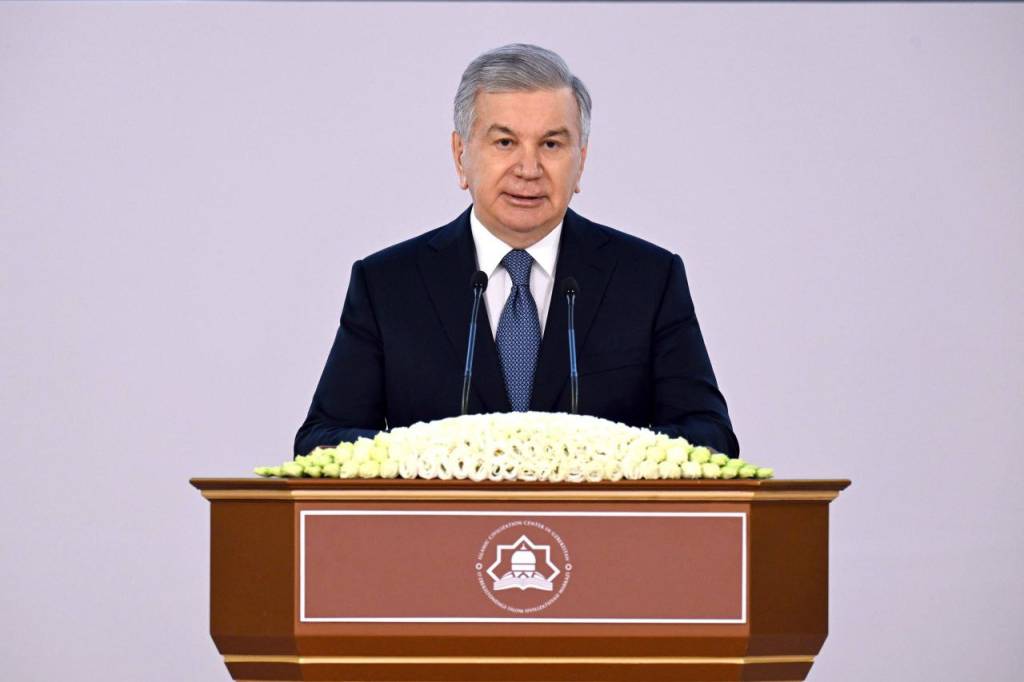
Tashkent, The Gulf Observer: President Shavkat Mirziyoyev officially inaugurated the Islamic Civilization Center in Uzbekistan on March 17, 2026, during a ceremony held alongside an iftar gathering attended by representatives of society, the diplomatic corps, and international organizations.
The event brought together participants from across the country through regional studios, including elders and members of the general public, as well as representatives of various nationalities and religious confessions, reflecting Uzbekistan’s spirit of inclusivity and harmony.
At the outset, President Mirziyoyev extended heartfelt congratulations to the nation on the holy month of Ramadan, expressing gratitude for the prevailing atmosphere of peace and stability in the country. He подчеркнул that Ramadan symbolizes compassion, generosity, and good deeds, highlighting ongoing efforts by government institutions, social organizations, and private sector actors to support vulnerable groups, including the elderly, persons with disabilities, and low-income families.
He noted that such initiatives not only uplift communities but also strengthen social cohesion and national unity, emphasizing that peace remains the country’s greatest blessing amid global uncertainties.
The President described the inauguration of the Islamic Civilization Center as a historic milestone, calling it a realization of the aspirations of generations and a celebration of science, spirituality, and enlightenment. He noted that the complex reflects Uzbekistan’s rich three-thousand-year history and cultural heritage, as well as the dynamic progress of “New Uzbekistan.”
The Center, located near the Hazrati Imam complex, spans nearly 10 hectares with a total usable area of 50,000 square meters. It houses multiple exhibition halls dedicated to key historical periods, including the pre-Islamic era, the First and Second Renaissances, and the foundations of the Third Renaissance in modern Uzbekistan.
The facility features an extensive collection of more than 1,500 exhibits, including ancient manuscripts, archaeological artifacts, and historical maps. Among its most significant treasures is the Uthman Mushaf, one of the oldest Qurans in the world, displayed in the Hall of the Holy Quran alongside other rare manuscripts.
President Mirziyoyev подчеркнул that the Center will serve as a unified educational and cultural platform, enabling visitors—particularly young people—to better understand the true values of Islam and appreciate the intellectual legacy of their ancestors. He highlighted the symbolic inscription of the Quranic word “Iqra” (“Read”) at the Ulugbek Portal, underscoring the importance of knowledge and education.
The project, first proposed at the 72nd session of the United Nations General Assembly, received broad international support and was implemented with contributions from experts and specialists from numerous countries.
Looking ahead, the President announced plans to organize international scientific expeditions to locate and study rare manuscripts worldwide and to strengthen cooperation with leading global institutions. Offices of major international organizations, including ICESCO, IRCICA, and the Oxford Centre for Islamic Studies, have already been established within the Center.
He also noted that the Muslim Board of Uzbekistan will operate from the complex, contributing to the study of Islamic heritage and the training of religious scholars, while the Center will serve as an academic base for students of the International Islamic Academy of Uzbekistan.
President Mirziyoyev called on scholars, artists, and young creators to draw inspiration from the nation’s rich heritage, encouraging them to produce works that promote Uzbekistan’s image as a country of peace, knowledge, and enlightenment.
Concluding the ceremony, he expressed confidence that the Islamic Civilization Center would become a lasting platform for intercultural dialogue, education, and global cooperation.
The event ended with the recitation of verses from the Holy Quran and collective prayers, seeking blessings for the nation and acceptance of worship during the holy month of Ramadan.